

Day Skipper Quiz
Rules of the road, lights, buoyage, chartwork, tides, pilotage and weather.
Day Skipper Test
Or practise one topic:
Every Question in This Test
Lights (18)
-
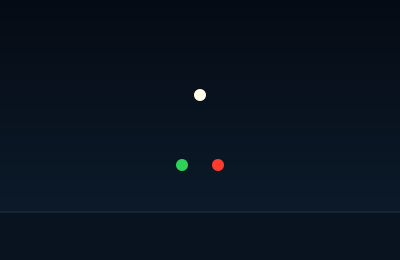 You see these lights ahead at night. What are you looking at?
 -
 A single red light, with no white light above it. What is it most likely to be?
 -
 Red and green side by side, with no white light above. What is it?
 -
 A white light above a green light. What can you see?
 -
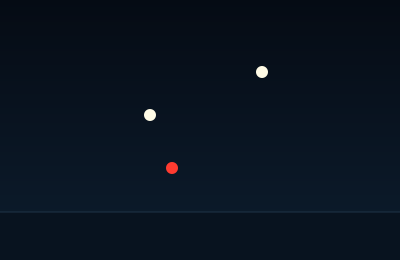 Two white lights, the one to the right higher, and a red light. What is it?
 -
 Two all-round red lights, one above the other, and nothing else. What do they mean?
 -
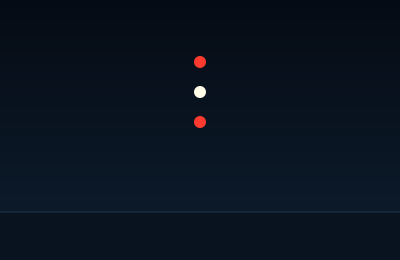 Red, white, red, in a vertical line. What does it mean?
 -
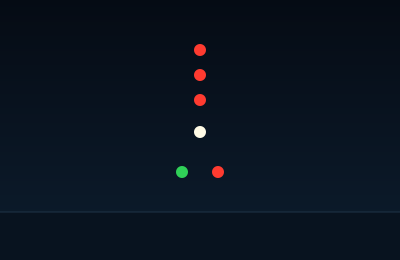 Three red lights in a vertical line above a power-driven vessel's lights. What is she?
 -
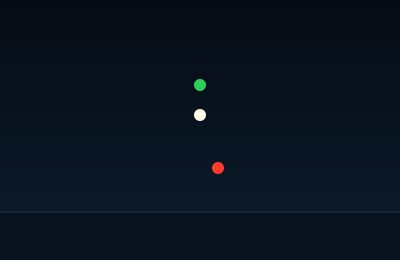 Green over white, with a red sidelight. What is it?
 -
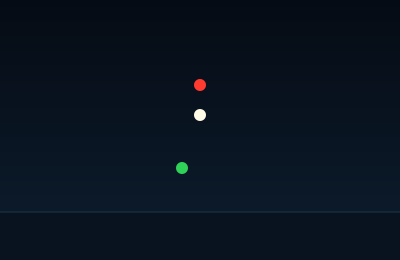 Red over white, with a green sidelight. What is it?
 -
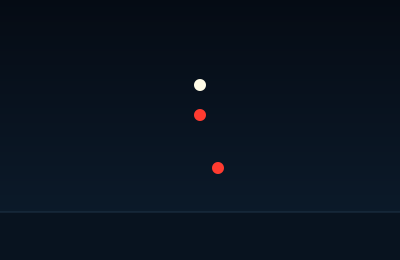 White over red all-round lights, with a red sidelight. What is it?
 -
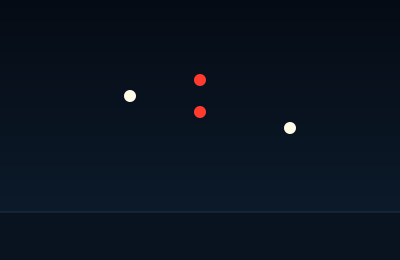 Two reds in a vertical line plus two white lights. What is it?
 -
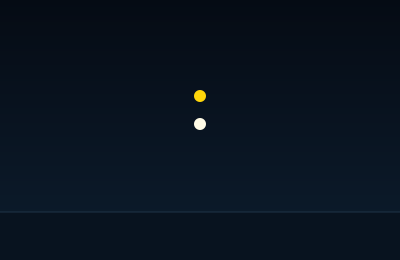 A yellow light above a white light, seen from behind a vessel. What is she doing?
 -
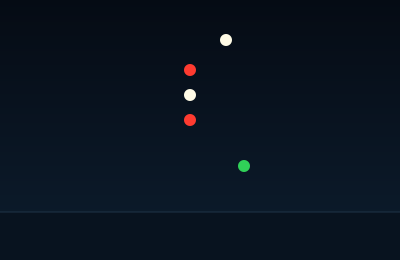 Red-white-red in a vertical line, with a white masthead light and a green sidelight. What is it?
 -
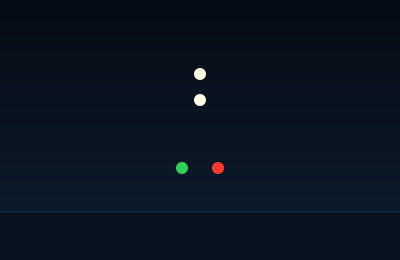 This power-driven vessel is towing another vessel astern. What do the two white lights in a vertical line tell you?
 -
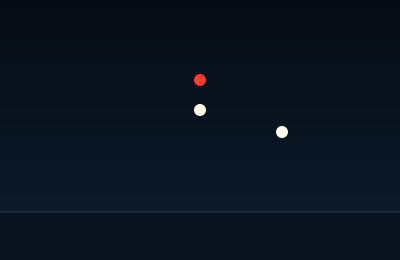 Red over white, plus a third white light lower down and off to one side. What does the extra light tell you?
 -
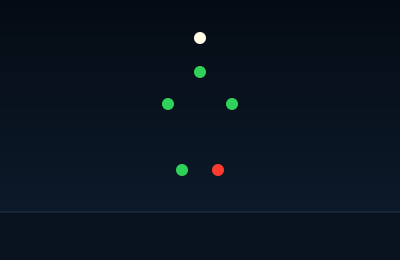 Three all-round green lights in a triangle, above a power-driven vessel's lights. What is she doing?
 -
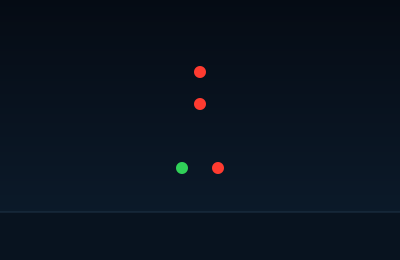 Two all-round reds in a vertical line, with red and green sidelights. What is it?
Day shapes (8)
-
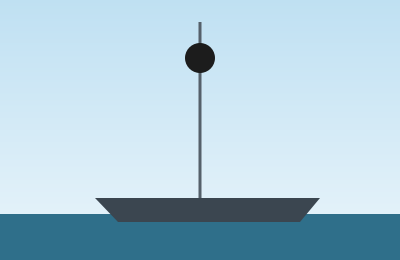 A single black ball hoisted in the forepart of a vessel. What does it mean?
 -
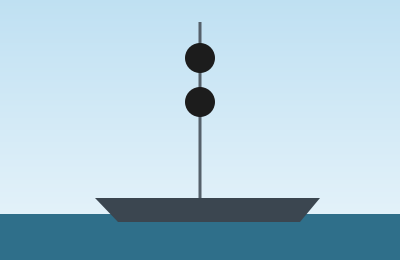 Two black balls, one above the other. What does it mean?
 -
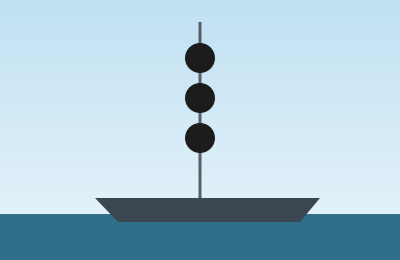 Three black balls in a vertical line. What does it mean?
 -
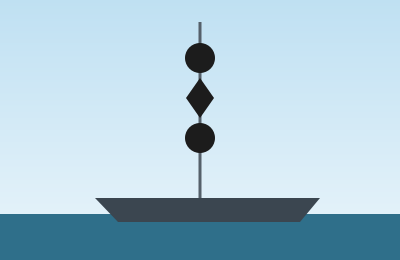 Ball, diamond, ball. What does it mean?
 -
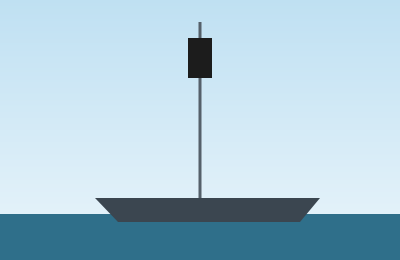 A black cylinder. What does it mean?
 -
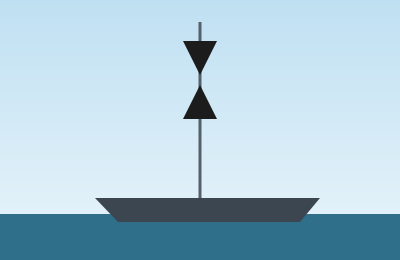 Two cones with their points together. What does it mean?
 -
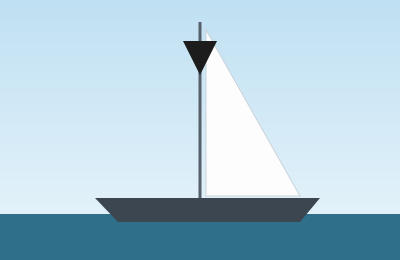 A yacht with her sails up shows a single cone, point down. What is she telling you?
 -
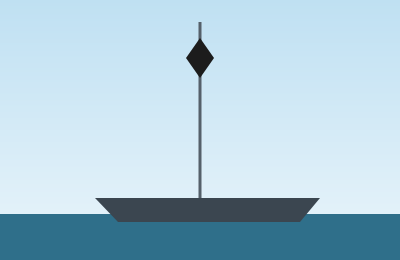 A single black diamond. What does it mean?
Sound signals (10)
-
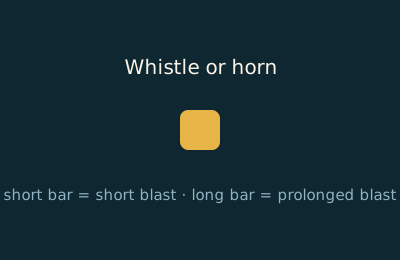 Vessels in sight of one another. One short blast means:
 -
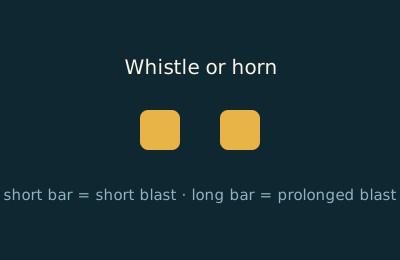 Vessels in sight of one another. Two short blasts mean:
 -
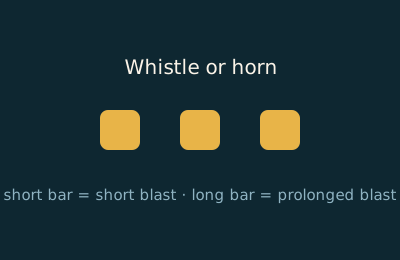 Vessels in sight of one another. Three short blasts mean:
 -
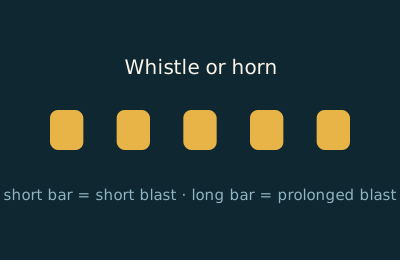 At least five short, rapid blasts mean:
 -
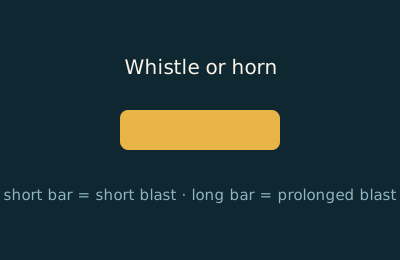 In fog you hear one prolonged blast about every two minutes. What is it?
 -
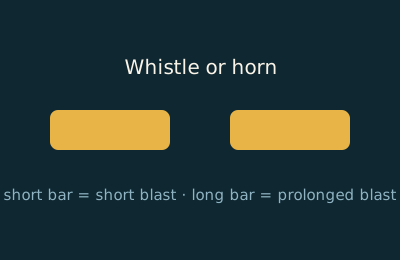 In fog you hear two prolonged blasts about every two minutes. What is it?
 -
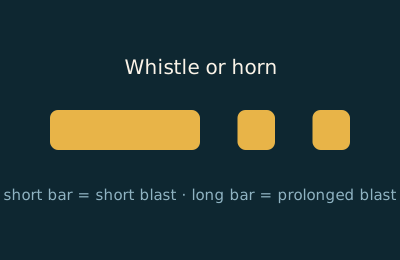 In fog you hear one prolonged blast followed by two short. Which of these could it be?
 -
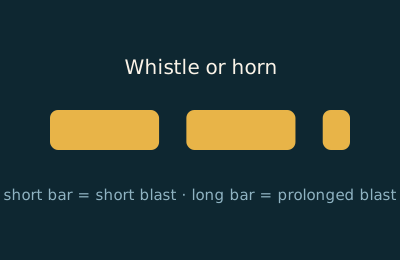 In a narrow channel, a vessel astern of you sounds two prolonged blasts and one short. What does she mean?
 -
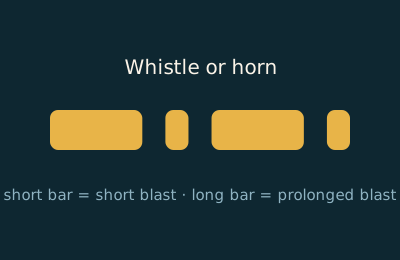 Long, short, long, short in a narrow channel means:
 -
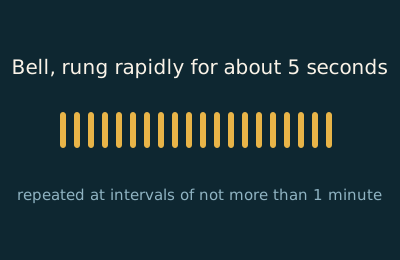 In fog you hear this bell. What is it?
Buoyage (9)
-
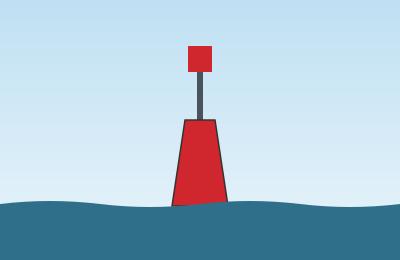 Entering harbour from seaward in Europe (IALA A), how do you pass this mark?
 -
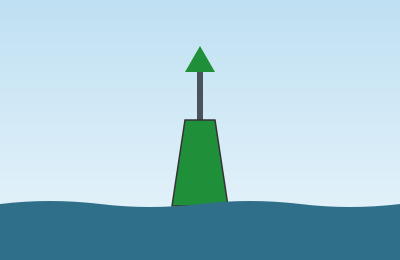 Entering harbour from seaward (IALA A), how do you pass this mark?
 -
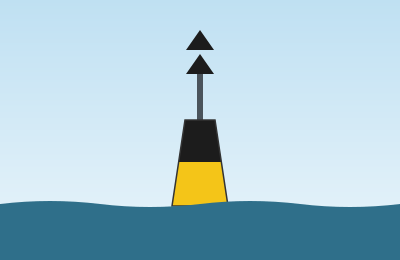 Both cones point up, black above yellow. What mark is this and where is the safe water?
 -
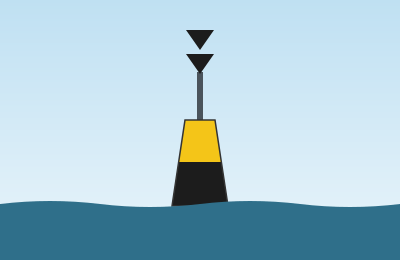 Both cones point down, yellow above black. Which side do you pass?
 -
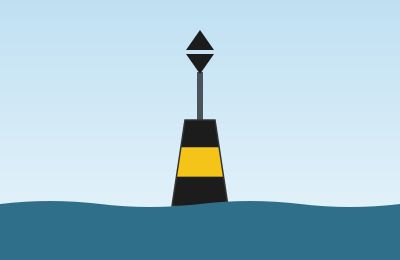 Cones pointing away from each other, black-yellow-black. What mark is it?
 -
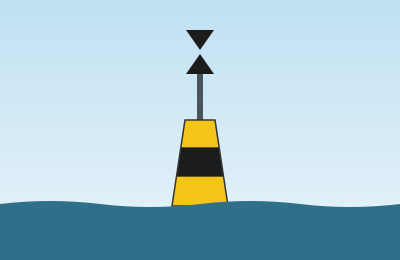 Cones pointing towards each other, yellow-black-yellow. What mark is it?
 -
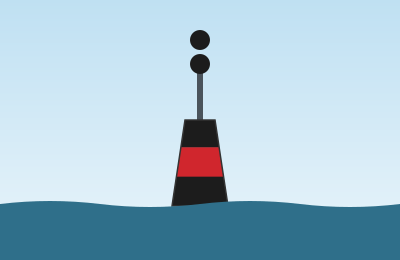 Black with a red band, topped by two black balls. What does it mark?
 -
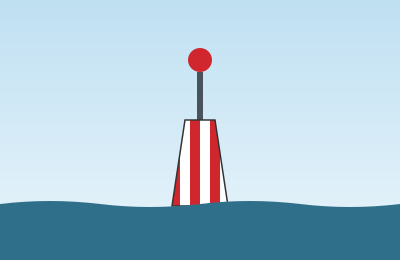 Red and white vertical stripes with a single red ball. What does it mark?
 -
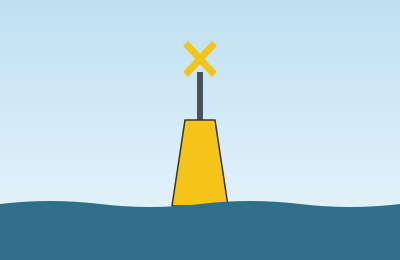 A yellow buoy with a yellow X on top. What is it?
Flags (5)

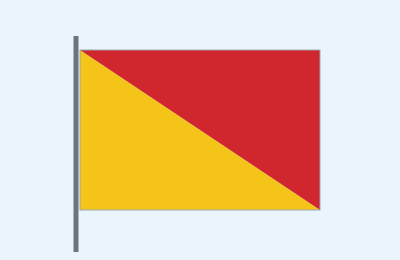

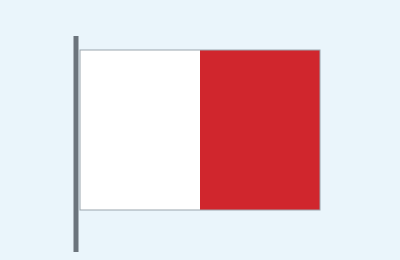
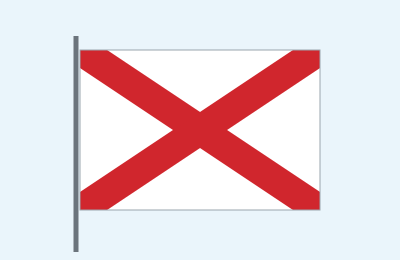
Rules of the road (8)
-
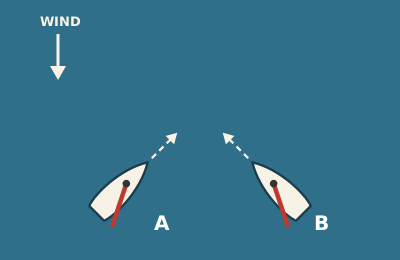 Two yachts on different tacks are converging. Which must keep clear?
 -
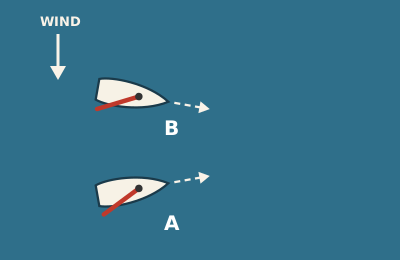 Two yachts on the same tack are converging. Which must keep clear?
 -
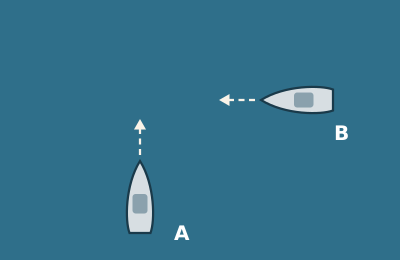 Two motor boats are crossing. Which must give way?
 -
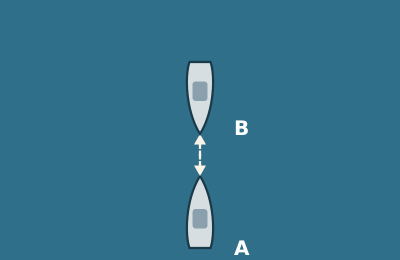 Two motor boats are meeting head-on. What should they do?
 -
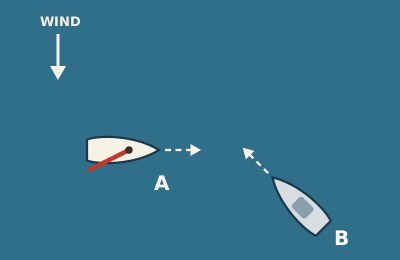 A yacht under sail alone and a motor boat are crossing. Which normally gives way?
 -
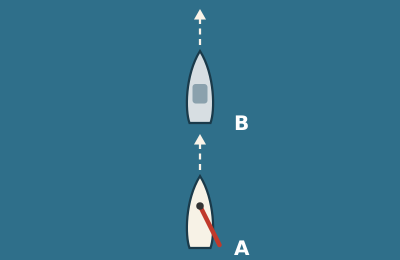 Yacht A, under sail, is catching up with motor fishing boat B from behind. Which keeps clear?
 -
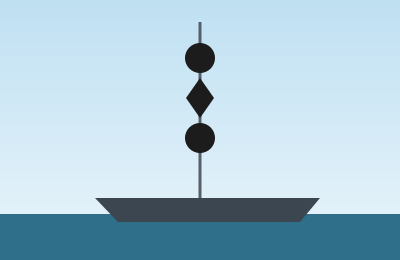 You are under sail and meet a dredger showing these shapes. Who keeps clear?
 -
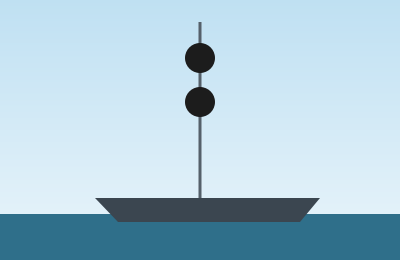 You are under sail and meet a ship showing these shapes. Who keeps clear?
Radar (3)
-
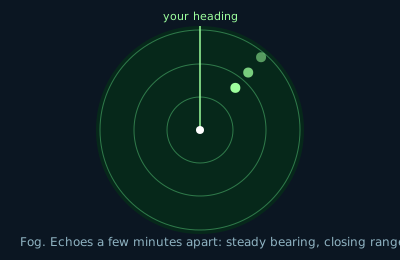 In fog, you detect this ship by radar only, on your starboard bow. You are not overtaking her and a close-quarters situation is developing. Which course alteration should you avoid?
 -
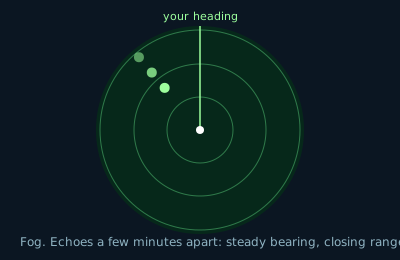 In fog, you detect this ship by radar only, on your port bow, bearing steady and closing. You are not overtaking her. Which course alteration should you avoid?
 -
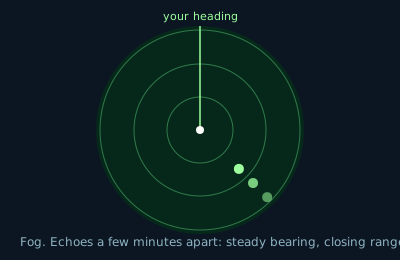 In fog, you detect this ship by radar only, on your starboard quarter, bearing steady and closing. Which course alteration should you avoid?
Channels and traffic schemes (6)
-
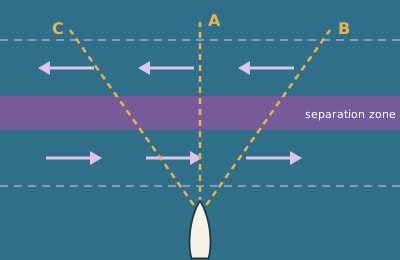 There is no tide. You need to cross this traffic separation scheme. Which heading should you steer?
 -
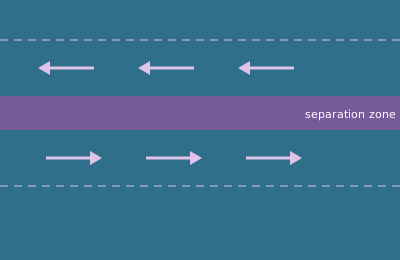 You are using a traffic separation scheme. How should you travel along it?
 -
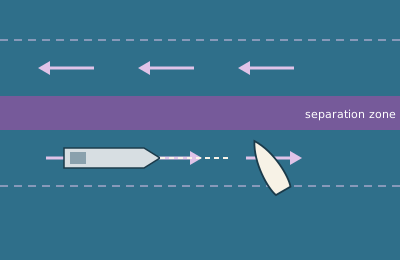 You are a small yacht under sail in a traffic lane, and a ship is coming along it. What does Rule 10 require of you?
 -
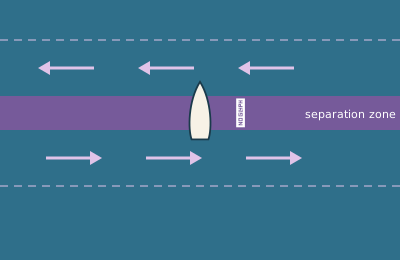 Can you anchor in a traffic separation scheme?
 -
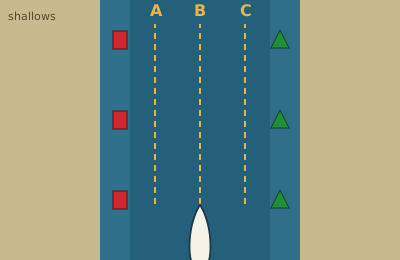 You are motoring up this narrow channel. Which track should you keep to?
 -
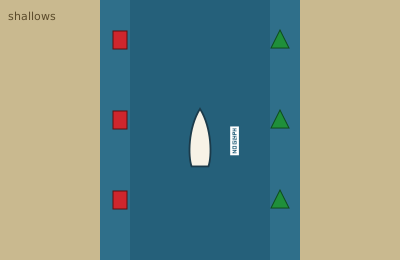 Should you anchor in a narrow channel?
Chartwork (8)
-
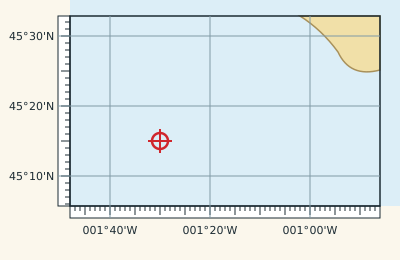 What is the position of the red mark on this chart?
 -
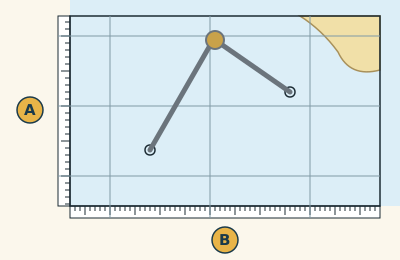 You have opened your dividers to the distance between two points. Which scale do you measure it against?
 -
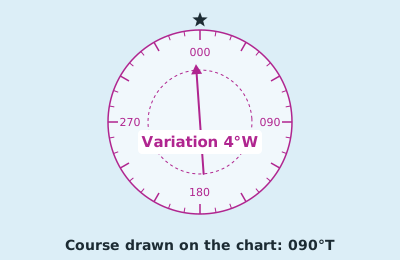 Your course drawn on the chart is 090°T. Using the variation on this compass rose, what is the magnetic course?
 -
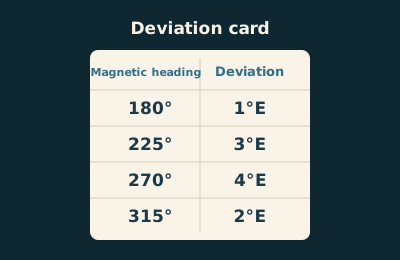 You need to make 225°M. Using this deviation card, what course do you steer by the ship's compass?
 -
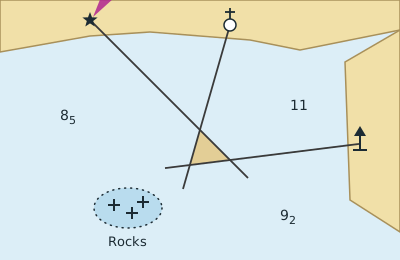 Your three bearings do not quite meet and leave this small triangle, a "cocked hat". Where should you assume you are?
 -
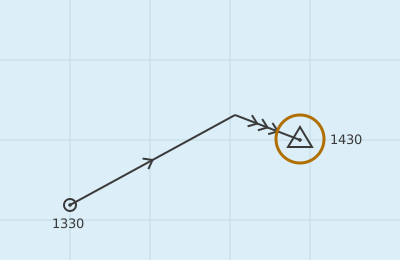 What does the ringed symbol, a triangle with a dot in it, mean?
 -
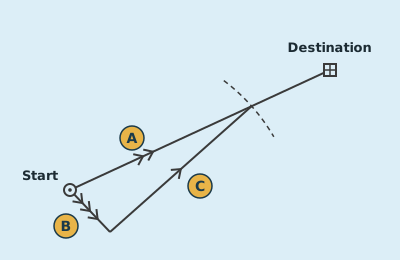 This is a one-hour course to steer triangle. Which line do you measure to find the course to steer?
 -
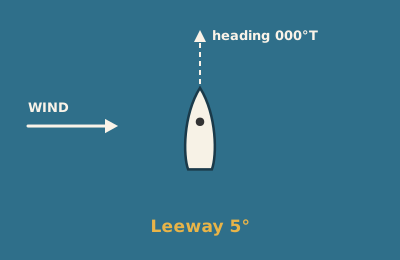 She is steering 000°T with the wind on her port side and is making 5° of leeway. What is her water track?
Charts and symbols (6)
-
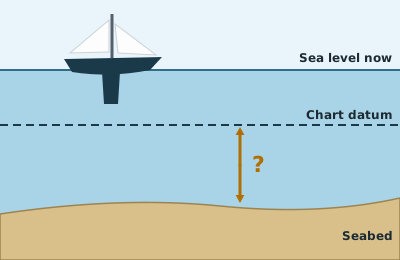 What is the measurement shown by the gold arrow called?
 -
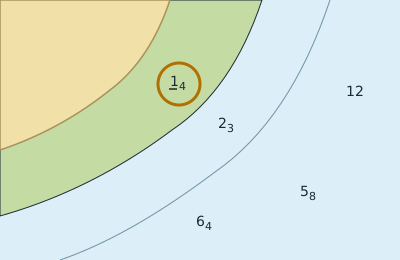 What does the ringed figure, with a line under it, tell you?
 -
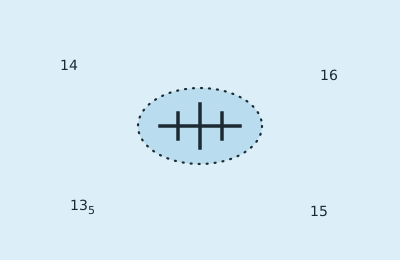 What does this chart symbol show?
 -
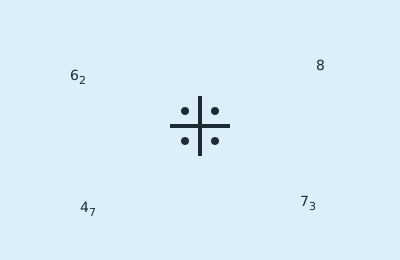 What does this chart symbol, a cross with four dots, show?
 -
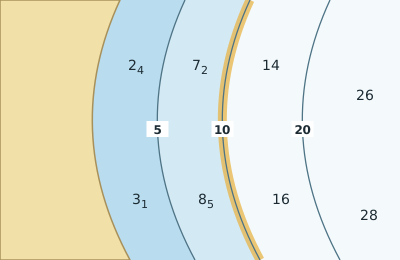 What does the highlighted line labelled 10 join up?
 -
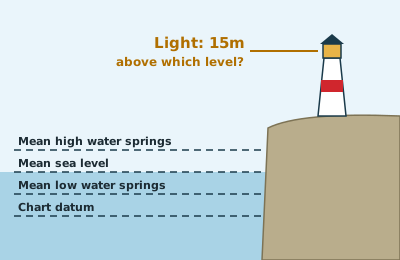 A UK chart gives the height of this light as 15m. Which level is that measured above?
Tides (9)
-
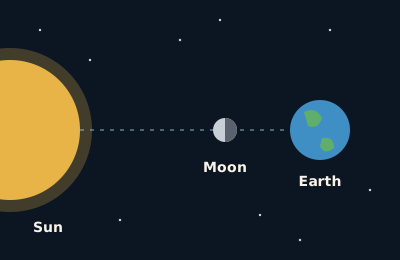 When the sun, moon and earth are in line, at new moon and full moon, what sort of tides follow?
 -
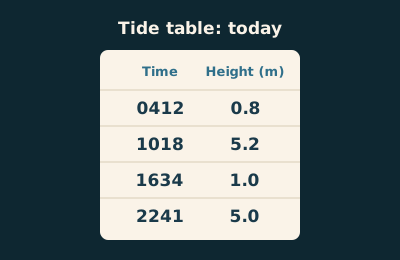 What is the range of the tide between the first two entries in this table?
 -
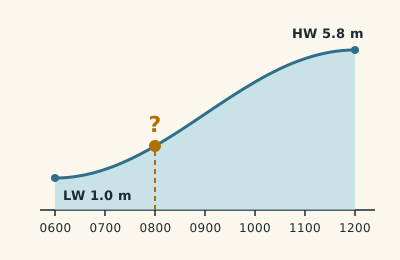 Low water is 1.0 m at 0600 and high water is 5.8 m at 1200. By the rule of twelfths, what is the height of tide at 0800?
 -
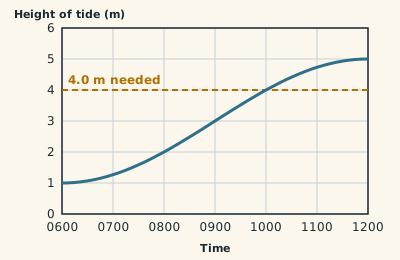 You need a height of tide of 4.0 m to get over a marina sill. Reading this curve, when does the rising tide reach it?
 -
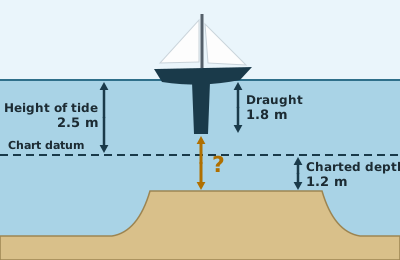 Your yacht draws 1.8 m. With these figures, how much water is there between the keel and the bar?
 -
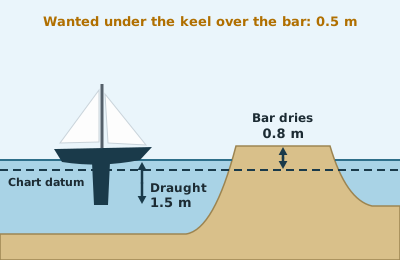 The bar dries 0.8 m. Your yacht draws 1.5 m and you want 0.5 m under the keel. What height of tide do you need to cross?
 -
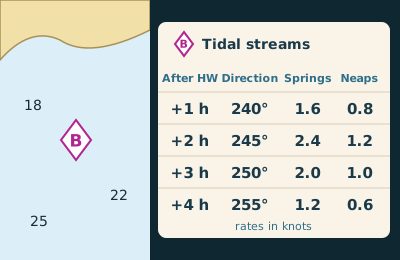 It is springs, two hours after high water. What is the tidal stream at diamond B doing?
 -
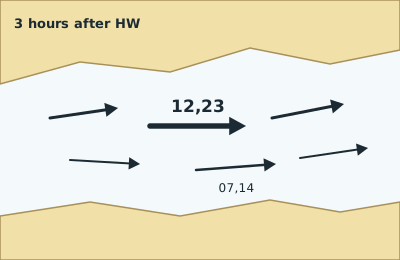 In a tidal stream atlas, what do the figures 12,23 beside an arrow mean?
 -
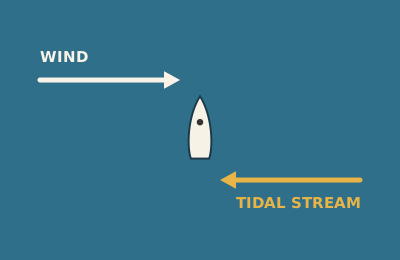 The wind is blowing directly against the tidal stream. What does that do to the sea?
Pilotage (10)
-
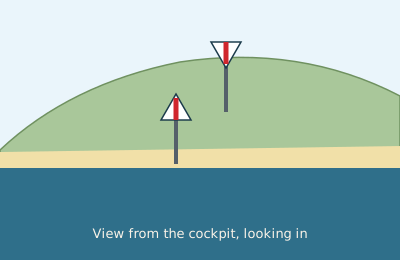 You are following a pair of leading marks into harbour. The front (lower) mark has moved to the left of the rear one. Which way do you turn to get back on the line?
 -
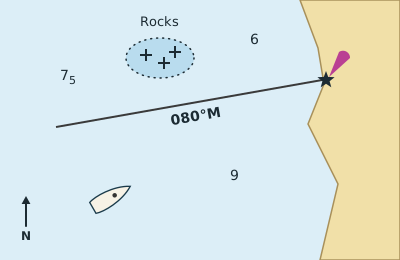 The skipper has drawn a clearing line: the lighthouse bearing 080°M. To stay south of the line, clear of the rocks, what must the bearing of the lighthouse be?
 -
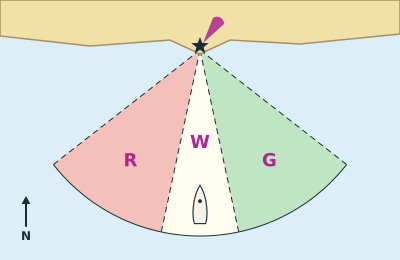 You are heading in at night in the white sector of this light. It turns red. What has happened, and what do you do?
 -
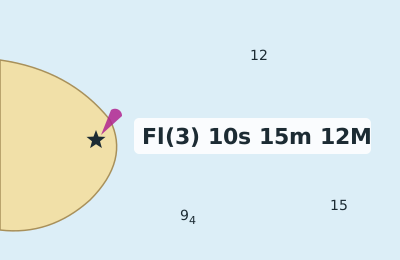 What does this description beside a lighthouse on the chart tell you?
 -
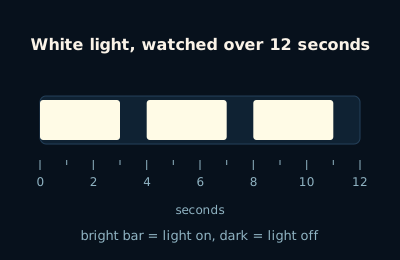 This light is on for longer than it is off. What is that rhythm called?
 -
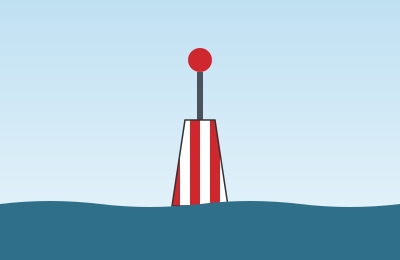 What light does this kind of buoy show at night?
 -
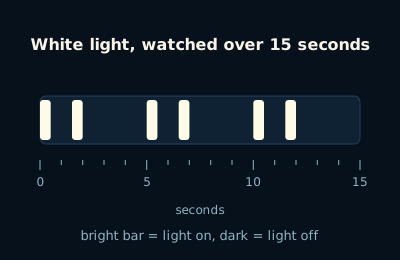 A white light flashes in groups of two, as shown. What kind of mark is it?
 -
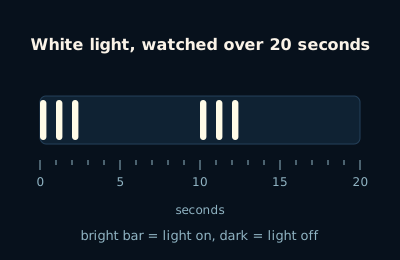 A white light gives three quick flashes in a group, then darkness, as shown. Which cardinal mark is it?
 -
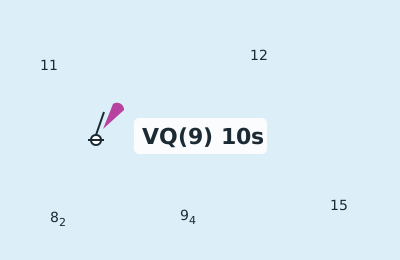 A lit buoy on the chart is marked VQ(9) 10s. On which side of it is the safe water?
 -
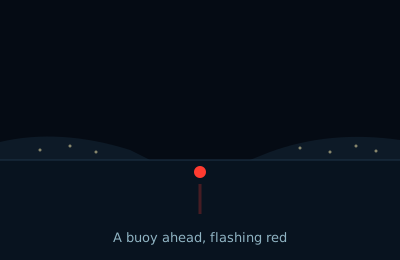 You are entering a harbour at night in IALA Region A (the UK and Europe) and see this flashing red light on a buoy ahead. Which side do you leave it?
Weather (8)
-
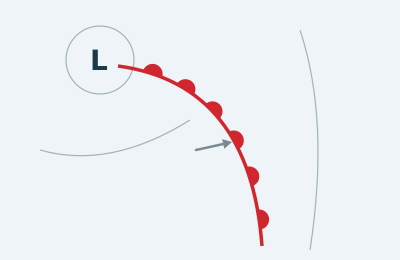 What does this line on a weather chart show?
 -
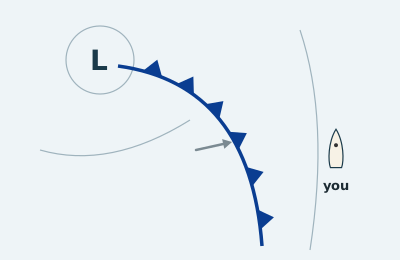 You are in the northern hemisphere and this front is about to pass over you. What is the wind most likely to do as it goes through?
 -
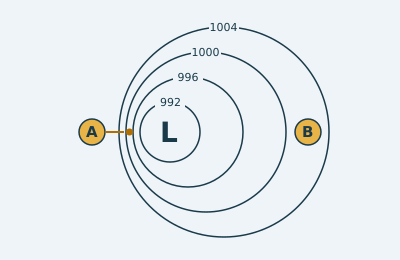 On this weather chart, where is the wind stronger?
 -
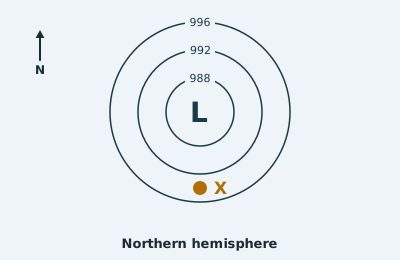 This low is in the northern hemisphere. Roughly where is the wind coming from at X, due south of the centre?
 -
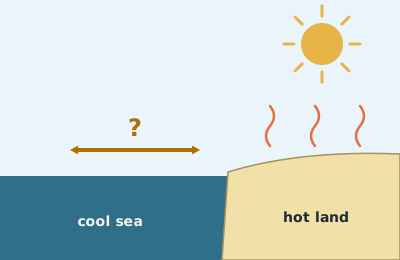 It is a hot, sunny afternoon and the day started calm. Which way does a sea breeze blow at the coast?
 -
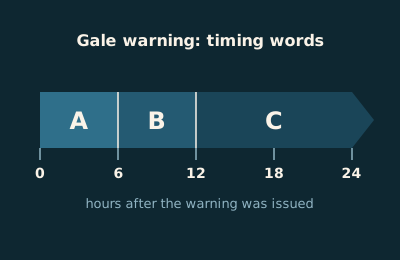 A gale warning says the gale is expected "soon". Which band on this timeline is that?
 -
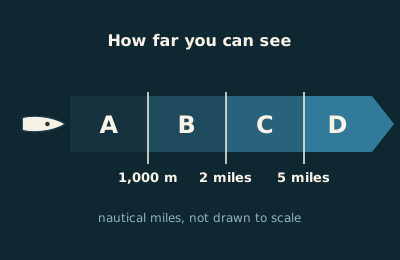 The shipping forecast gives the visibility as "poor". Which band on this scale is that?
 -
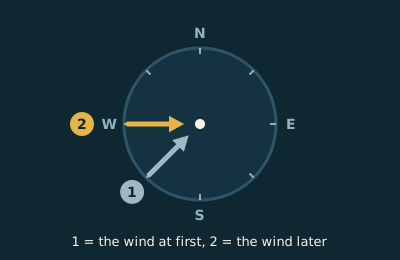 The wind shifts from south-west to west, as shown. What is that change called?
Anchoring (3)
-
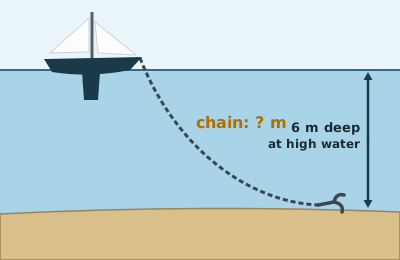 You are anchoring on chain only, and the depth will be 6 m at high water. By the usual rule of thumb, what is the least chain you should let out?
 -
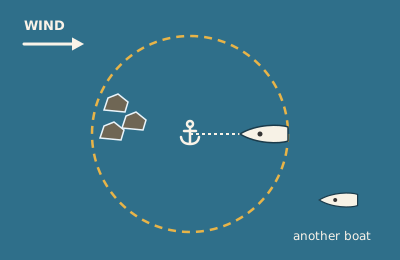 You are staying at anchor overnight and the wind is forecast to swing right round. What should you check before you settle down?
 -
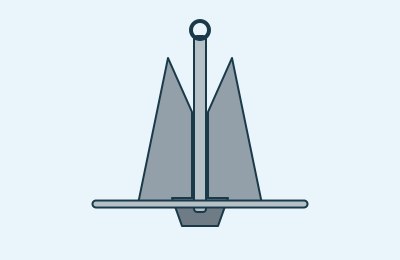 What type of anchor is this?
Safety and radio (3)
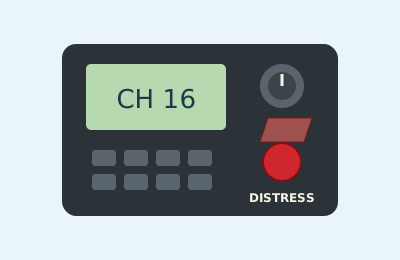
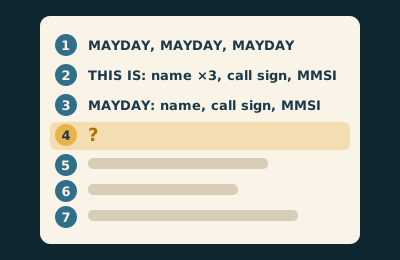
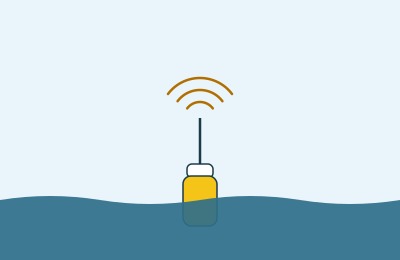
Passage planning (3)
-
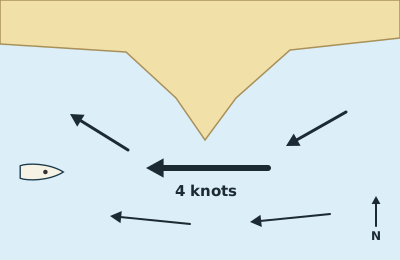 Your route passes this headland, where the stream runs hard. What do you call a place like this that decides the timing of your whole passage?
 -
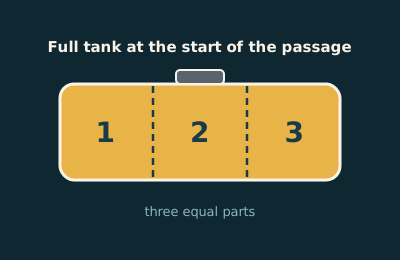 What is the "rule of thirds" for fuel on a passage?
 -
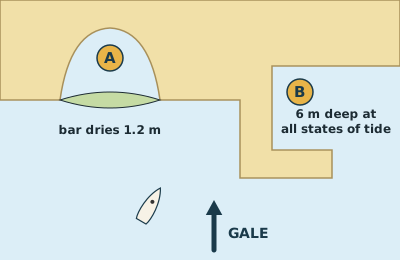 A gale is forecast from seaward, as shown, and you want a port of refuge. Which harbour is the better choice?
How These Questions Are Checked
SailChecker writes every question and checks each answer against the published source for its subject before it goes live. Where a rule says "so far as practicable", the answer says so too. Chart symbols follow UKHO Chart 5011.
- International Regulations for Preventing Collisions at Sea (COLREGs), IMO: lights, shapes, sound signals and the steering rules.
- IALA Maritime Buoyage System: buoys, topmarks and light rhythms.
- RYA Competent Crew course: what the Competent Crew test covers.
- RYA Day Skipper theory course: what the Day Skipper test covers.
- Met Office marine forecast glossary: forecast terms, visibility and the Beaufort scale.
- MCA GMDSS procedures for small boat users: distress calls and DSC.
These are independent practice questions that follow the RYA syllabuses. They are not official RYA papers, and a score here is not a qualification.
Last checked: October 2026. Spotted a mistake? Tell us at enquire@sailchecker.com.

Christopher Lait
Chris founded Drake Academy, a sailing company that provides leadership training to businesses. Now the CEO of SailChecker.com you will find him handling many of your enquiries as he attempts to drive SailChecker.com forward as the company of choice for yacht charter and sailing by focusing on quality advice and great customer service.