

Split Sailing Itinerary
7 Days Through The South Dalmatian Coast · 2026 Guide
Split Sailing Itinerary At A Glance
The Classic Croatia Charter Route, Honest, Practical, 2026-priced.
This is the most booked 7-day sailing route in the Mediterranean, and there's a reason: short crossings, reliable summer mistral winds, warm water from June to September, and some of the clearest water in Europe. Our itinerary takes you round-trip from Split through Brač, Hvar, Stari Grad, Mljet National Park, Korčula, Vis (with the Blue Cave) and Šolta, about 150 nautical miles of comfortable sailing with real anchorages and honest notes on what to skip.
Quick facts: 7 days Sat–Sat · ~150 NM · Base ACI Marina Split · May to October · All levels (bareboat, skippered or crewed) · From €4,500/week shoulder, €5,500–7,500 high season (bareboat 40–45 ft monohull).
Why This Route & Who It Suits
The South Dalmatian islands are the most booked charter area in the Mediterranean and easily the best introduction to Croatian sailing. Eight major islands, dozens of smaller ones, crossings mostly in the 10–30 NM range, and a genuinely varied coastline, party towns, medieval walled cities, a national park, lavender fields, wine regions and some of the clearest water in Europe, all inside one week.
This route suits you if it's your first Croatia charter and you want the headline spots; you have a mixed group (couples, kids, grandparents) and want short hops with lazy afternoons; or you want to balance nightlife at Hvar with the quiet of Mljet.
Consider a different route if you're chasing hidden gems in peak August (look at our Split → Kornati route instead); you want a one-way Split → Dubrovnik drop-off (logistically different, ask us); or you're sailing in October and want somewhere calmer (the Ionian is a better fit).
- Getting There (2026) Split International Airport handles direct flights from most major European hubs, and ACI Marina Split is 30 minutes from the airport by taxi or 35 by bus. If you're coming from the UK, Ireland or Germany you'll typically fly direct in under 3 hours. We can arrange airport transfers directly to your boat for around €35–55 for 4 pax.
- When to Go June and September are the best balance of weather, price and crowds, steady mistral winds F3–4, warm sea (20–24°C), and none of the August chaos. July is the most popular month but prices spike 25–40% over shoulder season. August is peak-of-peak: gorgeous but crowded marinas (Hvar in particular) and premium pricing. See the month-by-month table lower down.
- Marinas & Mooring ACI Marina Split is your base, well-protected, reservable online, roughly €120–150/night for a 45-footer in high season. Along the route, Hvar Town's town quay is the expensive one (€180–260/night); most other ports run €60–180. Mixing town quays with free anchorages (Šešula Bay on Šolta, Milna Bay on Brač) keeps the week's marina budget around €500–900. The mySea app lets you pre-reserve berths in most ACI marinas.
1. The 7-Day Itinerary
Day-by-day Through Brač, Hvar, Stari Grad, Mljet, Korčula, Vis & Šolta
Day by day
- Day 1
Day 1
Split → Milna, Brač · 10 NM
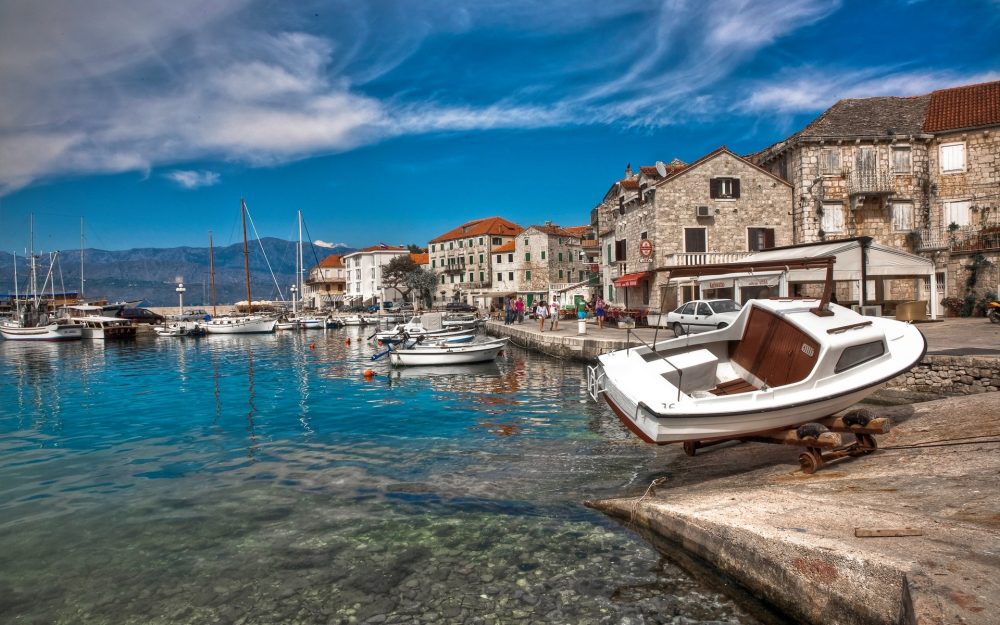
Boarding at ACI Marina Split is from 17:00 on Saturday. Don't try to sail far on day one, you'll still be learning the boat and provisioning. Milna, on the western tip of Brač, is a two-hour hop across the Brač Channel and one of the most protected natural harbours in central Dalmatia.
Moor: ACI Marina Milna (reservable), or free anchor in Milna Bay. Šćepan Luka just south is quieter.
Ashore: Walk the waterfront to Konoba Bago for fresh fish and octopus peka (order 3 hours ahead). For the energetic, scooter across to Bol (20 min) for a sunset at Zlatni Rat beach.
Skip this if: strong bura from the NE. Head for Maslinica (Šolta) instead.
- Day 2
Day 2
Milna → Hvar Town · 17 NM
Today is a proper sail, round the western tip of Brač and cross the Hvar Channel on a close reach in the afternoon mistral. Arrive Hvar Town by mid-afternoon to secure a berth; in July and August, call ahead by 11:00 or plan to anchor in the Pakleni Islands opposite.
Moor: ACI Marina Palmižana (Pakleni Islands, quieter, water taxi to Hvar Town), or Hvar town quay (€180–260 in peak).
Ashore: Walk up to the Spanish Fortress for sunset. Gariful for the scene, Konoba Menego for honest local food.
Honest note: Hvar Town in July/August is loud, expensive and crowded. Worth one night for the atmosphere, don't plan to stay two.
- Day 3
Day 3
Hvar → Stari Grad · 12 NM
A short hop around the northern side of Hvar island to Stari Grad, the oldest town in Croatia (founded by the Greeks in 384 BC) and the complete opposite of Hvar Town, slow, low-rise, local, and surrounded by the UNESCO-listed Stari Grad Plain, still farmed for wine and olives as it was by the Greeks 2,400 years ago.
Moor: Stari Grad town quay (affordable, €60–90 for a 45-footer with water and power) or anchor in Stari Grad bay.
Ashore: Walk or cycle through the Stari Grad Plain, the oldest continuously cultivated agricultural landscape in Europe. Dinner at Kod Damira or Eremitaž. The local Hvar wines (Plavac Mali, Pošip) are worth the evening.
Alternative: If the group wants more buzz, drop into Vrboska next door, quieter than Hvar Town but more character than most harbours this size.
- Day 4
Day 4
Stari Grad → Pomena, Mljet · 28 NM
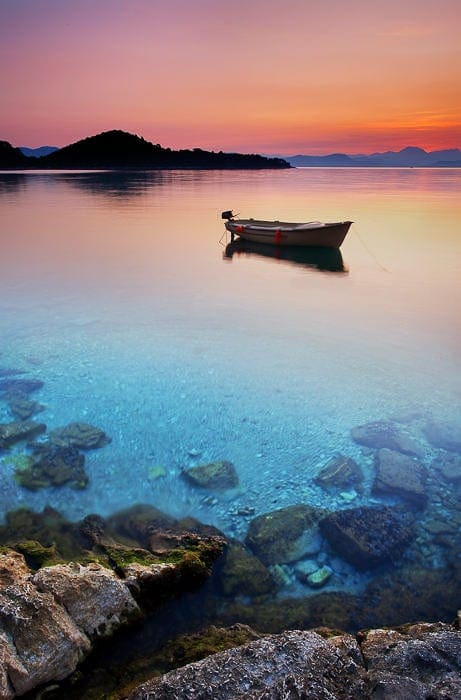
A longer sail south-east across the Hvar and Mljet channels to Mljet, the greenest island in the Adriatic and a National Park on its western third. Over two-thirds of the island is covered by forest. Anchor at Pomena, walk 15 minutes to the two salt lakes (Veliko Jezero and Malo Jezero), kayak or swim out to the islet of St. Mary and its 12th-century Benedictine monastery in the middle of Veliko Jezero. This is the "tranquil restore" day of the week.
Moor: Pomena has ~25 municipal buoys (pay the park ranger, ~€50/night for 6 including park entry). Polače next door is slightly cheaper.
Park entry: ~€18 per person in 2026, includes the shuttle boat to the monastery.
Honest note: Pomena village has two restaurants and one shop. Not a nightlife stop, bring supplies if you need them.
5. Practical Planning
Costs, Weather & Marina Fees For Your 2026 Charter
Day by day
- Day 5
Day 5
Mljet → Korčula Town · 15 NM
Short, easy sail up the Pelješac Channel to Korčula Town, far more charming than Hvar Town and a genuine medieval walled city on a narrow peninsula. Target arrival by 17:00 to grab a town-quay berth; the old town is best explored on foot with nowhere more than 5 minutes walk away.
Moor: Korčula town quay (book on VHF ch. 17, ~€100–180 for a 45-footer with water/power), or ACI Marina Korčula just south.
Ashore: Walk the walls at sunset. Dinner at Konoba Adio Mare inside the old town, it's tiny, reserve ahead. Traditional Moreška sword dance performances on summer Thursday evenings if you catch one.
Wine tip: Slow morning tomorrow? Taxi 10 km west to Čara for a Pošip tasting at Bire or Toreta, one of Croatia's best native whites and made right here on Korčula.
- Day 6
Day 6
Korčula → Biševo (Blue Cave) → Komiža, Vis · 33 NM
Longest sail of the week, cast off early and head north-west across open water to Biševo and the famous Blue Cave. Time it right: between 10:00 and 12:00 on a calm morning, the sun angles into the cave and lights the water electric blue from below. Tender entry only (yachts are too big); pay the entry fee at the concession (~€15 pp).
Afterwards, 3 NM across to Komiža on the west coast of Vis. Vis itself was off-limits to foreigners for military reasons until the late 1980s and still feels less developed than Hvar or Korčula, breathtaking bays, honest food, two great small towns (Vis Town and Komiža).
Moor: Komiža town quay (limited, reserve by radio by 14:00), or anchor in the bay on sand. If a westerly sea breeze is up, Rukavac on the south coast is a better lee.
Ashore: Climb to the old fishermen's church above town. Konoba Bako for dinner, the grilled lobster is genuinely worth it.
Tip: If the Blue Cave is too crowded (or the swell's too big), the Green Cave on the south side of Biševo is a better swim and you can take the yacht in closer.
- Day 7
Day 7
Vis → Maslinica, Šolta → Split · 32 NM
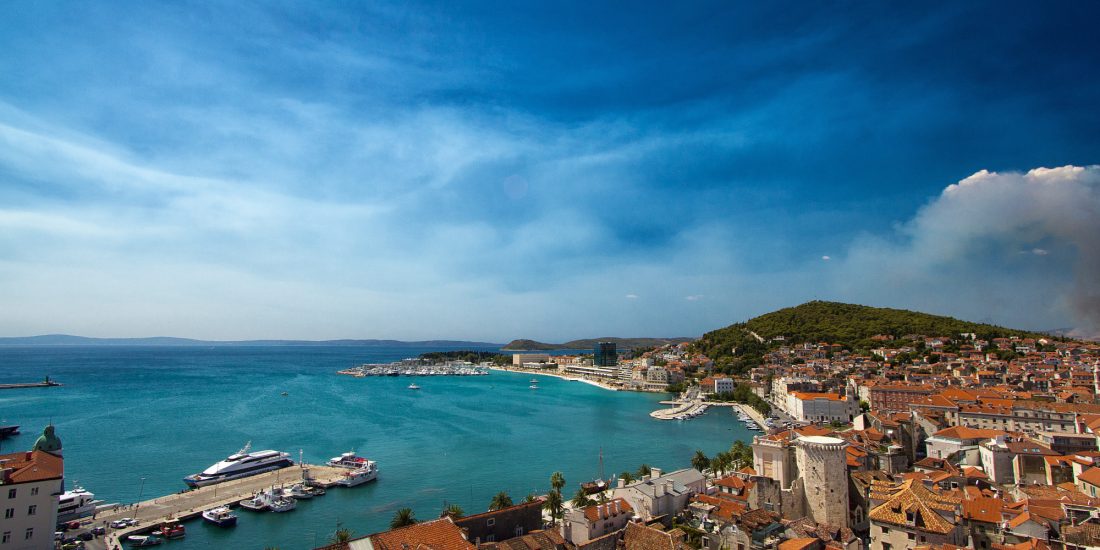
The homeward leg with time for one last anchored lunch. Sail north-east back towards Šolta and stop at the north-west corner, Šešula Bay at Maslinica, where you can tie a stern line to a rock and swim off the boat. Then a short 9 NM into Split to refuel and tie up at ACI by 17:00, ready for Saturday's 09:00 handover.
Moor: Maslinica town quay or free anchor in Šešula Bay (holding good in sand).
Lunch stop: Martinis Marchi at Maslinica if you want to end on a flourish, a boutique harbour restaurant in a restored 18th-century fortress.
Checkout tip: Refuel at Split fuel dock on the way in. Empty the fridge, strip the beds if the charter agreement asks, and you're off the boat in 20 minutes on Saturday morning.
Why Book Through SailChecker
Split South Route, Frequently Asked Questions
What is the best time of year to sail the Split south route?
June and September are the sweet spot, warm enough for swimming, far fewer boats than peak summer, and marina berths you can actually get. July and August deliver the best weather but Hvar town and Palmižana get extremely crowded. May is underrated: the sea is cooler but the Dalmatian coast is green, quiet, and at its most photogenic. We'd pick the second week of June or the first two weeks of September every time.
How many nautical miles is the Split south route?
Around 150–160NM for the full round trip, depending on whether you anchor off or go into marinas. The average daily sail is 20–25NM, roughly 3–4 hours underway, which leaves plenty of time ashore each day. It's one of the most relaxed paces of any Mediterranean itinerary.
Do I need a sailing licence to charter in Croatia?
Yes, for a bareboat charter Croatia requires a valid ICC (International Certificate of Competence) or an equivalent national certificate, plus a VHF radio licence. If you don't hold these, a skipper charter is the answer, your skipper handles all navigation while you enjoy the trip. We can arrange either. Call us and we'll work out what fits your group.
How much should I budget for a week's charter on the Split south route?
Every group is different, boat size, standard, season, skipper or bareboat, catamaran or monohull all move the number significantly. Rather than give you a range that may not apply to your trip, use our Yacht Charter Price Calculator to get a realistic estimate in under 30 seconds. When you're ready for a precise quote, call us and we'll turn that estimate into a confirmed price.
→ Try the Yacht Charter Price Calculator
Catamaran or monohull for the south Dalmatian route?
Catamarans win on comfort for groups of 6+: more deck space, a proper saloon, and no heeling. Monohulls are cheaper, easier to squeeze into tight town quays like Hvar and Korčula, and give you a more authentic sailing feel. The south route works well for both, passages are short and the main anchorages accommodate either. We'll recommend the right hull type once we know your group size and budget.
What winds should I expect on the Dalmatian coast?
The Maestral, a reliable NW afternoon sea breeze, kicks in most summer days around noon at 10–15 knots, ideal sailing. The Bora is the one to watch: a cold NE katabatic that can arrive fast and hit 30+ knots, most common in winter and spring but not unknown in summer. The Jugo (SE) brings swell and humidity, usually ahead of a weather front. We brief every client on the forecast before departure.
Which island can I skip if I'm short on time?
If you only have 6 days, drop Šolta, it's charming but lower-impact than the others. If nightlife isn't your thing, spend less time in Hvar town and more time in the Pakleni Islands anchorages instead. Vis is the one island we'd never cut, it's the least touristy, the most beautiful, and the Blue Cave and Stiniva Bay alone justify a full day.
Is this route suitable for beginners or first-time charterers?
Yes, it's one of the best beginner routes in the Mediterranean. Passages are short (3–5 hours), the Adriatic is generally calm in summer, navigation is straightforward line-of-sight, and there are marinas or anchorages every few miles if the weather changes. A skipper charter removes all stress entirely and is genuinely worth considering for a first trip.
What marina fees should I budget for along this route?
ACI marinas on this route charge roughly €40–€80 per night for a 40ft boat in shoulder season, rising to €80–€140 in peak July/August. Town quays like Hvar can be €60–€100. Anchoring in open bays is free. Budget €150–€250 total for the week if you mix marinas and anchorages sensibly, which is what most experienced crews on this route do.
Why book through SailChecker rather than direct with an operator?
We're a broker, not an operator, so we search across all fleets to find the right boat for your group, not just whatever one company has available. We've been placing clients on Croatian charters for over a decade, we know which fleets maintain their boats properly, and we don't charge more than going direct. If anything goes wrong on the water, you have a UK-based team who will sort it.
Leave Us A Quick Question Here, Or Call Your Local Office, The Numbers Are In The Footer Below. Prefer A Call Back? Just Let Us Know When.
Where charters went
Past trips from Split, Kaštela, Trogir and the Makarska Riviera can help you weigh up where to sail.
Where trips from Split, Kaštela, Trogir and the Makarska Riviera went
- 1 Uvala Stonca 44
- 2 ACI Palmižana 36
- 3 Stari Grad 23
- 4 Maslinica 23
- 5 ACI Milna 17
- 6 Uvala Pod Gospu 13
- 7 Vlaška 13
- 8 Lučice 12
- 9 ACI Korčula 11
- 10 Uvala Mala Milna* 10
* Marked places have limited evidence. Their figures may change as more trips are recorded.
2026 season to 8 October (not finished).
Destination groups
Furthest from base
The furthest point reached on each trip, measured in a straight line from base in nautical miles. This is not the distance sailed.
Most common first night out
- Maslinica
- ACI Milna
- Lučice
Most common last night before return
- Maslinica
- ACI Milna
- Vlaška
How we worked this out
Boats at sea broadcast their position through AIS, a ship-tracking system. We combine the overnight stops of many charter boats based in Split, Kaštela, Trogir and the Makarska Riviera, so the figures describe the whole area and never one boat. Distances are measured in a straight line from base.
Aggregated AIS ship-tracking data for the sailing area. No individual boat is shown, and these patterns do not predict future routes.
Other Croatia routes
 Croatia
 Dubrovnik
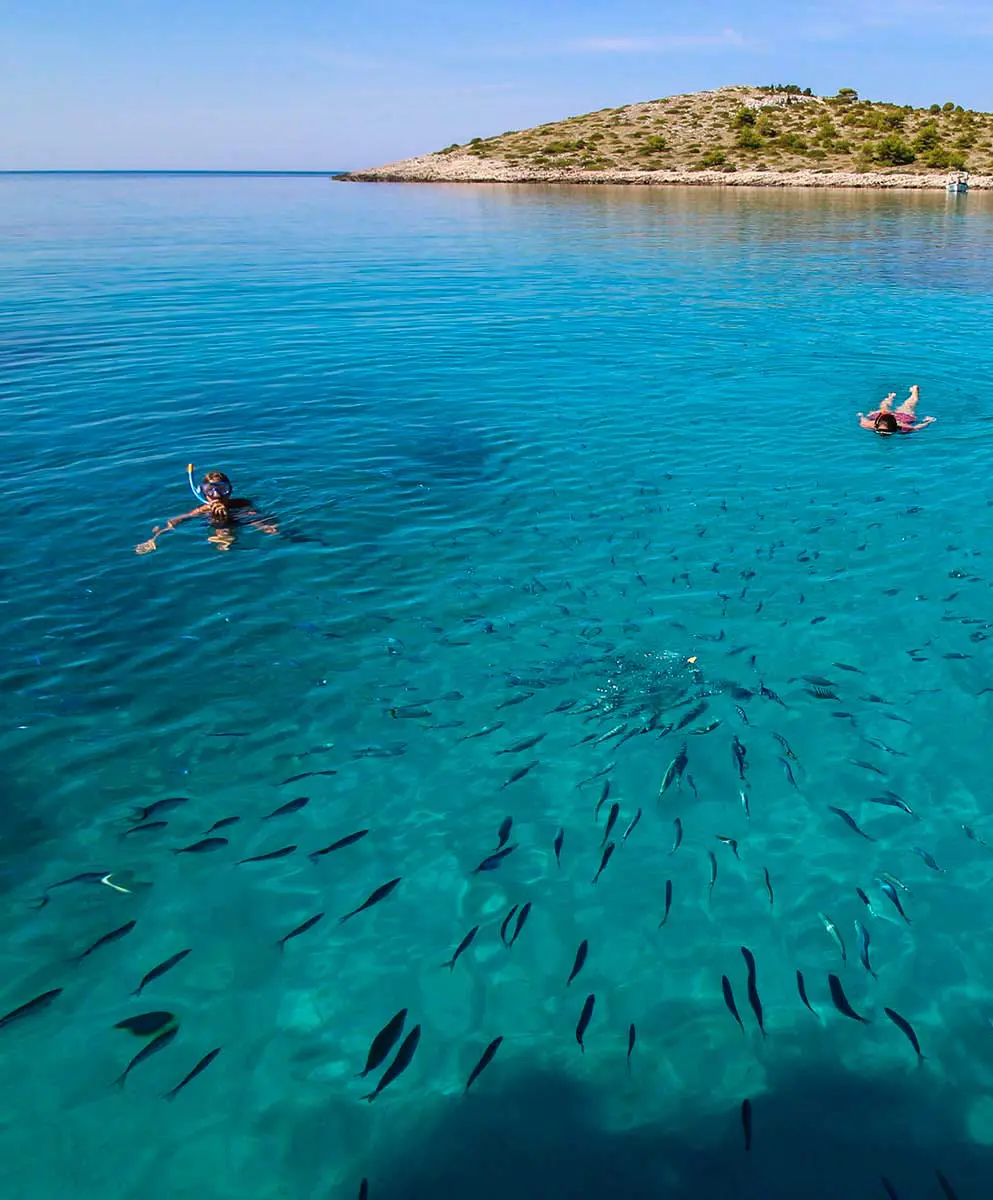
The Pearl of the Adriatic — Elafiti Islands, Mljet National Park, Korčula, and limestone walls glowing at sunset.
 Croatia
 Split — North Dalmatian Route
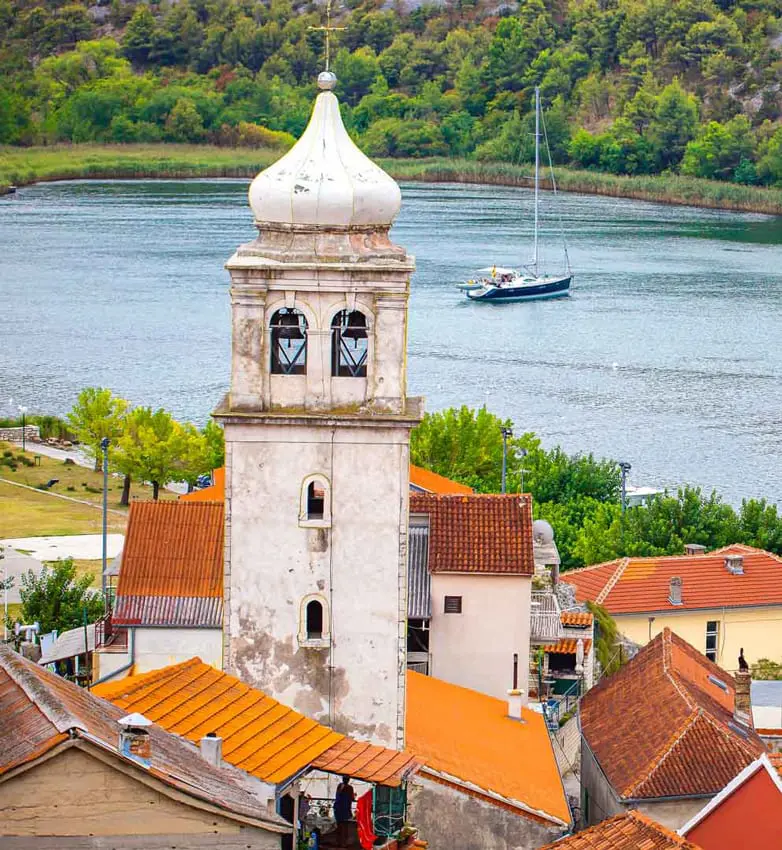
Kornati National Park, the quieter sister to the south — 89 uninhabited islets and the sailing of crystal lagoons.
 Croatia
 Zadar
Where the Kornati archipelago meets historic Roman ports and the world's first sea organ.
 Croatia
 Northern Adriatic
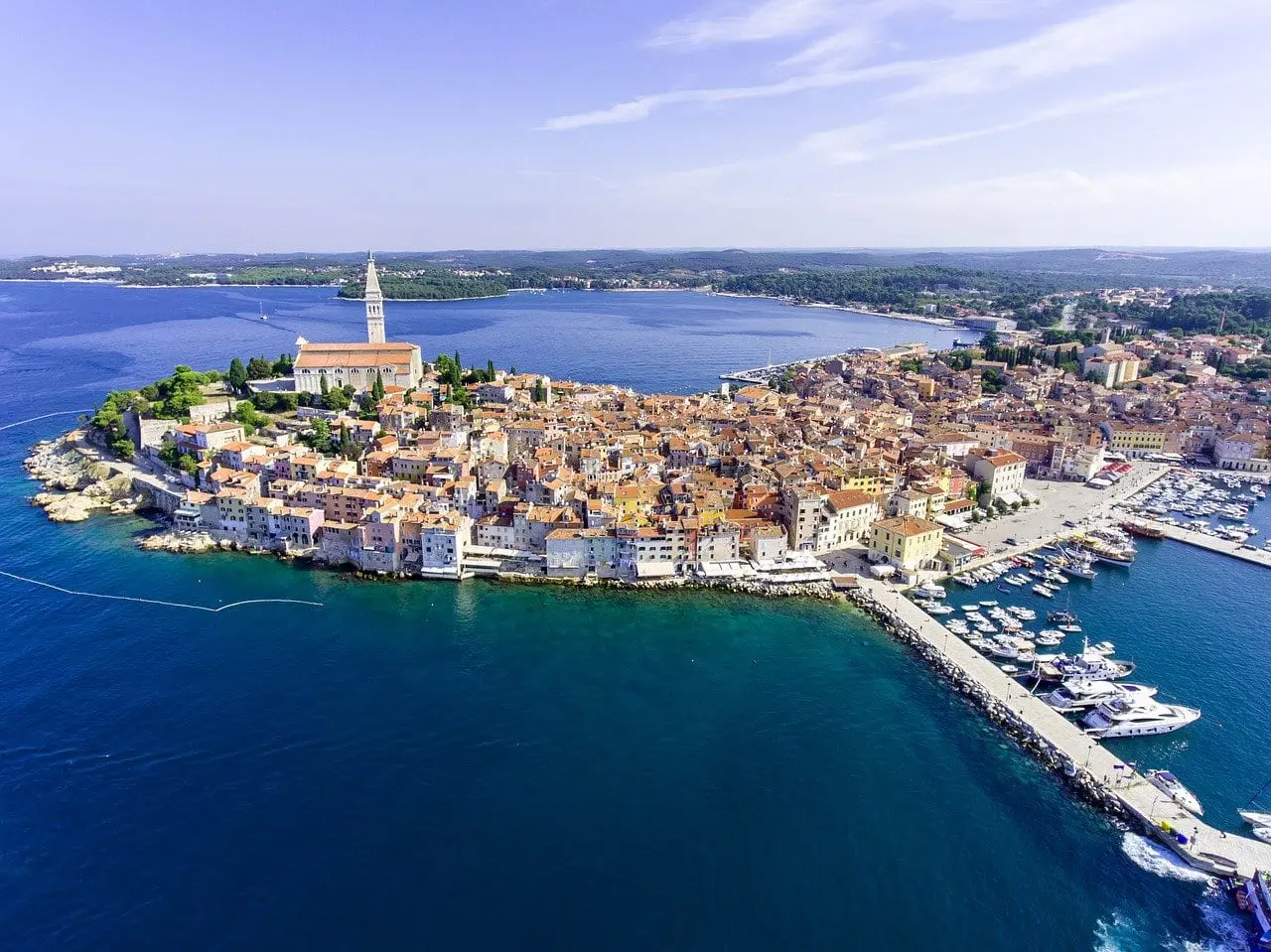
Istrian peninsula, Pula's Roman arena, truffle hunting in Motovun, and Venetian fishing villages.
Ready to book your Split Sailing Itinerary?
Independent, award-winning yacht charter advice since 2011. We'll match the perfect boat and crew to your Croatia sailing dates — every quote tailored, every detail handled.
Founding member IFCYA · Independent advisory since 2011