
Did Zuckerberg's Yacht Have To Help?
A skiff ran out of fuel off Alaska, the Coast Guard called it a request for help rather than a distress case, and Launchpad, Mark Zuckerberg's superyacht, was the closer vessel that did not respond.
Launchpad by daylight at her San Diego berth, showing the pod-style skylounge under curved glass on her upper deck. Photo by Euthman, CC BY 4.0

Founding Member: International Federation of Yacht Charter Agents

Verified & Protected by Pantaenius Yacht Insurance.
A 21 foot skiff ran out of fuel in Southeast Alaska on a Monday night in early August 2026, drifting between Petersburg and Juneau. Its crew reached the US Coast Guard on the radio at around 9.30pm. The two towns sit along Alaska's Inside Passage, a route both cruise ships and private yachts use through the summer. Two much larger vessels were nearby. One answered the call. The other, Mark Zuckerberg's 118 metre superyacht Launchpad, was closer and did not.
A passenger aboard the ship that answered says its captain told them as much over the public address system, and that the announcement was met with booing. The story has travelled fast this week, and it raises a real question, not a rhetorical one: under maritime law, does a yacht actually have to help?
Quick Navigation
- 1 The Duty To Help What international law actually requires
- 2 Not A Distress Call The distinction the Coast Guard drew, and what happened next
- 3 The Yacht Feadship's Project 1010, delivered in 2024
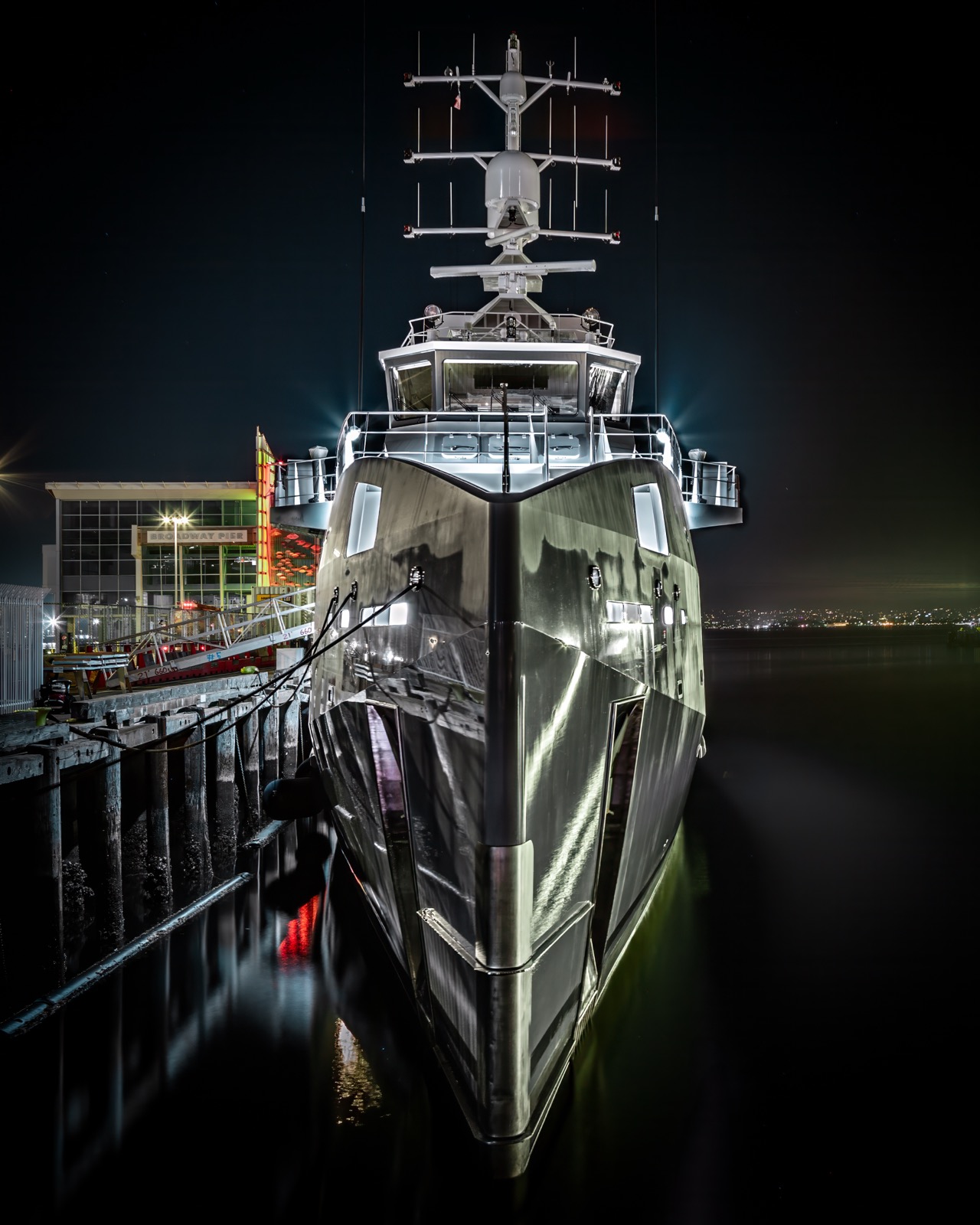
Wingman, the smaller support yacht that travels with Launchpad, dockside in San Diego. Photo by RON RAFFETY, CC BY-SA 2.0
1.The Duty To Help
What international law actually requires
International law does impose a duty to help. The United Nations Convention on the Law of the Sea requires every state to ensure the masters of its ships render assistance to anyone found at sea in danger of being lost, and proceed with all possible speed to rescue people in distress once informed of their need, so far as that can reasonably be expected of them. The release is narrow: a master only has to act "in so far as he can do so without serious danger to the ship, the crew or the passengers." The same convention also puts a duty on coastal states themselves, to maintain an effective search and rescue service, so that a lone master's decision is never the only safety net.
The Safety of Life at Sea Convention (SOLAS) sets the same duty out for masters directly: "on receiving information from any source that persons are in distress at sea," a master who is able to help "is bound to proceed with all speed to their assistance." A master who does not can be excused only if he is unable, or if, "in the special circumstances of the case," proceeding would be unreasonable or unnecessary, and even then the reason has to go in the ship's log. Neither duty is unconditional. Both are real, and both are keyed to one specific word: distress.
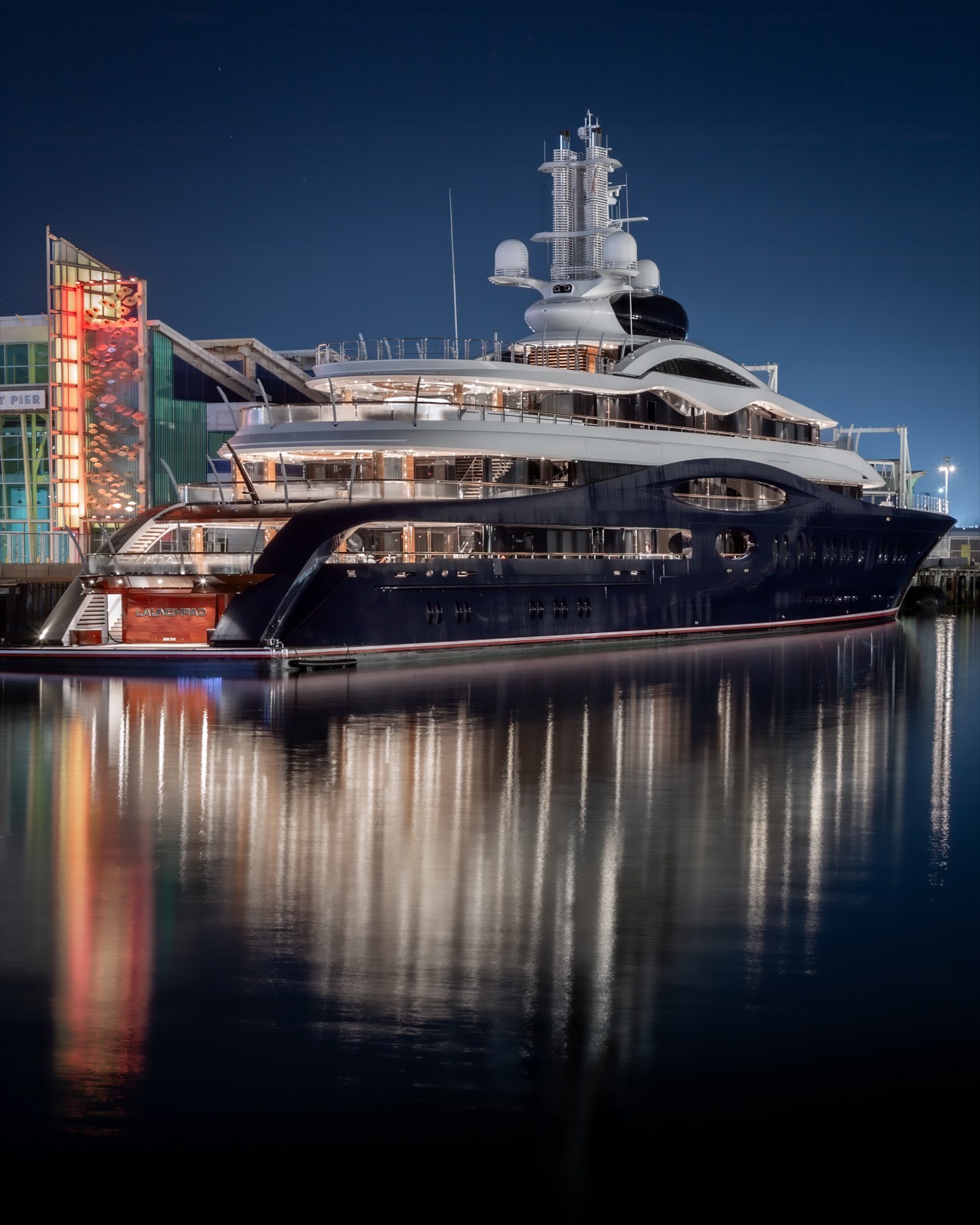
Launchpad at night, dockside in San Diego (not the Alaska location or date of the incident described here). Photo by RON RAFFETY, CC BY-SA 2.0
2.Not A Distress Call
The distinction the Coast Guard drew, and what happened next
That word is exactly where this case turns. At around 9.56pm, the Coast Guard finished assessing the skiff's situation. It did not declare a distress case. Instead, in the words of Coast Guard Public Affairs Specialist Shannon Shepard, "the Coast Guard determined they were not in distress and issued a marine assistance request broadcast on their behalf." Maritime radio protocol already draws a version of this line: a Mayday call means grave and imminent danger, a Pan-pan call means a serious situation that falls short of it. The legal duty above attaches most clearly to the first category, not automatically to every call for help.
None of that settles what actually happened. Vessel tracking data shows Launchpad was positioned closer to the skiff than the cruise ship that responded, UnCruise Adventures' Wilderness Legacy, which towed the skiff to Farragut Bay and refuelled it. Launchpad did not respond.
Brian Baker, a spokesperson for Zuckerberg and his wife Priscilla Chan, said on the record that Launchpad's crew had been monitoring a different radio channel from the one the broadcast went out on, and that "the assist was already under way" by the time they reviewed it. Neither Zuckerberg nor Chan were aboard. Baker's account has not been independently corroborated, and it stands alongside the passenger's account rather than displacing it.
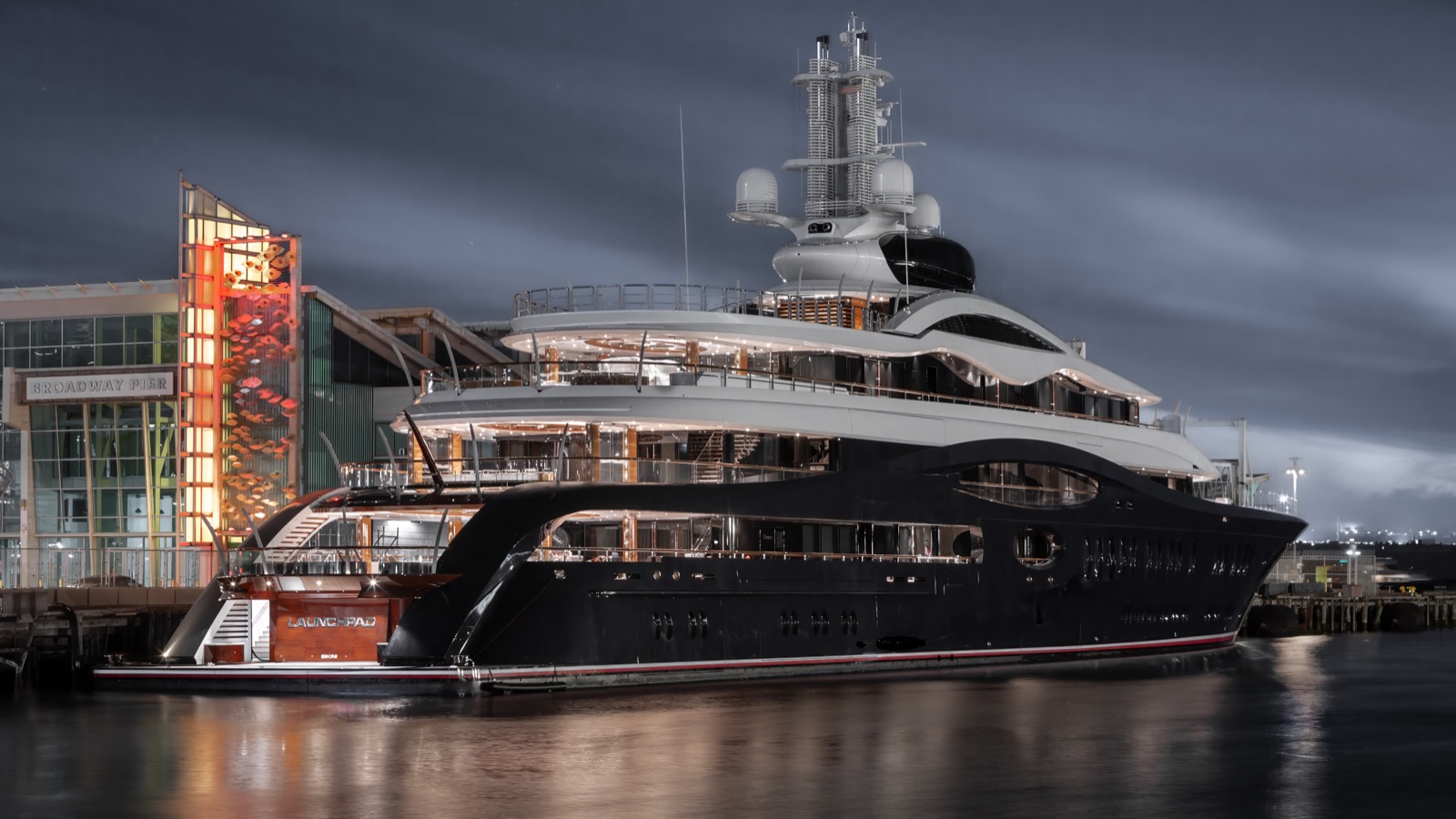
Launchpad's stern at her San Diego berth, her name visible on the tender garage door. Photo by RON RAFFETY, CC BY-SA 2.0
3.The Yacht
Feadship's Project 1010, delivered in 2024
Launchpad was built by the Dutch shipyard Feadship and delivered in 2024, after a build known only by the yard's internal number, Project 1010. She measures roughly 118 metres, with an exterior by Espen Øino International and interiors by Zuretti.
Every outlet that has covered her since delivery, from German business press to specialist yacht trade titles, names Mark Zuckerberg as the owner. Nobody involved, not Zuckerberg, not Meta, not Feadship, has confirmed that directly on the record; Feadship's own public yacht listing does not name her at all, which is standard practice for a vessel this size rather than anything evasive. A second, smaller vessel called Wingman, built by Damen Yachting and pictured further up this page, has been reported travelling alongside her as a support boat, carrying tenders and extra crew so the larger yacht does not have to. A yacht like this has never actually been offered for charter.
Launchpad is not, and has never been, a charter yacht. What SailChecker actually does is help you book one that is: real listings, properly checked, with an honest all in cost before you commit. Tell us where and when you want to sail, and we will find it.
Christopher Lait
Chris founded Drake Academy, a sailing company that provides leadership training to businesses. Now the CEO of SailChecker.com you will find him handling many of your enquiries as he attempts to drive SailChecker.com forward as the company of choice for yacht charter and sailing by focusing on quality advice and great customer service.

.jpg)

