

Sailing Terminology Glossary
520 nautical terms, A to Z, with pronunciation audio recorded by a sailor.
Sailing Terminology and Nautical Abbreviations
520 terms. Every sailing term worth knowing, A to Z, with real pronunciation audio. Port and starboard to euphroe and baggywrinkle: the full vocabulary of sailing, navigation, rigging, weather, safety, and deck commands.
Understanding Boat Lingo
A secret club, at first. Joining a boat for the first time can feel like walking into a group where everyone already knows the rules. Crew seem to know exactly where to stand, what to pull, and what the skipper means by "ease the jib". Nobody expects a new hand to know it all on day one, but a handful of the right terms changes the whole experience.
Speed over ceremony. Sailing is usually relaxed, right up until it is not. Winds shift, moorings get tight, and a quiet bay can get busy fast. Short, specific words exist for a reason: they keep everyone safe and confident when there is no time for a long explanation, and no room for voices to get lost in the noise.
Part of the crew, not a passenger. Learning this vocabulary is not jargon for its own sake. Knowing the difference between a sheet and a halyard, or why a line is never just "a rope", means being able to respond and help out rather than just watch. There is a real satisfaction in knowing a clew from a cleat, or tying a bowline that actually holds: this vocabulary connects sailors from the Solent to the Seychelles.
From Beginners to Yachtmaster
All sailors. First-timers getting to grips with an unfamiliar language. Experienced crew who think they have it covered: most have gaps they have never noticed. Day Skipper and Yachtmaster candidates who need the full vocabulary.
Precision at Sea
Precision. On a moving boat in wind and noise, there is no room for long instructions. Port and starboard never change regardless of which way you face. A halyard always raises; a sheet always trims. The language works because it has to.
Basic Sailing Terms: Ten Essentials
The core concepts. A practical shortlist for anyone wondering why sailors do not just say "pull the rope": ten ideas that make the rest of this glossary click into place faster.
- Ropes are called lines. Except the one genuine "rope" still found on most boats: the bell rope.
- Every line has a job and a name. Jib sheet, halyard, vang, painter: each name tells you what the line does, not just what it is.
- Port and starboard never change. Port is always the left side of the boat when facing forward, which avoids confusion when giving directions.
- Boats do not have walls or floors. They have bulkheads and a sole. Small distinctions like these matter when someone needs help quickly.
- The head is the toilet. Worth knowing before it comes up.
- A sheet is not a sail. It is the line that controls a sail's trim.
- Tacking and gybing are different manoeuvres. One turns the bow through the wind, the other turns the stern: know which is which, and when to duck.
- The helm is where you steer from. It can mean the wheel or tiller, or the person standing at either.
- Commands are short on purpose. "Ease", "trim", and "sheet in" sound abrupt because being brief saves time and reduces mistakes.
- Nobody expects total fluency. Trying to learn the language builds trust with a skipper faster than staying silent ever will.
Hear it Right
Pronunciation. Several sailing words sound nothing like their spelling. Forecastle is fok-sl. Gunwale is gunnel. Boatswain is bosun. Terms with a speaker icon can be heard as well as read.
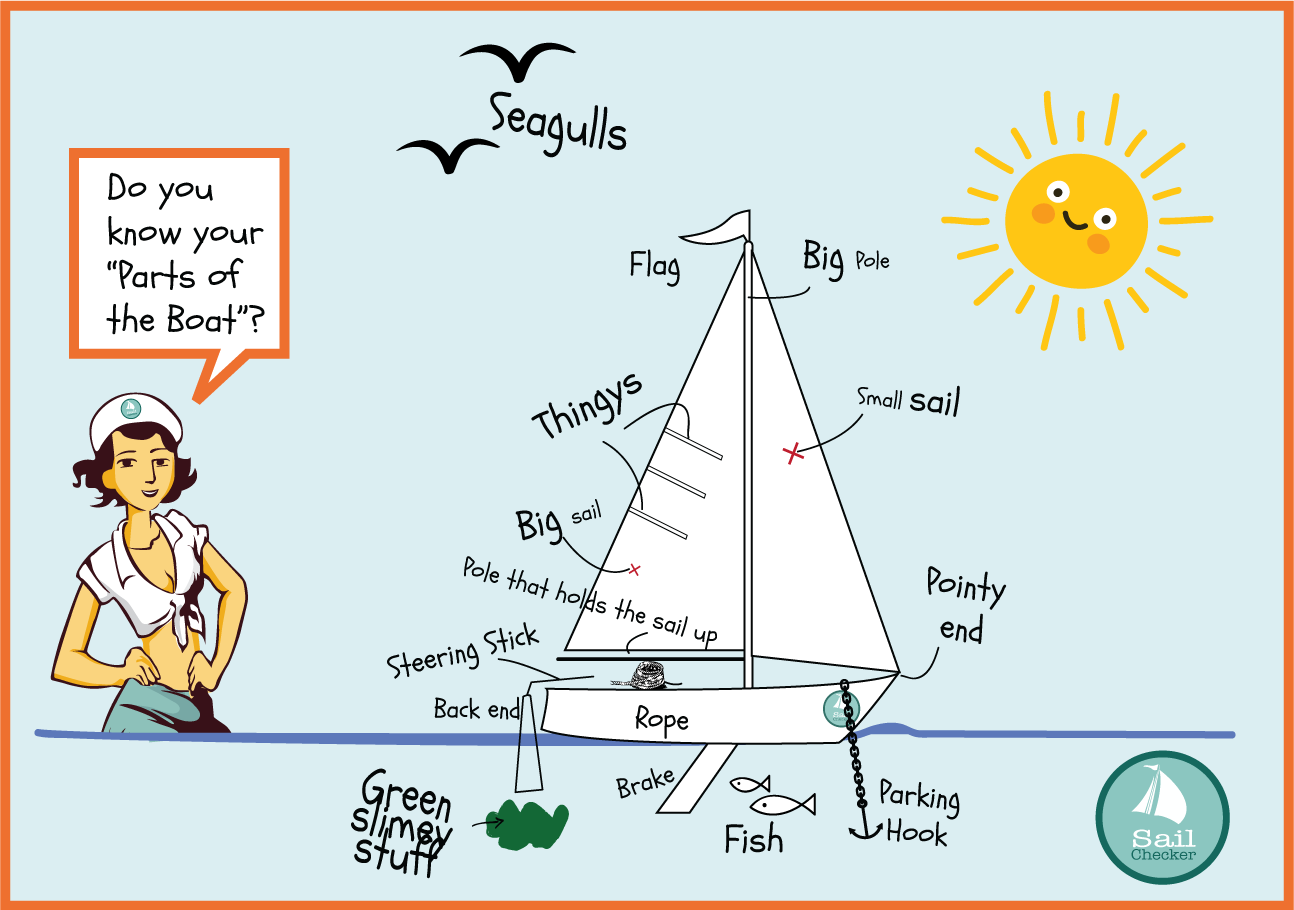
Day one (click to enlarge)
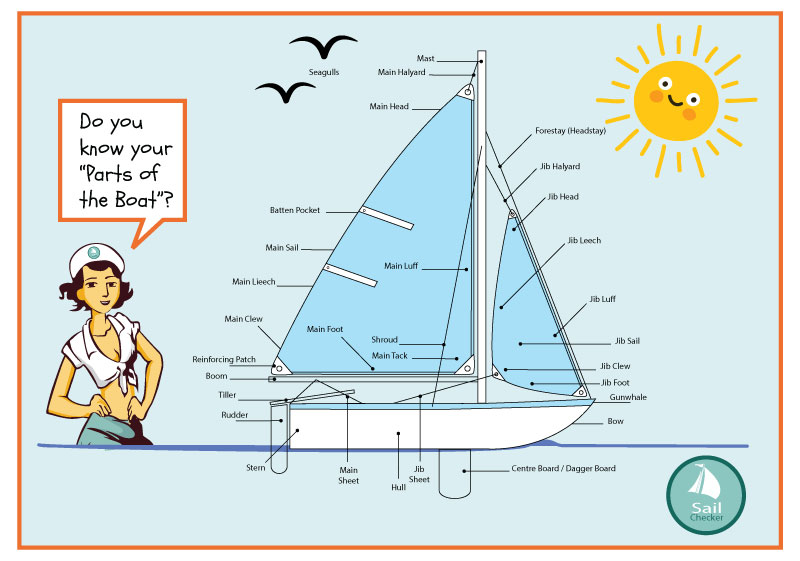
After one good read (click to enlarge)
Every sailor starts with the joke labels. The terminology is what moves you from nervous passenger to useful crew, and it takes less time to learn than you think.
Nautical Terms A to Z
520 termsFilter by Category
Tick to show, untick to hide. All categories selected by default.
Browse by Letter
- /eɪ hʌl/ ⛵ Sailing & Manoeuvres
- A storm tactic where all sails are taken down and the helm is secured leeward, allowing the boat to drift freely with minimal control.
- /əˈbæk/ ⛵ Sailing & Manoeuvres
- When a sail is pushed backward against the mast by the wind, typically when the wind is coming from the wrong direction. This can be accidental or used intentionally to slow the boat.
- /əˈbɑːft/ ⛵ Sailing & Manoeuvres
- Toward the rear (stern) of the boat. A relative term meaning behind when facing forward.
- /əˈbiːm/ ⛵ Sailing & Manoeuvres
- At a right angle to the boat's centreline, directly off to the side, either port or starboard.
- /ɑːft/ ⛵ Sailing & Manoeuvres
- Located near, toward, or in the direction of the stern (rear) of the vessel.
- /eɪ aɪ ɛs/ 🧭 Navigation
- A safety system that uses transponders to broadcast and receive data about vessel position, course, speed, and identity, helping avoid collisions.
- 📣 Deck Commands
- The call to bring every crew member on deck immediately. Not a request. Not an invitation. All Hands means now. Everyone moves, no questions asked. The skipper explains later.
- /ˈɔːltərneɪtɪŋ laɪt/ 🧭 Navigation
- A navigation light that changes colour with each flash. Al WR = alternating white and red. The colour you see depends on which sector you are in, red means you are in the danger sector, white means safe water.
- /əˈmɪdʃɪps/ ⛵ Sailing & Manoeuvres
- The central area of a vessel, both side-to-side (athwartships) and end-to-end (fore-and-aft).
- /ˈæŋkər/ ⚓ Equipment
-
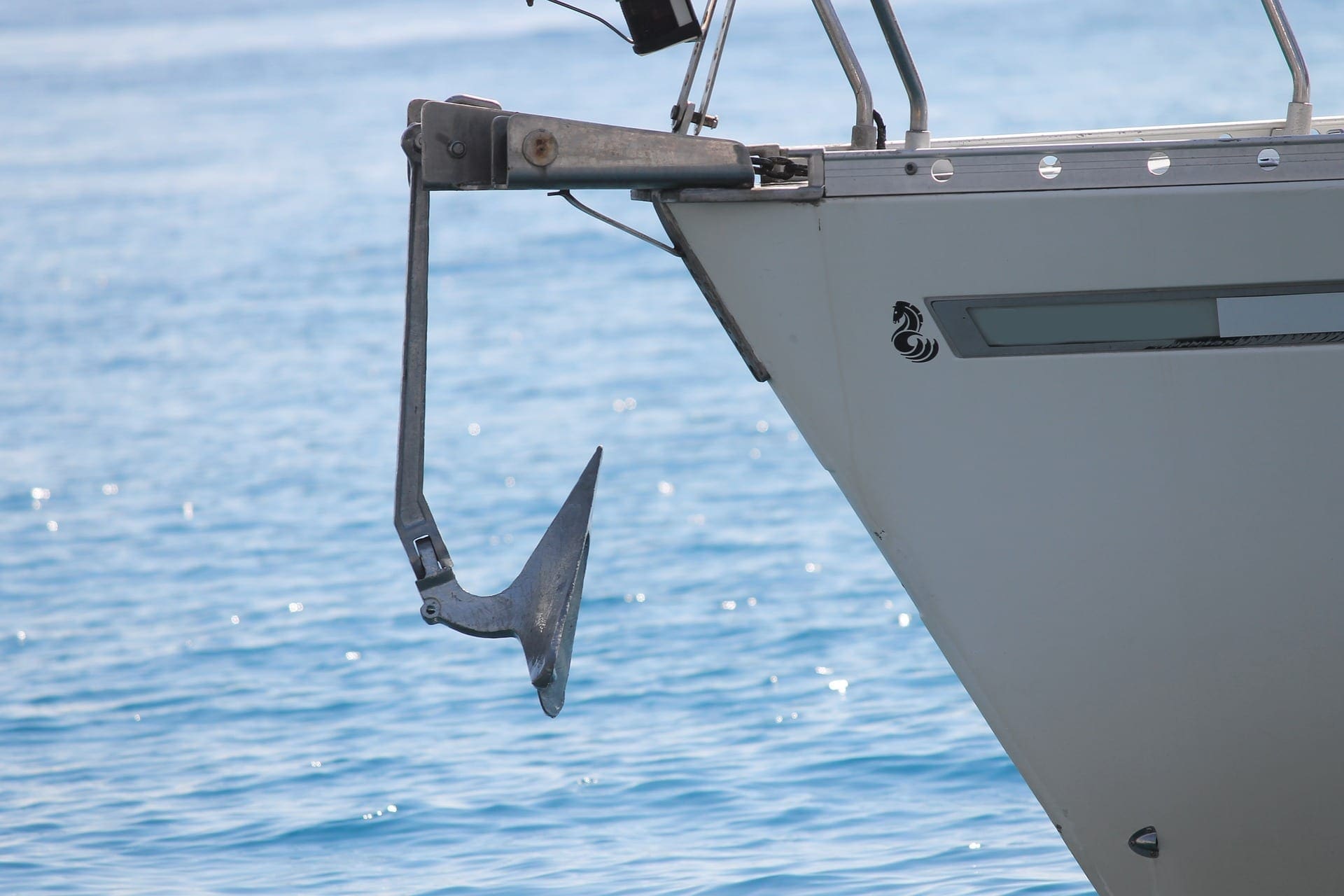 A heavy object lowered to the seabed on a chain or rope to keep the boat from drifting due to wind or current. The anchor bites into the seabed; the chain provides catenary weight and protects the anchor from being pulled out. See also: Scope, Windlass, CQR Anchor, Delta Anchor, Danforth Anchor.
 - /ˈæŋkər laɪt/ ⚓ Equipment
- An all-round white light shown at anchor from sunset to sunrise. Required by COLREGS Rule 30. Vessels under 50m show one all-round white light. A boat at anchor without an anchor light is an invisible hazard.
- /əˈnemɒmɪtər/ ⚓ Equipment
- An instrument that measures wind speed, typically mounted at the masthead on rotating cups. The digital readout at the chart table shows apparent wind speed, useful for knowing when to reef.
- /ˌæntɪˈsaɪkləʊn/ 🌊 Weather & Sea
- A high pressure weather system. Wind circulates clockwise around it in the Northern Hemisphere. Brings settled weather, light winds, and sometimes fog. The Mediterranean summer high is a semi-permanent anticyclone.
- ⚓ Equipment
- A fund, typically 20 to 30% of the charter fee, paid upfront on crewed charters to cover variable at-cost expenses, fuel, food, drink, port fees, and local taxes. Settled against receipts at the end of the charter, with any surplus refunded. Full guide: advance provisioning allowance →
- /əˈpærənt wɪnd/ ⛵ Sailing & Manoeuvres
- The wind felt on a moving boat, combining the true wind and the wind generated by the boat's motion.
- /ɑːkˈtjʊərəs/ 🧭 Navigation
- The brightest star in the northern hemisphere sky, orange-red in colour. Found by following the arc of the Great Bear's handle outward: arc to Arcturus. A prominent navigational star, high in the spring and summer sky.
- /ˈɑːrpə/ 🧭 Navigation
- A radar system that automatically tracks nearby vessels, calculating their movement to assist with safe navigation.
- /əˈstɜːn/ ⛵ Sailing & Manoeuvres
- Behind the boat, or the direction toward the stern. To go astern means to move in reverse.
- /ˌeɪsɪˈmetrɪk ˈspɪnəkər/ 🪢 Rigging & Sails
- A large lightweight downwind sail cut asymmetrically, one luff edge attaches to a bowsprit or pole, the other flies free. Easier to gybe than a symmetric spinnaker. Used at apparent wind angles of roughly 60-150 degrees.
- /əˈθwɔːtʃɪps/ ⛵ Sailing & Manoeuvres
- At right angles to the boat's centreline, across the width of the vessel.
- /əˈvɑːst/ 📣 Deck Commands
- Stop immediately: whatever you are doing with that rope, stop doing it. From the Dutch houd vast, hold fast. Still used, still understood, and considerably more satisfying than stop.
- /əˈwɒʃ/ 🧭 Navigation
- At or barely above the waterline, a rock, reef, or object continuously washed over by the sea. A rock that is awash is one of the nastiest hazards afloat: intermittently visible and makes no sound until it makes a very loud one.
- 🧭 Navigation
- A charting classification meaning the feature is at or just above the surface at Mean High Water Springs, precisely when it is hardest to see. Treat these as submerged hazards at all states of the tide.
- /aɪ aɪ/ 🍺 Slang & Lore
- The correct response when given an order aboard a boat. Means I have heard, I understand, and I will carry it out. Saying yes, OK or sure is not acceptable. Said twice because once is not enough.
- /bæk/ 🌊 Weather & Sea
- When the wind shifts counterclockwise (in the Northern Hemisphere). Opposite of veering.
- /bæk ə seɪl/ ⛵ Sailing & Manoeuvres
- To sheet a sail so that the wind fills it on the side normally leeward, pushing the boat backward or helping to slow or stop it.
- /ˈbæksteɪ/ 🪢 Rigging & Sails
- A support cable running from the top of the mast to the stern, preventing the mast from moving forward.
- /ˈbæɡɪˌrɪŋkəl/ 🪢 Rigging & Sails
- Soft, frayed rope padding wrapped around rigging to prevent sails from chafing.
- /ˈbæləst/ ⚓ Equipment
- Weight placed low in the boat or keel (often lead or iron) to improve stability.
- /ˈbæləst kiːl/ ⚓ Equipment
- A heavy keel attached to the hull, increasing stability and reducing the risk of capsizing.
- 🍺 Slang & Lore
- Never bring bananas aboard a sailing vessel. The superstition is ancient, global, and taken with complete seriousness by experienced sailors. You will be asked to leave them on the dock. This is non-negotiable.
- /bɑː/ 🧭 Navigation
- A submerged ridge of sand or shingle across a harbour or river entrance. In swell it becomes dangerous, breaking seas crashing across the entrance. Check the pilot book, check the swell forecast, and if in doubt wait or enter at high water.
- /bəˈrɒmɪtər/ 🌊 Weather & Sea
- An instrument measuring atmospheric pressure. Your most important weather instrument on a passage. Falling pressure means deteriorating weather; rising pressure means improvement. A rapid fall (more than 3 millibars in 3 hours) indicates a fast-moving depression.
- /ˈbætən/ 🪢 Rigging & Sails
- A flexible strip inserted into a sail's leech pocket to support its shape and roach.
- /ˈbætən daʊn ðə ˈhætʃɪz/ 🍺 Slang & Lore
- To prepare for trouble or difficulty. Literally: to secure the hatch covers with wooden battens before a storm, preventing water from entering below decks. The phrase has passed into general use to mean get ready, something bad is coming.
- /biːm/ ⚓ Equipment
- (1) The widest part of a boat. (2) A structural support running across the hull. (3) On the beam means directly to the side of the vessel.
- /biːm riːtʃ/ ⛵ Sailing & Manoeuvres
- A point of sail where the wind comes directly from the side at 90 degrees to the centreline. Usually the fastest and most comfortable point of sail for a monohull.
- /beər əˈweɪ/ ⛵ Sailing & Manoeuvres
- To steer the boat away from the wind, usually to a broader point of sail. Full guide: bearing away →
- /ˈbeərɪŋ/ 🧭 Navigation
- The direction from the observer to an object, measured in degrees from true or magnetic north.
- /ˈbəʊfərt skeɪl/ 🌊 Weather & Sea
- The scale from 0 to 12 used to describe wind strength and its effect on the sea. Developed by Admiral Sir Francis Beaufort in 1805. Force 0 is flat calm; Force 12 is hurricane force. Every sailor must know it.
- /bɪˈleɪ ðæt/ 📣 Deck Commands
- Cancel the last order. Stop what you were just asked to do. Used when the skipper changes their mind mid-manoeuvre or the situation changes fast. Immediate effect.
- /bel rəʊp/ ⚓ Equipment
- The rope or lanyard attached to the clapper of a ship's bell. Traditionally finished with a Turk's Head or Matthew Walker knot, both to give grip and to show the ropework skill of whoever made it.
- /bɪˈtwiːn ðə ˈdɛvəl ænd ðə diːp/ 🍺 Slang & Lore
- Caught between two equally bad options. The devil was a seam near the waterline on a wooden ship, one of the most difficult and dangerous places to work. To be caught between that seam and the sea was to be in an impossible position.
- /baɪt/ 🪢 Rigging & Sails
- A loop or curve in a rope without the ends crossing, distinct from a knot or hitch. Many knots are tied in the bight using a doubled section rather than a free end. Also used geographically for a curve in a coastline or a sheltered bay.
- /ˈbɪtər ɛnd/ 🍺 Slang & Lore
- The very last of something. The bitter end of an anchor chain is the inboard end, secured to a bitt on deck. Playing out the chain to the bitter end means you have run out of rode. If the chain is not secured to the bitt, the bitter end disappears over the bow and so does your anchor. Hence: doing something to the bitter end means doing it until there is nothing left. Full guide: the bitter end →
- /blɒk/ 🪢 Rigging & Sails
- A pulley enclosed in a casing, used to redirect or multiply force on a rope.
- /blʌf/ ⛵ Sailing & Manoeuvres
- (1) A steep, broad cliff or headland presenting an almost vertical face to the sea, prominent and useful as a chart landmark. (2) A bluff bow is full, rounded, and wide, buoyant and comfortable in a head sea, slower than a fine entry but drier for cruising.
- /ˈbəʊt hʊk/ ⚓ Equipment
- A long pole with a hook at one end, used to pick up mooring buoys, fend off from pontoons, or retrieve items dropped overboard. The first item on the boat to be dropped overboard in any given situation.
- /ˈbəʊlt rəʊp/ 🪢 Rigging & Sails
- A rope sewn into the luff (and sometimes foot) of a sail to reinforce the edge and allow it to feed into a groove in the mast or boom. A broken bolt rope means the sail will not hoist properly.
- /buːm væŋ/ 🪢 Rigging & Sails
- The American term for the kicking strap, a tackle or strut preventing the boom from lifting and controlling sail twist. See also: Kicking Strap.
- /buːt ˈtɒpɪŋ/ ⚓ Equipment
- A painted stripe separating the antifouling bottom paint from the topside finish.
- /ˈbəʊsən/ 🍺 Slang & Lore
- The crew member responsible for the deck, rigging, and all equipment above the waterline. Pronounced BOH-sun.
- /ˈbəʊsənz kɔːl/ 🍺 Slang & Lore
- A small metal pipe-whistle used to signal orders to crew. Different tunes have specific meanings. A working tool on traditional vessels, a decorative curiosity on modern ones.
- /ˈbəʊsənz tʃeər/ ⚓ Equipment
- A canvas seat or webbing harness used to hoist a crew member up the mast for repairs or inspection. Attached to the main halyard. The person being hoisted always checks the halyard themselves.
- /baʊ/ ⚓ Equipment
-
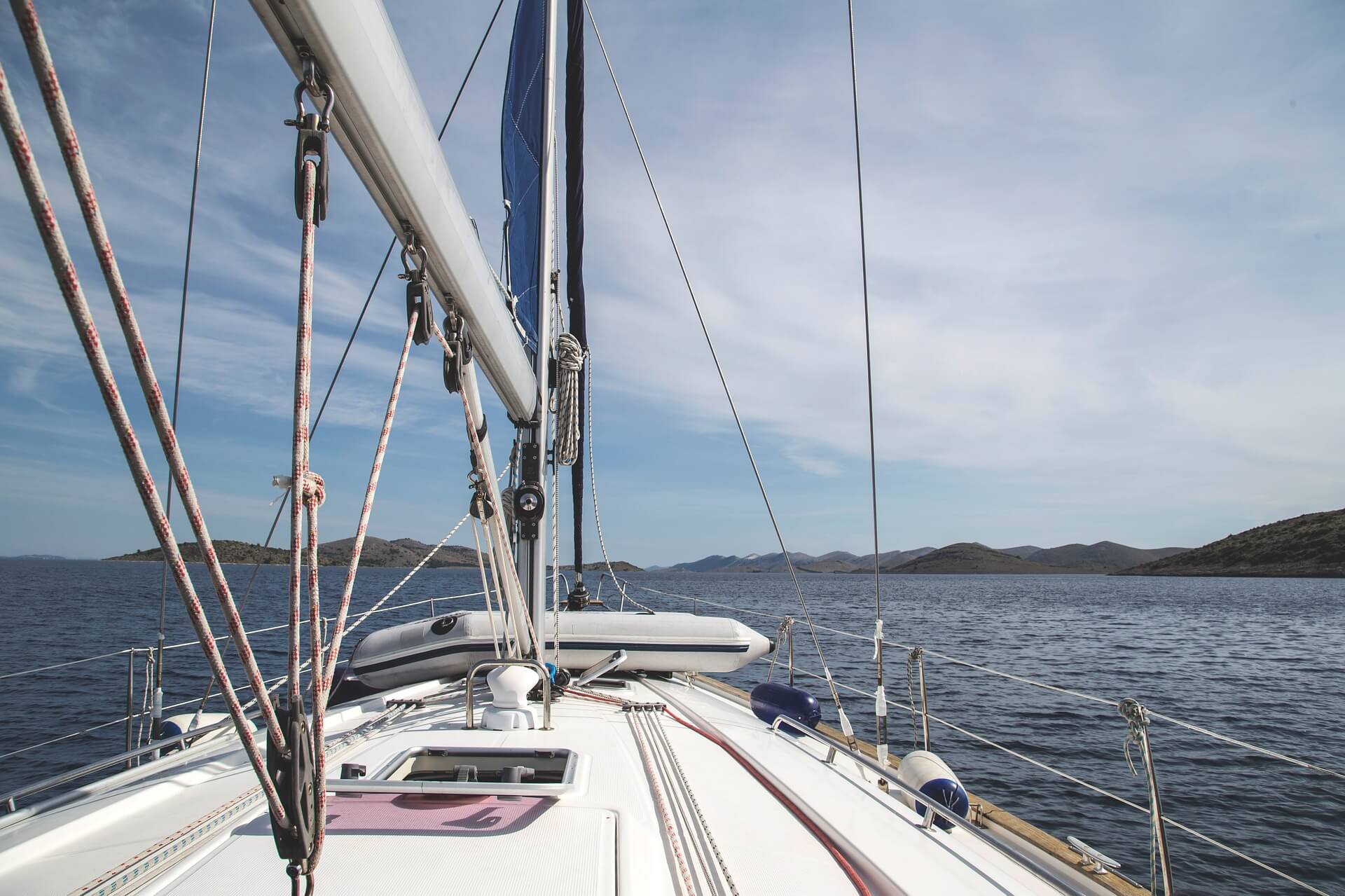 The front of the boat. Where the anchor lives, where headsail changes happen, and where less confident crew are never sent alone.
 - /baʊ weɪv/ ⛵ Sailing & Manoeuvres
- The wave created by a hull moving through water, originating at the bow and spreading outward in a V-shape. Hull speed is reached when the bow wave wavelength equals the waterline length.
- /ˈbəʊlɪn/ 🪢 Rigging & Sails
- The most important knot in sailing. Forms a fixed loop at the end of a line that will not slip or jam under load. Used to attach a sheet to a sail clew, to make a line fast to a cleat, or as a safety loop. Practice until you can tie it with your eyes closed; one-handed in the dark is the eventual goal. Remember it as: the rabbit comes out of the hole, goes around the tree, and back down the hole. Watch: how to tie a bowline Full guide: how to tie a bowline →
- /brəʊtʃ/ ⛵ Sailing & Manoeuvres
- A sudden, uncontrolled turn of the boat broadside to the wind and waves, risking capsize.
- /brɔːd riːtʃ/ ⛵ Sailing & Manoeuvres
- A point of sail with the wind coming from behind the beam but not directly aft.
- /bruːs ˈæŋkər/ ⚓ Equipment
- A single-piece anchor with three curved flukes and no moving parts. Good in mud and sand, poor on rock. Was widely fitted as standard equipment; now largely superseded by modern plough-style and roll-bar designs.
- /ˈbʌlkhed/ ⚓ Equipment
- A vertical wall inside a boat that divides compartments and adds structural strength.
- /baɪ ænd lɑːdʒ/ 🍺 Slang & Lore
- On the whole, generally speaking. From two points of sail: by (close to the wind) and large (off the wind, running free). A ship that sailed well by and large sailed well in all conditions, a genuine recommendation from the age of sail. The meaning has widened to simply mean broadly, in general.
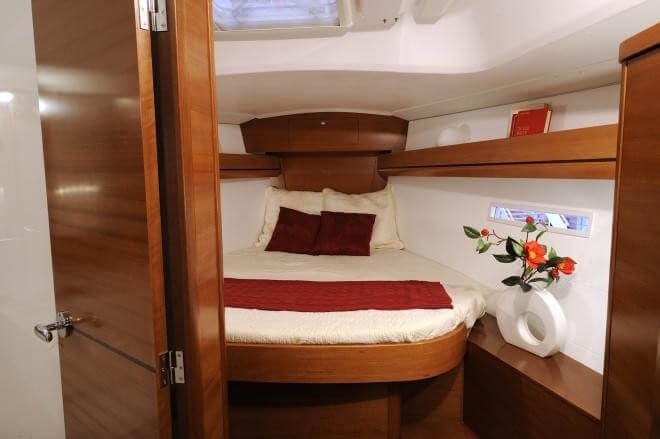 (1) A mooring place in a harbour. (2) A sleeping space aboard a vessel.
 - /ˈkæbɪn/ ⚓ Equipment
- A room below decks used for sleeping, eating, or working. Full guide: what is a cabin →
- /ˈkeɪbəl/ 🧭 Navigation
- A nautical unit of distance equal to one-tenth of a nautical mile. Roughly 185 metres or 200 yards.
- /kæp ʃraʊdz/ 🪢 Rigging & Sails
- The upper shrouds running from the chainplates on deck to the very top of the mast. Provide the main lateral support. When cap shrouds fail, the mast follows.
- /ˈkæpstən/ ⚓ Equipment
- A vertically-oriented powered or manual drum used to haul in heavy lines or chain, particularly the anchor rode. Distinguished from a windlass (horizontal drum) by its vertical axis. On larger yachts the electric capstan replaces manual work; on traditional vessels it was turned by crew walking bars around the drum.
- /ˈkɑːdɪnəl bɔɪ/ 🧭 Navigation
- One of four marks (North, South, East, West) placed near a hazard to indicate on which side safe water lies. North: black over yellow, two cones pointing up, VQ or Q white light. South: yellow over black, cones pointing down, VQ(6)+LFl. East: black/yellow/black, cones back to back, VQ(3). West: yellow/black/yellow, cones pointing inward, VQ(9). The light rhythm helps: 3 o'clock east, 6 o'clock south, 9 o'clock west.
- /ˌkæsɪəˈpiːə/ 🧭 Navigation
- Five bright stars forming a clear W or M shape, on the opposite side of Polaris from the Great Bear. When the Great Bear is low in autumn, Cassiopeia is high. The middle star of the W points roughly toward Polaris.
- /kæt rɪɡ/ 🪢 Rigging & Sails
- A rig with a single mast stepped right at the bow, carrying one large mainsail and no headsail. Extremely simple. Used on traditional workboats and modern dinghies such as the Laser/ILCA.
- /ˈsentəbɔːd/ ⚓ Equipment
- A retractable keel or fin that can be lowered through a slot in the hull to reduce sideways drift (leeway). Especially useful when sailing upwind.
- /ˈsentəlaɪn/ ⚓ Equipment
- The imaginary line running lengthwise down the middle of the boat from bow to stern.
- /tʃɑːt ˈdeɪtəm/ 🧭 Navigation
- The reference level from which depths on a chart are measured, approximately Lowest Astronomical Tide (LAT). Depths shown on a chart are at their shallowest: if you can sail there at chart datum, you can sail there any time. Heights of features above water are measured from a different datum (MHWS).
- /klɔː rɪŋ/ 🪢 Rigging & Sails
- A circular metal fitting that slips over the boom, typically used for attaching the mainsheet after the sail has been reefed.
- /kliːt/ ⚓ Equipment
-
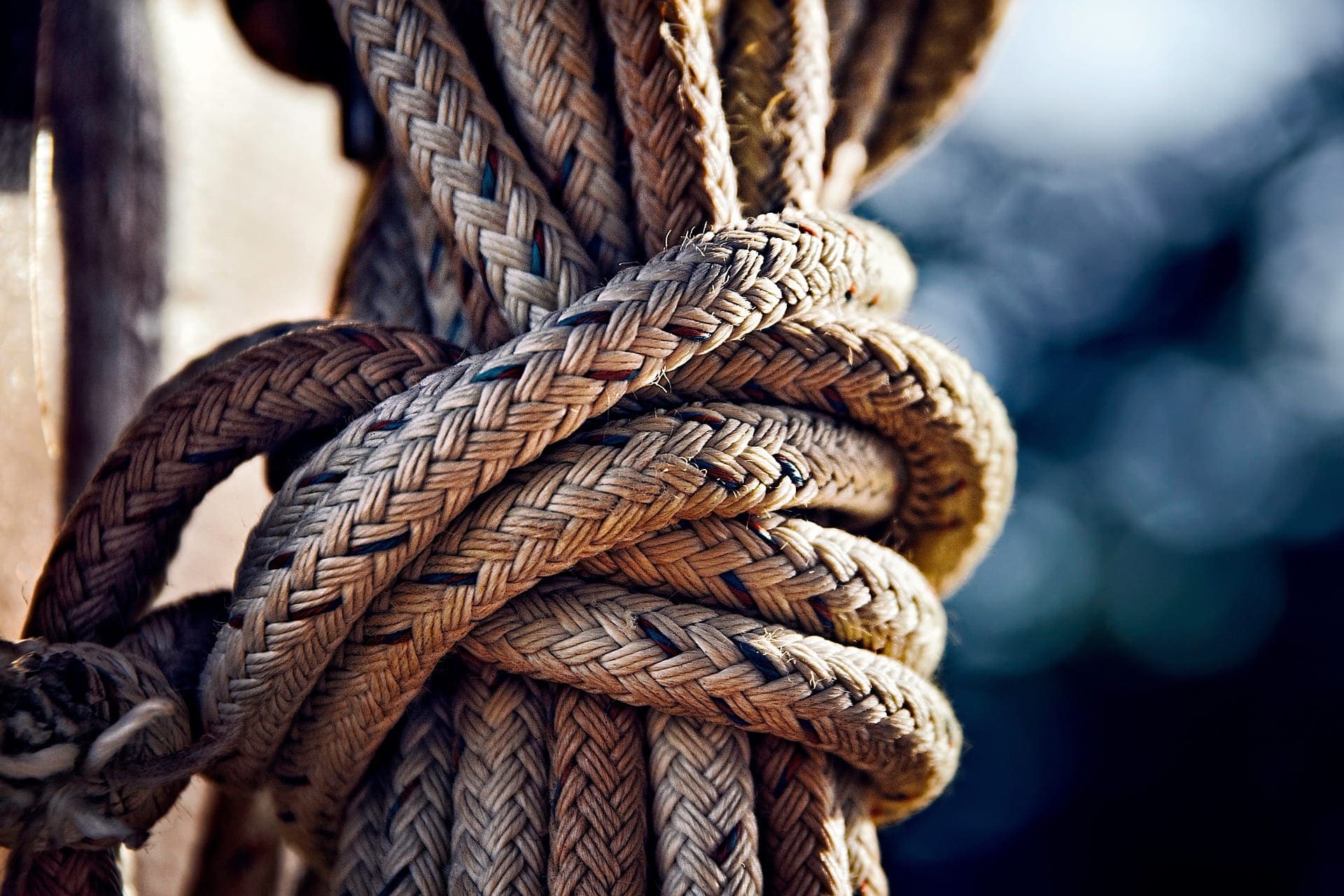 A horn-shaped fitting on deck or on the mast used to secure a line. The line is wrapped in a figure-eight pattern around the two horns. Two turns and a locking hitch is usually enough. Too many turns makes it impossible to release under load.
 - /kjuː/ 🪢 Rigging & Sails
- The lower aft corner of a sail where the foot meets the leech. Usually the point where control lines like the sheet attach.
- /kləʊs riːtʃ/ ⛵ Sailing & Manoeuvres
- A point of sail between close-hauled and beam reach, where the wind is forward of the beam.
- /kləʊs hɔːld/ ⛵ Sailing & Manoeuvres
- The point of sail where a boat is sailing as directly into the wind as possible (typically around 30-45 degrees off the wind).
- /kləʊs ˈwɪndɪd/ ⛵ Sailing & Manoeuvres
- Describes a boat capable of sailing very close to the wind with minimal leeway.
- /kləʊv hɪtʃ/ 🪢 Rigging & Sails
- A quick, adjustable knot used to attach a line to a post, rail, or bollard. Easy to tie, easy to release, but can slip if the load direction changes. Best used as a temporary fastening. Watch: how to tie a clove hitch
- /ˈkɒkpɪt/ ⚓ Equipment
-
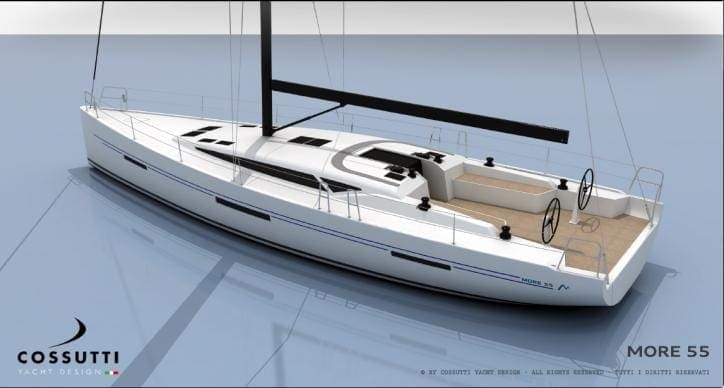 The recessed working area at the helm of a yacht where the wheel or tiller and primary sail controls are operated. On most modern cruising yachts it is at the stern, giving direct access to the mainsheet, primary winches, and navigation instruments. The safest place on deck in bad weather, and where the entire crew congregates in good weather, blocking the person trying to steer.
 - /kəʊd ˈzɪərəʊ/ 🪢 Rigging & Sails
- A large, flat reaching sail set on a furling line between the masthead and the bow, used in light winds at apparent wind angles typically between 50 and 80 degrees.
- /kəʊld frʌnt/ 🌊 Weather & Sea
- The leading edge of a cold air mass pushing under warmer air. Arrives fast, often with a sharp wind shift, sudden temperature drop, squally conditions, then clearing skies. Reef before it arrives, not during.
- /kʌm ʌp/ ⛵ Sailing & Manoeuvres
- To steer toward the wind, pointing the bow closer to the wind direction. The opposite of bearing away.
- /kʌm wɪˈðɪn heɪl/ 🍺 Slang & Lore
- To approach close enough that voice communication is possible without a radio. Still used for immediate short-range communication.
- /ˈkʌmpəs/ ⚓ Equipment
-
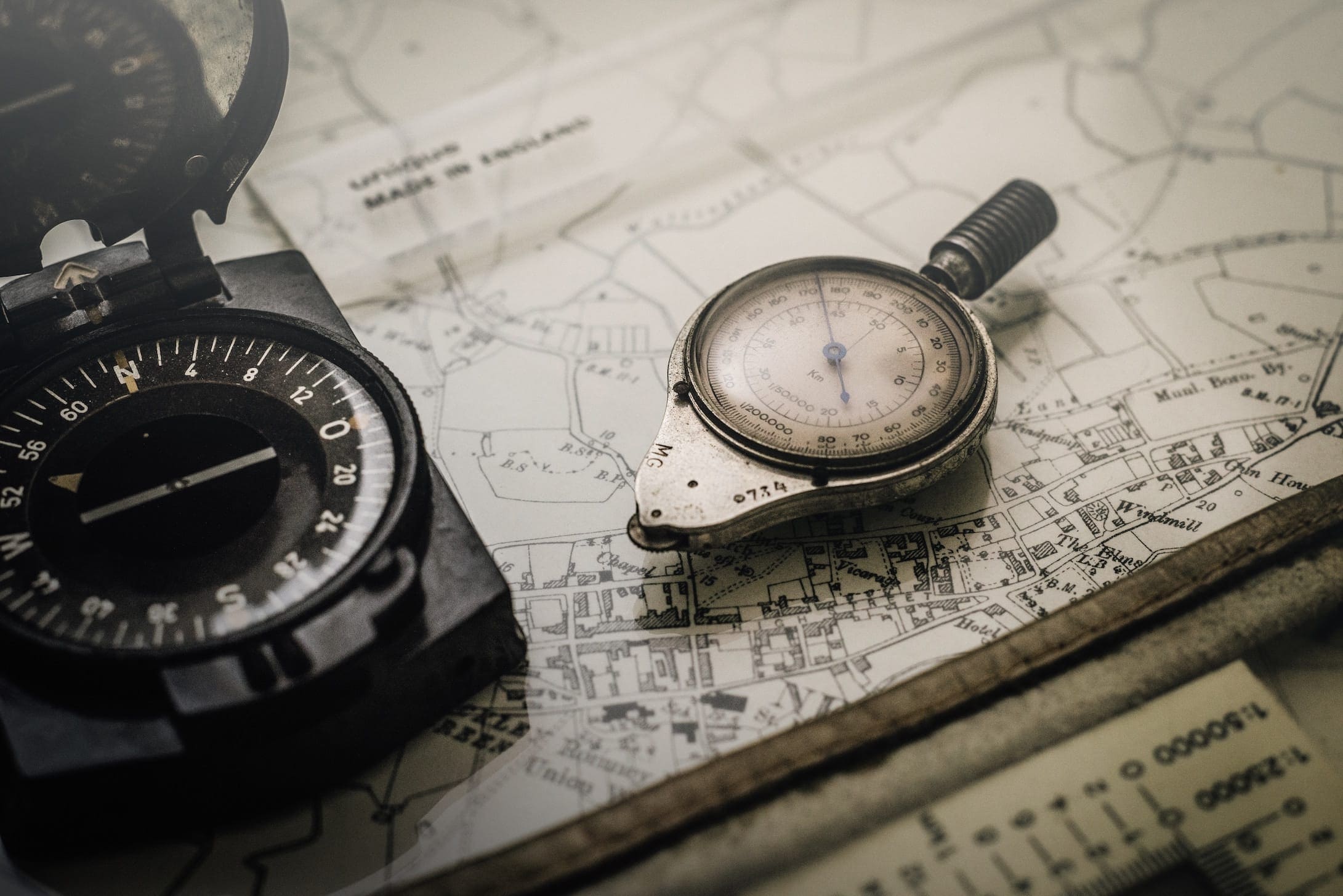 The primary magnetic direction instrument on a yacht, indicating the heading relative to magnetic north. Mounted at the helm so it is always in the helmsman's line of sight. Must be corrected for deviation (local magnetic interference from the boat's own metalwork and electronics) and variation (the difference between magnetic and true north) before plotting on a chart. When electronics fail, this is what gets you home.
 - /kənˈfjuːzd siː/ 🌊 Weather & Sea
- A sea state where waves arrive from multiple directions simultaneously, after a wind shift, near a headland, or where swell crosses a local sea. Difficult to steer, difficult to cook in, difficult to sleep in.
- /kənˈtrəʊld dʒaɪb/ ⛵ Sailing & Manoeuvres
- A deliberate, planned gybe executed under full crew control, with the mainsheet eased in as the stern passes through the wind. The opposite of a crash gybe.
- /ˈkɔːkskruːɪŋ/ ⛵ Sailing & Manoeuvres
- When a boat rolls and pitches simultaneously in a confused sea, spiralling in an uncomfortable corkscrew motion. Makes seasickness almost inevitable for susceptible crew.
- /kɔːs/ 🧭 Navigation
- The direction in which a vessel is steered or intended to travel, usually measured in degrees relative to true or magnetic north.
- /siː kjuː ɑː ˈæŋkər/ ⚓ Equipment
- A hinged plough-shaped anchor that swings to follow changes in rode direction. One of the most widely used anchor designs of the 20th century. Good in mud and sand. The hinge point can fail on older examples. Modern plough-style anchors (Delta, Rocna) have improved on the original design.
- /kræʃ tæk/ ⛵ Sailing & Manoeuvres
- An emergency tack executed rapidly without the usual preparation, typically to avoid a collision or obstacle. No time to pre-tension sheets. Crew should brace and hold on.
- /kruː/ 🍺 Slang & Lore
- Everyone aboard who is not a passenger. Being good crew does not require experience, it requires listening, asking before touching, and not sitting down when there is work to be done.
- /ˈkrɪŋɡəl/ 🪢 Rigging & Sails
- (1) A reinforced eyelet in a sail used for reefing or attaching lines. (2) A loop of rope at the end of reef points.
- /ˈkrəʊz nest/ ⚓ Equipment
- A lookout platform built around the mast at height for a clear view over waves. On modern yachts, going aloft in calm conditions to spot reefs or find a shallow anchorage entrance gives the same advantage.
- /ˈkʌnɪŋəm/ 🪢 Rigging & Sails
- A control line tensioning the luff of a mainsail or headsail through a cringle just above the tack. Named after Briggs Cunningham. When the wind builds and the sail goes baggy, the Cunningham is what you reach for first.
- /kɑːst ɒf/ 📣 Deck Commands
- Release the mooring line, untie the boat from the dock, pontoon, or buoy. The most definitive order in sailing: once cast off, you have committed to leaving. Never cast off until the engine is running and the skipper is ready.
- /kʌt ænd rʌn/ 🍺 Slang & Lore
- To leave in a hurry, abandoning anything that takes time. Originally: to cut the anchor cable and run before the wind rather than wait to weigh anchor. The loss of the anchor was less important than escaping the situation. Now means to leave hastily without proper preparation.
- /diː ˈʃækəl/ ⚓ Equipment
- The standard shackle with a D-shaped loop and screw pin, the workhorse of deck hardware. Used to connect blocks to pad eyes, attach halyards to sails, and link any two fittings. Always mouse the pin with seizing wire on a critical connection. The pin unscrews unless secured.
- /ˈdæɡənəm deɪv/ 🍺 Slang & Lore
- Sailing slang for a crew member who is slightly unhinged or not quite all there. A play on the London saying two stops past Barking, Dagenham being two stops past Barking on the District line. A term of affection, mostly.
- /ˈdænbɔɪ/ 🚨 Safety & Rules
- The tall, weighted marker buoy thrown overboard in a man overboard situation. A float at the base, a long fibreglass pole, a flag at the top, and usually a light and whistle. Always deployed with the horseshoe lifebuoy.
- /dɪp ðə ˈɛnsɪn/ 📣 Deck Commands
- To salute another vessel by lowering the ensign one-third of the way and waiting for the other vessel to dip theirs in return before re-hoisting. Naval vessels and state yachts are not dipped to, they outrank you. Commercial vessels may not respond. The correct form is to dip first and hoist only after the reply.
- /ˈdænfɔːθ ˈæŋkər/ ⚓ Equipment
- A lightweight anchor with two large flat flukes that fold flat for stowage. Excellent holding in sand and mud, poor on rock or weed. The standard anchor for dinghies and as a second bower on cruising yachts.
- /dɛd rʌn/ ⛵ Sailing & Manoeuvres
- A point of sail where the wind blows directly from astern, aligned with the boat's centre-line. It is often less stable than a broad reach.
- /dek ʃuːz/ 🍺 Slang & Lore
- Rubber-soled footwear with a special siping pattern that grips wet teak or fibreglass without marking. High heels, flip flops, and bare feet are hazardous on a moving boat.
- /ˈdeltə ˈæŋkər/ ⚓ Equipment
- A fixed (non-swivelling) plough-style anchor with a single-piece construction. One of the most popular modern anchor designs, good penetration, reliable reset if dragged, holds well in mud and sand. Standard fit on many production yachts.
- /dɪˈpɑːtɪŋ ɒn ə ˈfraɪdeɪ/ 🍺 Slang & Lore
- Never begin a passage on a Friday. One of the oldest and most widely observed superstitions in sailing. The story of HMS Friday is probably apocryphal. The superstition is observed with complete sincerity by people who are otherwise perfectly rational.
- /dɪˈpreʃən/ 🌊 Weather & Sea
- A low pressure weather system. Wind circulates anticlockwise around it in the Northern Hemisphere. Depressions bring deteriorating weather, cloud, rain, wind. Track the isobars on the forecast chart.
- /ˌdiːvɪˈeɪʃən/ 🧭 Navigation
- The error introduced to a magnetic compass reading by local magnetic fields aboard the vessel. It differs from magnetic variation. A deviation card records the error on each heading.
- /ˈdɪŋɡi/ ⚓ Equipment
- A small open boat used for sailing, rowing, or as a tender to reach shore from a larger yacht. On a charter yacht, the dinghy is the means of getting ashore when anchored. Treat it with respect, it is your only way off the boat.
- /dɪsˈpleɪsmənt/ ⚓ Equipment
- (1) The weight of the water displaced by a floating vessel, which is equal to the boat's weight. (2) A displacement hull relies on buoyancy to support the vessel and does not plane across the water.
- /ˈdʌbəl ʃiːt bɛnd/ 🪢 Rigging & Sails
- A stronger version of the sheet bend, used to join two ropes of significantly different sizes. A second turn of the smaller rope is wrapped around the larger loop before threading through.
- /ˈdaʊnhɔːl/ 🪢 Rigging & Sails
- A line used to pull a sail or spar downward. On a mainsail, tensions the luff by pulling the tack down toward the boom, flattening the sail and moving the draft forward. Closely related to the Cunningham.
- /drɑːft/ ⚓ Equipment
- The vertical distance between the waterline and the lowest part of the boat's hull (typically the bottom of the keel). Determines the minimum water depth needed to float the boat.
- /drɪft/ 🌊 Weather & Sea
- (1) The movement of a boat caused by wind or current when not under power or sail. (2) The distance a vessel is moved off course by current over a specific time period.
- /drəʊɡ/ 🚨 Safety & Rules
- A cone, bag, or parachute-shaped device streamed from the stern on a long line to slow a vessel in heavy weather and keep the stern presented to breaking seas. Different from a sea anchor (deployed from the bow). A drogue allows some forward progress while controlling speed.
- /drɒp/ 📣 Deck Commands
- Lower a sail or flag, or release something controlled. Drop the kite means collapse and retrieve the spinnaker. Drop the hook means anchor. Drop the main means lower the mainsail. Said with urgency when conditions change fast.
- /drɒp kiːl/ ⚓ Equipment
- A retractable keel that can be lowered to improve stability and windward performance or raised to reduce draught in shallow water.
- /dʌmp/ 📣 Deck Commands
- To ease a sheet fast in an emergency, releasing it suddenly to spill wind and reduce heel or load. Dump the sheet. Used when the boat is overpowered and there is no time for a controlled ease. The mainsheet, in particular, can be dumped instantly from a cam cleat.
- /iːz/ ⛵ Sailing & Manoeuvres
- To gradually release or let out a line, such as a sheet, halyard, or guy, reducing tension. The opposite of trim.
- /ɛb taɪd/ 🌊 Weather & Sea
- The period when the tide level is falling and water flows seaward from shore or estuary, the opposite of flood tide.
- /ɛdʒ/ ⛵ Sailing & Manoeuvres
- To gently trim or adjust a sail by small amounts, edging in the sheet means tightening slowly to find the optimal sail shape.
- /ɪˈdʌktər/ ⚓ Equipment
- A pump that uses pressurised water to create suction for removing bilge water, often used where electrical bilge pumps are impractical.
- /ɪˈmɜːdʒənsi ˈtɪlər/ 🚨 Safety & Rules
- A backup steering device used if the main steering system fails. Usually a metal or composite arm connected directly to the rudder stock.
- /ɪˈmɜːdʒənsi rɛk ˈmɑːkɪŋ bɔɪ/ 🧭 Navigation
- Blue and yellow vertical stripes, alternating blue and yellow light, Mo(U). Marks a recently discovered wreck before it appears on updated charts. The hazard is there whether or not the chart shows it yet.
- /ɛnd pleɪt ɪˈfɛkt/ 🪢 Rigging & Sails
- A phenomenon where airflow around the foot of a sail is improved by proximity to the deck, reducing induced drag and increasing lift.
- /ɛnd fər ɛnd/ 🪢 Rigging & Sails
- To reverse a line or spar so the other end takes the working position, extending life or wear of rigging or gear.
- /ˈɛndʒɪn maʊnt/ ⚓ Equipment
- A flexible support system that secures an inboard engine to the hull while dampening vibration and noise.
- /ˈɛnsɪn/ 🍺 Slang & Lore
- A national flag flown at the stern to indicate nationality, required when entering foreign ports or when requested by a naval vessel. UK yachts fly the Red Ensign (merchant / civilian). The Blue Ensign is reserved for government vessels and members of certain clubs holding a warrant. The White Ensign is Royal Navy only. Flying the wrong ensign is a serious breach of maritime etiquette.
- /iː piː/ 🧭 Navigation
- A navigational estimate of a boat's position based on course and speed over a certain time, without factoring in drift or current.
- /ˈiːpɜːb/ 🚨 Safety & Rules
- Your last resort when everything else has failed. A self-contained transmitter that sends a distress signal via satellite to the COSPAS-SARSAT system with your GPS position and vessel identity. Accurate to within 100 metres. Must be registered. Replace the battery on schedule.
- /ˈestjʊəri/ 🧭 Navigation
- The tidal mouth of a river where fresh water meets salt water. Shifting sandbanks, strong tidal streams, channels that move between surveys. Approach on a rising tide, leave on the ebb.
- /iː tiː eɪ/ 🧭 Navigation
- The predicted time a vessel will reach a specific location or waypoint based on speed, distance, and course.
- /iː tiː diː/ 🧭 Navigation
- The expected time a vessel will leave a berth, port, or location.
- /ˈjuːfrəʊ/ 🪢 Rigging & Sails
- A hardwood slat with holes used in traditional rigging to spread the legs of a rope grommet, as seen in lugsail or Polynesian rigs.
- /aɪ/ 🪢 Rigging & Sails
- A loop formed in the end of a rope either by knot, splice, or thimble. Used for attaching lines securely to fittings.
- /ˈfeəliːd/ ⚓ Equipment
- A fitting (typically a ring, eye, or block) used to guide a rope in a specific direction and prevent chafing or fouling.
- /fɛnd ɒf/ 📣 Deck Commands
- Push the boat away from the dock, another vessel, or any obstruction using hands, feet, or a boathook. Used during berthing. Never use your hand between two hulls, the boat is always stronger.
- /ˈfæðəm/ 🧭 Navigation
- A unit of length equal to 6 feet (1.83 metres), traditionally used to measure water depth.
- /ˈfendər/ ⚓ Equipment
- A cushioned object, usually made of rubber or inflatable plastic, placed between a boat and a dock or another vessel to absorb impact and prevent damage.
- /fetʃ/ 🌊 Weather & Sea
- (1) The unobstructed distance over water that wind travels to generate waves. Longer fetches produce larger waves. (2) To reach a point by sailing, we will fetch the mark on this tack.
- /ˈfɪɡjər eɪt nɒt/ 🪢 Rigging & Sails
- A stopper knot used at the end of a rope to prevent it from slipping through a block, fairlead, or cleat.
- /faɪn riːtʃ/ ⛵ Sailing & Manoeuvres
- A point of sail close to the wind but just eased off close-hauled, the wind is forward of the beam but not as tight as possible.
- /ˈfɪʃəmənz ˈæŋkər/ ⚓ Equipment
- The traditional kedge anchor: a shank with two fixed arms and a removable stock set at right angles to the flukes. Excellent on rock, kelp, and hard sand where modern plough designs struggle. Heavy, awkward to stow, irreplaceable in some conditions.
- /fɪkst laɪt/ 🧭 Navigation
- A continuous, steady navigation light with no flashing or interruption. Used on harbour entrances and leading lights.
- /fleər/ 🚨 Safety & Rules
- (1) A pyrotechnic device used to signal distress or attract attention. (2) The outward curve of a hull's topsides, especially forward, which helps deflect spray.
- /ˈflæʃɪŋ laɪt/ 🧭 Navigation
- A navigational light that shows a single flash at regular intervals, with the dark period longer than the flash. The most common buoy light. Fl(2) = two flashes then a pause.
- /flæts/ 🧭 Navigation
- Shallow, often sandy or muddy areas typically found near coasts or estuaries. They can dry at low tide and require careful navigation.
- /fliːt/ 🧭 Navigation
- A group of vessels operating together. In racing, a fleet refers to all boats competing in a class or division.
- /flʌd taɪd/ 🌊 Weather & Sea
- The rising tide as water flows from the sea toward the shore. The opposite of an ebb tide.
- /ˈflɒtsəm/ 🍺 Slang & Lore
- Wreckage or cargo floating on the sea after a vessel has sunk, not deliberately thrown overboard. Legally distinct from jetsam.
- /ˈfəʊksəl/ 🍺 Slang & Lore
- The forward section of a vessel below deck, originally the raised forward castle of a warship, now the forward storage area. Pronounced FOHK-sul. Often the wettest, noisiest, and least popular berth on the boat.
- /ˈfɒləʊɪŋ siː/ 🌊 Weather & Sea
- Waves coming from astern, travelling in the same direction as the boat. At its best: surfing, fast, exhilarating. At its worst: threatening to broach or cause an involuntary gybe.
- /fʊt/ 🪢 Rigging & Sails
- The bottom edge of a sail. In mainsails, it is the edge attached to the boom; in headsails, it is the edge between tack and clew.
- /ˈfʊtluːs/ 🪢 Rigging & Sails
- A sail is footloose when its foot is not attached to the boom, allowing for greater sail shape flexibility, particularly in light winds.
- /fɔːs zɪərəʊ kɑːm/ 🌊 Weather & Sea
- Under 1 knot. Sea like a mirror. Sails hang limp. Motor.
- /fɔːs wʌn laɪt eər/ 🌊 Weather & Sea
- 1-3 knots. Barely enough to fill a sail. Good for getting the sails up and remembering how to trim.
- /fɔːs tɛn stɔːm/ 🌊 Weather & Sea
- 48-55 knots. Survival conditions for most yachts. Heave-to, deploy a drogue, send a Mayday if you cannot manage.
- /fɔːs ɪˈlɛvən ˈvaɪələnt stɔːm/ 🌊 Weather & Sea
- 56-63 knots. Exceptional waves. Small ships lost to view.
- /fɔːs twɛlv ˈhʌrɪkən fɔːs/ 🌊 Weather & Sea
- 64 knots and above. The sea is completely white. Visibility nil.
- /fɔːs tuː laɪt briːz/ 🌊 Weather & Sea
- 4-6 knots. Small ripples. The genoa starts to pull. A pleasant introduction to sailing.
- /fɔːs θriː ˈdʒɛntəl briːz/ 🌊 Weather & Sea
- 7-10 knots. Proper sailing. The boat heels slightly, makes good speed, and crew begin to relax. The Mediterranean summer ideal.
- /fɔːs fɔː ˈmɒdərɪt briːz/ 🌊 Weather & Sea
- 11-16 knots. White horses appearing. The boat is sailing well, this is where most keelboats come alive. Full sail, good speed.
- /fɔːs faɪv frɛʃ briːz/ 🌊 Weather & Sea
- 17-21 knots. Moderate waves. Charter skippers think about a reef. Good sailors are already reefed.
- /fɔːs sɪks strɒŋ briːz/ 🌊 Weather & Sea
- 22-27 knots. Large waves, spray, significant heel. Reef the mainsail. Change down the headsail. Anyone not experienced is now quiet and white-knuckled.
- /fɔːs sɛvən nɪər ɡeɪl/ 🌊 Weather & Sea
- 28-33 knots. The sea builds. Foam streaks appear. Double reef. This is serious sailing.
- /fɔːs eɪt ɡeɪl/ 🌊 Weather & Sea
- 34-40 knots. Spindrift. Storm jib and deeply reefed main. Harbour if possible. Most charter boats should not be at sea.
- /fɔːs naɪn sɪˈvɪər ɡeɪl/ 🌊 Weather & Sea
- 41-47 knots. Very high waves. Dense foam. Heave-to and wait. Experienced offshore crew only.
- /ˈfɔːpiːk/ ⚓ Equipment
- The forward-most compartment of a boat, often used for storage or anchor gear.
- /ˈfɔːsəl/ 🪢 Rigging & Sails
- A general term for a sail set forward of the mast, commonly refers to a jib or genoa.
- /ˈfɔːsteɪ/ 🪢 Rigging & Sails
- A wire or rope running from the top of the mast to the bow, supporting the mast and typically carrying the headsail or jib.
- /ˈfrækʃənəl rɪɡ/ 🪢 Rigging & Sails
- A rig where the forestay attaches below the masthead, typically at 7/8 or 9/10 of the mast height. Common on racing yachts.
- /friː præˈtiːk/ 🚨 Safety & Rules
- Official permission from port health authorities to make contact with shore after arriving from a foreign port. Fly the Q flag (Quebec, plain yellow) on arrival. Until free pratique is granted, no one boards and no one leaves.
- /ˈfriːbɔːd/ ⚓ Equipment
- The vertical distance from the waterline to the top of the hull at its lowest point.
- /fʊl ænd baɪ/ ⛵ Sailing & Manoeuvres
- Sailing close-hauled but keeping the sails full, a compromise between pointing as close to the wind as possible and maintaining speed.
- /ˈfɜːlɪŋ/ 🪢 Rigging & Sails
- The process of rolling or folding a sail for storage or to reduce sail area. Modern furling systems allow sails to be reefed or stowed while underway.
- /ˈfɜːlɪŋ laɪn/ 🪢 Rigging & Sails
- The line used to roll up a furling headsail or furling mainsail. On a roller-furler, pulling the furling line rolls the sail around the forestay; releasing it (via the sheet) lets the sail unroll. If the furling line jams or breaks at sea, getting the sail in becomes a foredeck exercise in controlled chaos.
- /ɡæf/ 🪢 Rigging & Sails
- A spar used to extend the top edge (head) of a four-sided fore-and-aft sail. Common in traditional rigs like gaff cutters.
- /ɡæf rɪɡd/ 🪢 Rigging & Sails
- A type of sailing rig where the mainsail is four-sided and supported by a gaff at its top edge, offering a larger sail area than a triangular Bermuda rig.
- /ˈɡæli stræp/ ⚓ Equipment
- A strap or bar across the front of the galley that the cook leans against when the boat is heeled, keeping them in position and both hands free for cooking. An essential piece of safety equipment that is not glamorous enough to appear in charter brochures.
- /ˈɡæskɪt/ 🪢 Rigging & Sails
- A line or strap used to secure a furled sail to the boom or mast to prevent it from unfurling when not in use.
- /ˈdʒenəʊə/ 🪢 Rigging & Sails
-
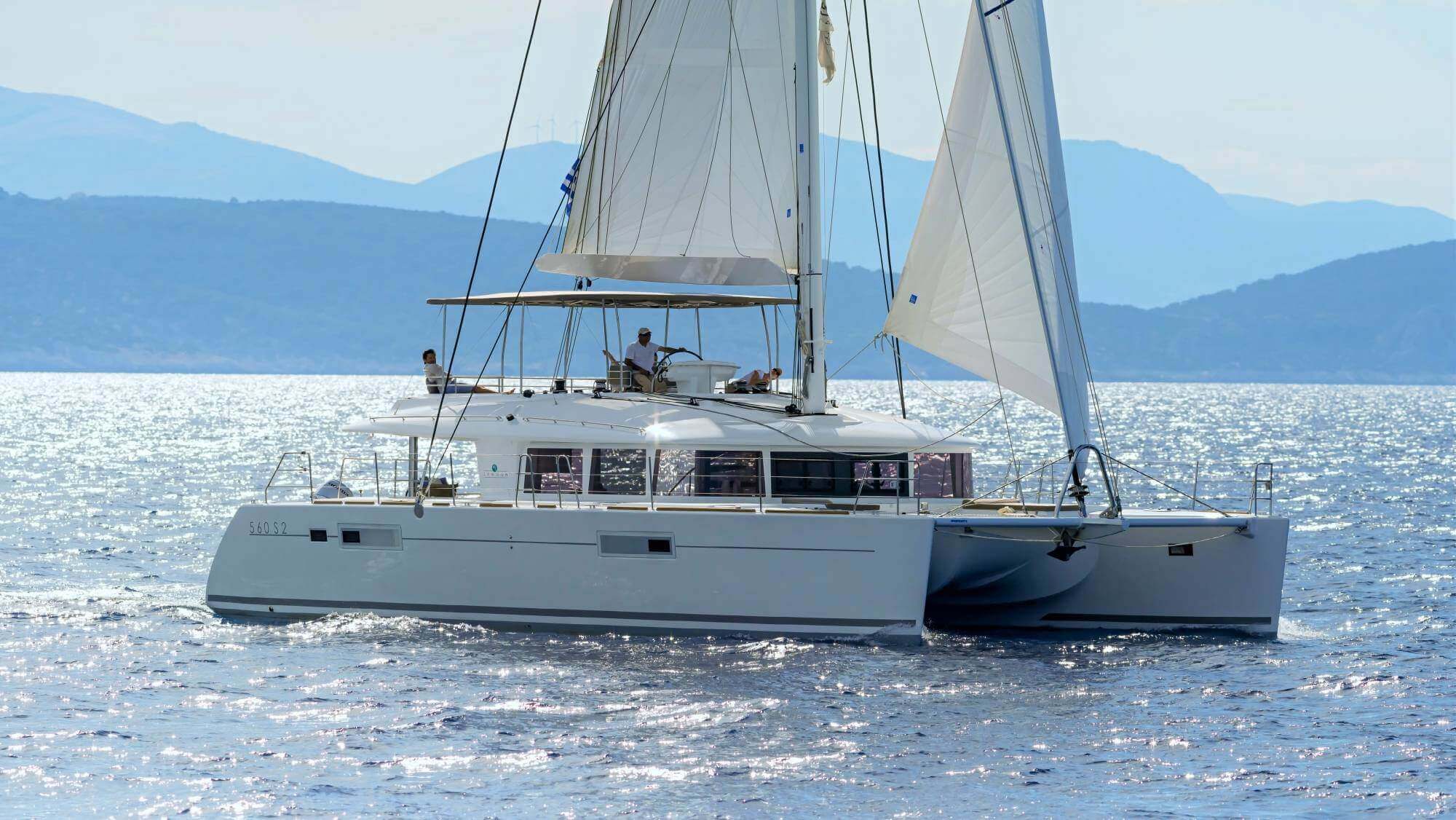 A large overlapping headsail that extends past the mast, increasing sail area and power, especially useful in light to moderate winds.
 - /ˈɡɪmbəlz/ ⚓ Equipment
- Pivoted supports that allow a compass or stove to remain level despite the boat's motion.
- /ˈɡɜːtlaɪn/ 🪢 Rigging & Sails
- A safety line rigged across the deck or cockpit, used as an attachment point for harness tethers to prevent crew from falling overboard.
- /ɡɪv ə waɪd bɜːθ/ 🍺 Slang & Lore
- To keep well clear of something or someone. A berth is the space allocated for a vessel to manoeuvre. Giving a wide berth means leaving a generous margin when passing a hazard, an anchored vessel, or a difficult person.
- /ɡɪv weɪ/ 🚨 Safety & Rules
- A vessel required by COLREGS to keep clear of another vessel, often called the burdened vessel.
- /ɡʊd lʌk/ 🍺 Slang & Lore
- Do not wish a sailor good luck. It is spectacularly bad luck to do so. Say fair winds instead. This rule is observed with complete sincerity by people who are otherwise perfectly rational.
- /ˈɡuːsnek/ 🪢 Rigging & Sails
- The swivel fitting that attaches the boom to the mast, allowing it to pivot vertically and horizontally.
- /dʒiː piː ɛs/ 🧭 Navigation
- A satellite-based navigation system providing real-time position, course, and speed information worldwide.
- /ɡræb reɪl/ 🚨 Safety & Rules
- A handhold mounted on cabin tops or bulkheads to provide safety and stability when moving about the boat in rough conditions.
- /ˈɡræpnəl ˈæŋkər/ ⚓ Equipment
- A small anchor with four or more curved prongs radiating from a central ring, looks like a grappling hook. Used for small dinghies, for dragging along the bottom to retrieve lost items, and for anchoring on rock where other designs cannot hold. Folds for stowage on folding versions.
- /ɡreˈɡɑːle/ 🌊 Weather & Sea
- A north-easterly gale in the central Mediterranean, Malta, Sicily, the Ionian Sea. Predominantly in autumn and winter. Still capable of making the central Mediterranean extremely uncomfortable.
- /ɡrɪb faɪlz/ 🌊 Weather & Sea
- Computer-generated weather data files (GRIdded Binary) used in marine navigation software to predict wind, waves, and currents.
- /dʒiː ɑː piː/ ⚓ Equipment
- A common boatbuilding material made from plastic reinforced with glass fibres, known for its strength, durability, and ease of maintenance.
- /ˈɡʌntər rɪɡ/ 🪢 Rigging & Sails
- A rig where a yard extends the luff of the mainsail almost vertically above the mast, creating a taller rig than the mast alone allows. Used on traditional dinghies and small working craft.
- /ˈɡʌnəl/ ⚓ Equipment
- The upper edge of the boat's side, where the hull meets the deck, often reinforced for strength and as a handhold.
- /ɡaɪz/ 🪢 Rigging & Sails
- Lines used to control a spinnaker pole or whisker pole. The foreguy prevents the pole from lifting; the afterguy pulls the pole aft. On a symmetric spinnaker you trim the sheet on one side and the guy on the other.
- /dʒaɪb əʊ/ 📣 Deck Commands
- The warning that a gybe is beginning. The stern is passing through the wind and the boom is about to swing across. Duck. Said by the helmsman at the moment of gybing, not as advance notice. Gybing, gybing, gybing is also called out repeatedly on some boats to warn crew throughout the manoeuvre. See also: Controlled Gybe.
"Port" replaced "larboard" by Admiralty order: too easily confused with "starboard" when shouted across a deck in a storm.
- /heɪl/ 🍺 Slang & Lore
- To call out to another vessel or person by voice. Still used for immediate short-range communication, calling to the dock, to another boat when coming alongside, or to the crew on the foredeck.
- /ˈhæljəd/ 🪢 Rigging & Sails
- A line (rope) used to hoist or lower sails, running from the deck or mast base to the top of the mast or spar.
- /hænd/ 🍺 Slang & Lore
- A crew member, particularly one who works the deck. All hands on deck means everyone, now. Short-handed means fewer crew than the boat ideally needs.
- /hɑːd əˈliː/ 📣 Deck Commands
- The helm has been put hard to leeward, the tack is beginning. The bow is turning through the wind. Warning to crew to prepare to release the old headsail sheet and take the new one.
- /hɔːl əˈweɪ/ 📣 Deck Commands
- Pull the line now, with purpose. The signal to begin hauling on a halyard, sheet, or dock line when the crew is waiting for the word to start.
- /hiːv/ 📣 Deck Commands
- To pull with effort on a line. Heave on that halyard. Also: the rhythmic rise and fall of a vessel in a swell. Heave to means to deliberately stop the boat using a backed jib and locked helm, used for resting, waiting, or riding out bad weather.
- /hæŋk/ 🪢 Rigging & Sails
- A small metal or plastic clip used to attach the luff (leading edge) of a headsail to a stay, allowing it to be easily raised or lowered.
- /ˈhɑːbər/ 🧭 Navigation
- A sheltered body of water where vessels can anchor or moor safely, protected from wind and swell. Inside: pontoons, quays, moorings, and usually a harbour master who will tell you where to go and what you owe.
- /ˈhɑːnɪs/ 🚨 Safety & Rules
- A webbing harness worn over the body with attachment points for a tether, which clips to a jackstay or strong point. Worn at night, in rough weather, and whenever the skipper says. Clip on before you go on deck. Not after.
- /hæt/ 🧭 Navigation
- The highest tide level that can be predicted to occur under any combination of astronomical conditions. Used in bridge clearance calculations, if the charted air draft clears HAT, you can pass under at any tide.
- /hætʃ/ ⚓ Equipment
- An opening in the deck, covered with a waterproof lid or hatch cover, providing access to the interior or storage areas below deck.
- /hɛd siː/ 🌊 Weather & Sea
- Waves coming from ahead. The hardest work. The bow rises, falls, and slams. Speed drops dramatically. A dead beat into a head sea in Force 5 or above is what sailing holidays are not advertised as.
- /hɛd tə wɪnd/ ⛵ Sailing & Manoeuvres
- A condition where the boat's bow points directly into the wind, causing sails to luff and the boat to lose forward momentum.
- /ˈhɛdfɔɪl/ 🪢 Rigging & Sails
- A streamlined extrusion or foil attached to the forestay, with a groove or track to guide the luff of a furling headsail, reducing drag and improving sail shape.
- /ˈhedlənd/ 🧭 Navigation
- A promontory of land projecting into the sea. Headlands accelerate tidal streams, the water has less space to pass and speeds up around the point. They also create overfalls on their downstream side. Rounding a headland with a foul tide is slow and uncomfortable.
- /ˈhɛdweɪ/ ⛵ Sailing & Manoeuvres
- The forward motion or progress of a vessel through the water.
- /hiːv tuː/ ⛵ Sailing & Manoeuvres
- A heavy-weather sailing technique where the jib is backed and the tiller lashed to leeward, causing the boat to slow down and lie stable. Minimises motion and allows rest or handling of emergencies.
- /hiːl/ ⛵ Sailing & Manoeuvres
- The leaning or tipping of a boat to one side under wind pressure on the sails or uneven weight distribution.
- /helm/ ⚓ Equipment
-
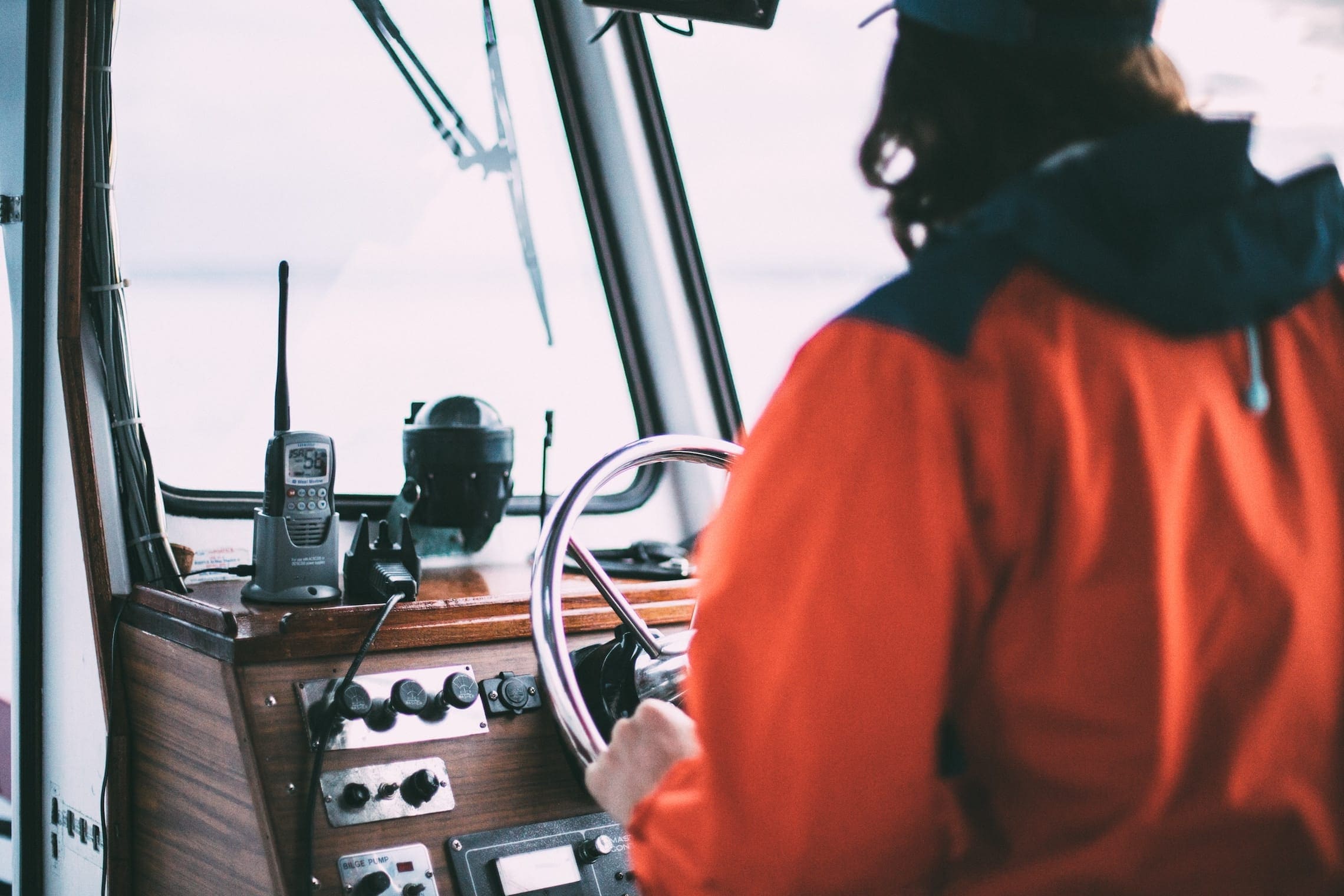 The steering mechanism of a yacht, either a tiller (a lever directly connected to the rudder) or a wheel. The person steering is the helmsman. To take the helm means to take control of the boat's direction. A well-balanced boat will hold a course with light helm pressure; a boat that pulls constantly to windward has weather helm, one that pulls to leeward has lee helm.
 - /hɛlmz ə liː/ 📣 Deck Commands
- The helm has gone to leeward, the boat is tacking. Called by the helmsman as the manoeuvre begins so crew know to release the old headsail sheet and prepare the new one. Interchangeable with Hard alee. See also: Lee-oh, Ready About, Let Draw.
- /haɪ ænd draɪ/ 🍺 Slang & Lore
- Stranded and helpless. Literally: a vessel left aground as the tide falls, sitting high above the waterline and unable to move. Running aground on a falling tide is one of the more avoidable catastrophes in sailing.
- /haɪ hiːld ʃuːz/ 🍺 Slang & Lore
- Never wear high heeled shoes on a boat. They puncture teak decking, destroy non-slip surfaces, and create a serious falling hazard on a moving vessel. No exceptions.
- /hɔɪst/ 📣 Deck Commands
- To raise a sail using its halyard. Hoist the main, hoist the kite. The instruction to begin raising. Also: the vertical dimension of a flag.
- /ˈaɪ biːm/ 🪢 Rigging & Sails
- A structural beam with a cross-section shaped like the letter I, used in boat construction for strength and weight efficiency.
- /aɪ ɛm əʊ/ 🚨 Safety & Rules
- A specialised United Nations agency responsible for regulating shipping safety, security, and environmental performance.
- /ɪmˈpelər/ ⚓ Equipment
- A small rubber paddle-wheel inside the engine's raw-water cooling pump that draws sea water through to cool the engine. Perishes with age, replace annually. Carry a spare and know how to fit it.
- /ɪn ˈaɪənz/ ⛵ Sailing & Manoeuvres
- A condition when a sailing vessel is pointed directly into the wind and loses forward momentum, causing the sails to luff and the boat to stall.
- /ɪn ðə ˈdɒldrəmz/ 🍺 Slang & Lore
- Stuck, inactive, or feeling low. The doldrums are a band of equatorial ocean notorious for calms, light airs, and unpredictable squalls. Sailing ships could be becalmed here for weeks. Getting out required patience and luck. The word is now applied to any period of stagnation.
- /ɪn ðə ˈɒfɪŋ/ 🍺 Slang & Lore
- About to happen, or expected soon. The offing is the visible sea between the horizon and the coast, the zone you can see from shore but which has not yet arrived. A ship in the offing was expected imminently.
- /ˈɪnbɔːd/ ⚓ Equipment
- An engine mounted inside the hull, driving a propeller through a shaft that exits through the hull below the waterline. The standard propulsion on cruising yachts. Diesel. Properly maintained, an inboard diesel will outlast the boat.
- /ˈɪnhɔːl/ 🪢 Rigging & Sails
- A line used to pull a sail or spar inward, adjusting sail shape or position, such as bringing in a spinnaker pole.
- /ˌɪntəˈmiːdɪɪt rɪɡ/ 🪢 Rigging & Sails
- A sail plan configuration between a simple sloop and a more complex ketch or yawl, often including staysails or multiple headsails.
- /ˈaɪsəbɑːz/ 🌊 Weather & Sea
- Lines drawn on weather maps connecting points of equal atmospheric pressure, used to interpret wind patterns and weather fronts.
- /ˈaɪsəleɪtɪd ˈdeɪndʒər mɑːk/ 🧭 Navigation
- Black with one or more red horizontal bands. Two black spheres as topmark. Fl(2) white light. Marks a hazard with navigable water all around it. Do not go near it, go around.
- /ˈaɪsəʊfeɪz laɪt/ 🧭 Navigation
- A navigation light with equal periods of light and dark, on as long as off. Abbreviated Iso. Used on some leading lights and harbour marks.
- /dʒæk ɪn ə ˈbɑːskɪt/ 🍺 Slang & Lore
- A traditional navigation beacon with a lantern or light mounted in a metal cage on a pile or pole, marking a shoal, channel edge, or hazard. Still found marking inshore channels in the UK and Ireland.
- /ˈdʒæksteɪ/ 🪢 Rigging & Sails
- Webbing or wire straps running along the deck from bow to stern, to which crew clip their safety harness tethers in rough weather. Properly rigged jackstays allow crew to move fore and aft without unclipping. A jackstay that allows you to go overboard is worse than none.
- /ˈdʒæmər/ 🪢 Rigging & Sails
- A sprung cleat device that grips a rope under load, holding it without tying off. Allows instant release of a loaded line with one hand. A bank of jammers along the coachroof is how a modern yacht manages multiple control lines to a single winch.
- /ˈdʒetsəm/ 🍺 Slang & Lore
- Cargo or equipment deliberately thrown overboard (jettisoned) to lighten a vessel in distress. Legally distinct from flotsam.
- /ˈdʒeti/ 🧭 Navigation
- A structure projecting into the water from the shore, used for mooring boats or as a pier for embarkation. The approach to a jetty in a cross-wind is the standard test of a skipper's boat-handling.
- /dʒɪb/ 🪢 Rigging & Sails
-
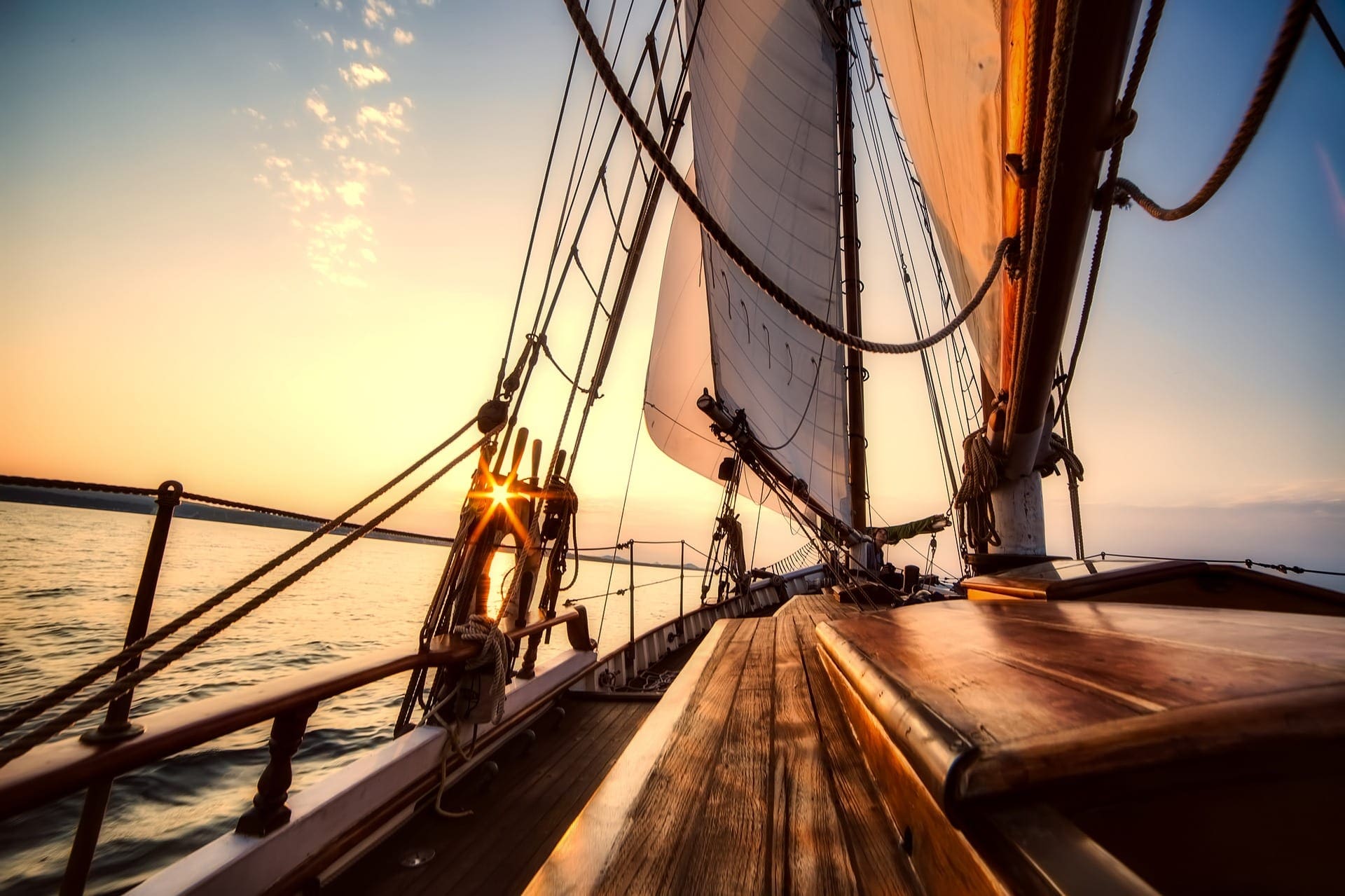 A triangular headsail set on the forestay, smaller than a genoa, it does not overlap the mast. In common usage jib is often used for any headsail. The working jib is the heavy-weather headsail you change to when the genoa becomes too much.
 - /dʒaɪb/ ⛵ Sailing & Manoeuvres
- A sailing manoeuvre in which the stern passes through the wind, causing the sails to swing across from one side to the other. Requires careful handling to avoid accidental gybes.
- /ˈdʒɪfi riːf/ 🪢 Rigging & Sails
- A quick and simple method of reducing sail area by partially lowering and securing the mainsail at a predetermined reef point. Also called slab reefing.
- /ˈdʒɒɡəl/ 🪢 Rigging & Sails
- A small notch or projection in a fitting or spar used to prevent slipping or movement, often found in wooden boats or traditional rigs.
- /ˈdʒɔːdən/ 🪢 Rigging & Sails
- A reefing line used on some mainsails, running through a cringle or reefing eye, allowing the sail to be reefed easily from the cockpit.
- /kedʒ/ ⚓ Equipment
- A small, lightweight anchor used to move a boat short distances by hauling on the anchor rode, often deployed to assist in manoeuvring or to hold position. Also the Fisherman-style anchor used as a second bower.
- /kiːl/ ⚓ Equipment
- The structural backbone running along the bottom of the hull, providing stability and strength. May include a ballast keel which adds weight to improve righting moment and prevent capsizing.
- /ˈkiːpɪŋ klɪər/ 🚨 Safety & Rules
- The obligation of the give-way vessel under COLREGS to take early and positive action to pass at a safe distance. Hesitation and small course corrections are a collision waiting to happen.
- /ketʃ/ 🪢 Rigging & Sails
-
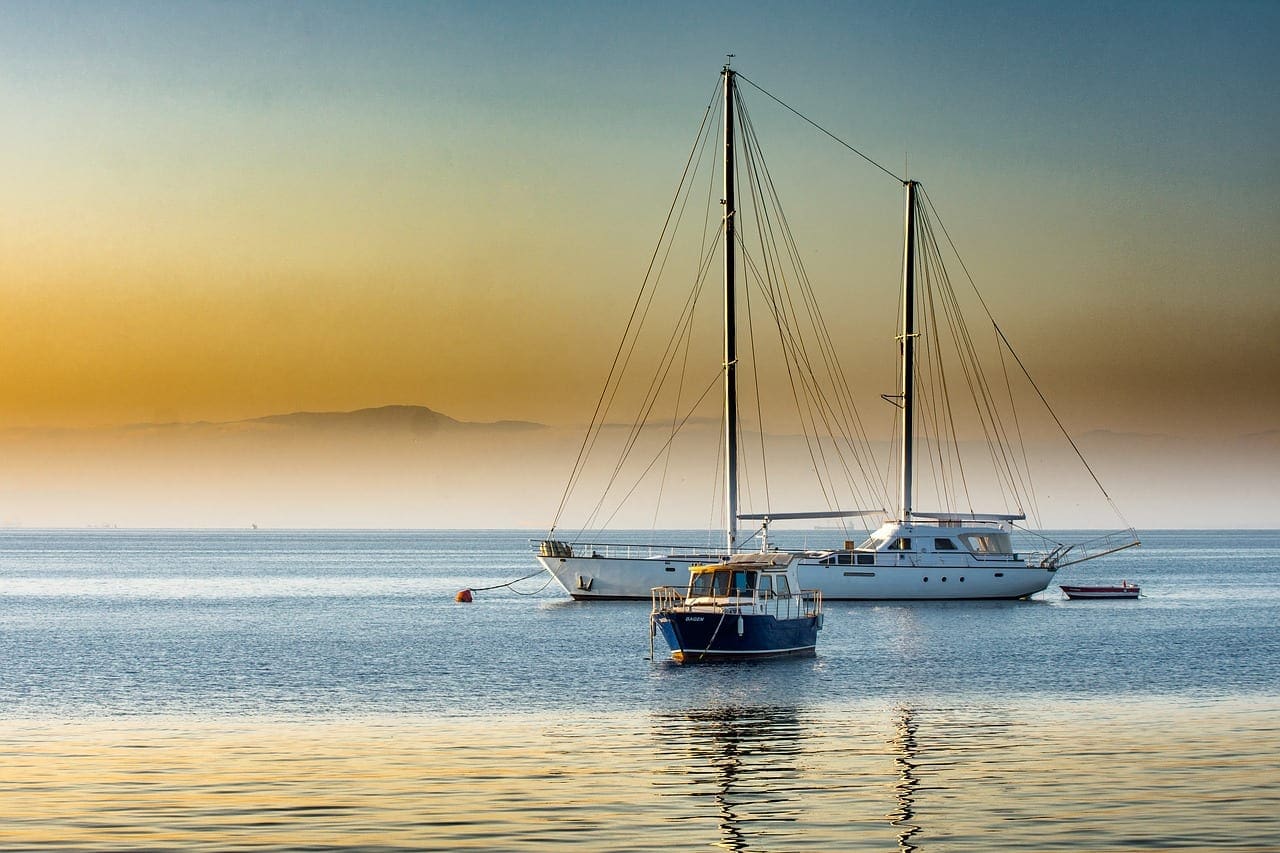 A sailing vessel with two masts: a mainmast and a smaller mizzen mast stepped forward of the rudder post.
 - /ˈkɪkɪŋ stræp/ 🪢 Rigging & Sails
- The British term for the tackle or solid strut running from the underside of the boom to the base of the mast, preventing the boom from rising when the mainsheet is eased. Important on a reach or run, without it the boom lifts, the sail twists, and you lose power. See also: Boom Vang.
- /nəʊ ðə rəʊps/ 🍺 Slang & Lore
- To understand how something works. On a working sailing ship there were hundreds of ropes, each with a specific name and purpose. A new sailor who knew the ropes was competent and could find the right line in the dark. One who did not was a hazard to everyone else.
- /ˈnɒtmiːtər/ 🧭 Navigation
- An instrument measuring the boat's speed through water in knots, typically using a paddle wheel or electromagnetic sensor.
- /ˈlænjəd/ 🪢 Rigging & Sails
- A short line used to secure an object such as a knife, whistle, or tool to prevent loss or for easy access.
- /ˈlɑːbəd/ 🍺 Slang & Lore
- The old word for port (left). Replaced in the 19th century because larboard and starboard sound nearly identical when shouted over wind and waves, causing dangerous confusion. Know it exists; do not use it.
- /liː əʊ/ 📣 Deck Commands
- A contraction of helm's a-lee, used as the tacking command in some boats and traditions. Meaning identical to Helms-a-lee and Hard alee: the bow is coming through the wind. See also: Ready About, Let Draw.
- /lɛt drɔː/ 📣 Deck Commands
- Ease the headsail sheet so the sail fills and draws on the new tack, completing the tack. Said after Helms-a-lee or Hard alee once the bow has passed through the wind and the new sheet is ready to take.
- /læt/ 🧭 Navigation
- The lowest predicted tide level under average meteorological conditions, commonly used as the chart datum for depth measurements.
- /ləˈtiːn rɪɡ/ 🪢 Rigging & Sails
- A triangular sail set on a long yard angled to the mast. The traditional rig of the Mediterranean and the Arab dhow. Seen today on traditional craft and historic replica vessels.
- /ˈlætərəl mɑːk/ 🧭 Navigation
- A buoy or beacon marking the sides of a navigable channel. In IALA A (Europe, Africa, Asia, Australia): port hand marks are red, starboard hand marks are green. In IALA B (Americas) the colours are reversed.
- /ˈleɪzi dʒæks/ 🪢 Rigging & Sails
- Lines running from the mast to the boom on either side, forming a cradle that catches the mainsail as it is lowered. Particularly useful single-handed. Must be slackened when raising a fully battened sail.
- /ˈliːdɪŋ laɪnz/ 🧭 Navigation
- Two fixed marks that when kept in line (one directly behind the other) put you on a safe course through a channel or into a harbour. Free, always accurate, requires no electronics.
- /liː bəʊ/ ⛵ Sailing & Manoeuvres
- (1) Tidal: when the tide pushes against the leeward bow it effectively pushes the boat up into the wind, letting you point higher. (2) Tactical: tacking onto an opponent's lee bow places you just ahead and to leeward, your disturbed air slows them while you sail in clear air.
- /liː hɛlm/ ⛵ Sailing & Manoeuvres
- The tendency of a boat to turn away from the wind when the helm is released, often indicating balance issues in the rigging or sail trim.
- /liː ʃɔː/ ⛵ Sailing & Manoeuvres
- A shore toward which the wind is blowing, often dangerous because it can push a boat aground.
- /ˈluːəd/ ⛵ Sailing & Manoeuvres
- The direction away from the wind; the side sheltered from the wind.
- /ˈliːweɪ/ ⛵ Sailing & Manoeuvres
- The gap between where you are pointing and where you are actually going. Wind pushes the boat sideways, so your track through the water is never the same as your heading. Ignore leeway and you arrive somewhere you did not intend.
- /lɪˈvæntər/ 🌊 Weather & Sea
- An easterly wind in the Strait of Gibraltar. Causes the distinctive cloud plume over the Rock of Gibraltar. Can be persistent and strong, making the strait difficult to beat through to windward.
- /lɪˈbetʃɪəʊ/ 🌊 Weather & Sea
- A south-westerly wind on the Italian west coast, Corsica, and Sardinia. Brings swell and deteriorating conditions quickly.
- /ˈlaɪflaɪnz/ 🚨 Safety & Rules
- The wires or lines running around the perimeter of the deck between the stanchions. They form the safety boundary. On offshore passages, clip harnesses to the jackstays, not the lifelines, lifelines are not designed for fall-arrest loads.
- /lɪst/ ⛵ Sailing & Manoeuvres
- A persistent lean or tilt of a vessel to one side due to uneven weight distribution or flooding.
- /lɒɡ/ 🧭 Navigation
- (1) A device used to measure a boat's speed through the water and estimate distance travelled. (2) A written record of a boat's voyage and events aboard.
- /lɒŋ ˈflæʃɪŋ laɪt/ 🧭 Navigation
- A navigation light showing a single flash of 2 seconds or more. Abbreviated LFl. Often combined with quick flashing: Q(6)+LFl is the south cardinal mark.
- /ˈlʊkaʊt/ 🚨 Safety & Rules
- The crew member whose sole job at any moment is watching for hazards. COLREGS Rule 5 requires every vessel to maintain a proper lookout at all times by sight and hearing. Autopilot steers the boat. It does not keep watch.
- /lʌf/ ⛵ Sailing & Manoeuvres
- The leading edge of a sail closest to the wind. To luff up means to turn the boat's bow into the wind, causing the sail to flutter.
- /lʌf ʌp/ ⛵ Sailing & Manoeuvres
- To steer the boat closer to the wind, causing the sails to begin to flutter at the luff.
- /ˈlʌfɪŋ/ ⛵ Sailing & Manoeuvres
- When a sail flaps or shakes because the wind is coming too close to its leading edge. A deliberately luffing sail generates no power. Full guide: luffing up →
- /ˈmeɪnsəl/ ⚓ Equipment
-
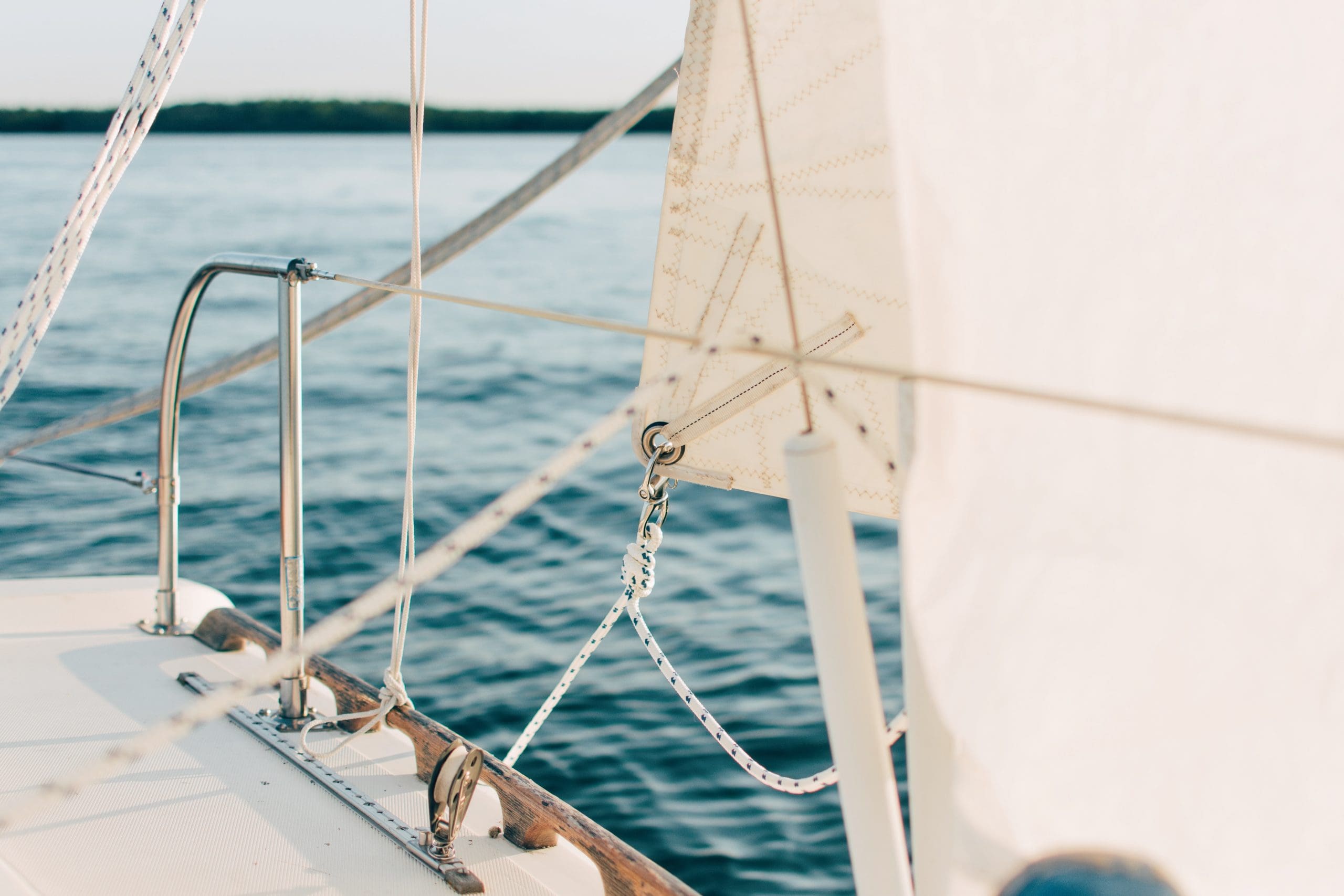 The primary sail on a yacht, attached to the mast and boom. On a sloop or cutter it is the largest driving sail. Controlled by the mainsheet (fore-and-aft trim), outhaul (foot tension), halyards (luff tension), and boom vang. Reefed when the wind builds, a full mainsail in 25 knots is too much for most cruising yachts. Always raised before leaving harbour and lowered before entering a berth.
 - /mæɡˈnetɪk nɔːθ/ 🧭 Navigation
- The direction a compass needle points, toward the Earth's magnetic north pole, which is not the same as true geographic north. The difference is called variation. A compass bearing must be corrected for variation before plotting on a chart, and for deviation before trusting it.
- /meɪk fɑːst/ ⛵ Sailing & Manoeuvres
- To secure a line firmly to a cleat, bollard, or fitting so it will not slip. The most basic instruction in sailing and the one most often done badly by newcomers who have never used a cleat before.
- /meɪk fər/ ⛵ Sailing & Manoeuvres
- To steer toward a destination. We made for Palermo means that was the intended direction of travel.
- /meɪk ɡʊd/ 🧭 Navigation
- The course or speed actually achieved over the ground, accounting for tidal set, leeway, and current. Navigation is the business of predicting and correcting this gap.
- /meɪk ɒf/ 🪢 Rigging & Sails
- To coil and stow a rope neatly after use, clearing it from the deck. Also means to depart.
- /meɪk seɪl/ ⛵ Sailing & Manoeuvres
- To set the sails and get underway under canvas. Implies intention and preparation.
- /meɪk ˈwɔːtər/ 🚨 Safety & Rules
- To take on water through a leak in the hull. She is making water is serious. Know where every stopcock is before you leave the dock.
- /meɪk weɪ/ ⛵ Sailing & Manoeuvres
- To move through the water under control, under sail, engine, or oar. A vessel making way is propelled.
- /ˈmeɪkɪŋ weɪ/ ⛵ Sailing & Manoeuvres
- Moving through the water under propulsion. Different from simply being underway: a vessel underway but drifting is not making way.
- /ˈmeɪkɪŋ jər ɪnˈtɛnʃənz klɪər/ 🚨 Safety & Rules
- A fundamental principle of the COLREGS. When manoeuvring near other vessels, take early, decisive, and unmistakable action. A small alteration of course says nothing. A bold 30-degree turn says everything.
- /məˈriːnə/ ⚓ Equipment
-
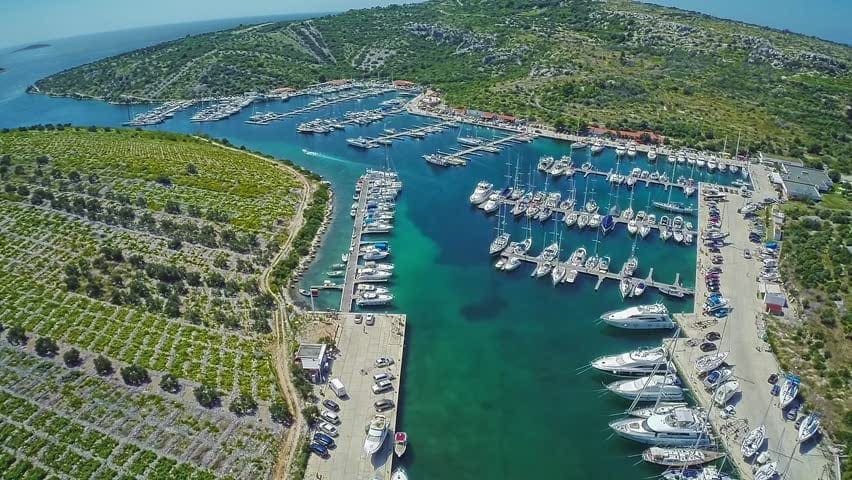 A harbour with permanent pontoon berths, water and shore power connections, and facilities for visiting yachts. Quality varies from a floating pontoon with a cold tap to fully serviced complexes with chandlery, restaurants, fuel berths, and laundry. Berth fees are typically charged by the boat's overall length. In popular Mediterranean destinations in July and August, a berth is rarely guaranteed, always call ahead.
 - /mæn ˈəʊvəbɔːd/ 🚨 Safety & Rules
- The most serious emergency on a sailing yacht. Procedure: (1) Shout Man overboard. (2) Throw the horseshoe buoy and danbuoy immediately. (3) Press the MOB button on the GPS. (4) Assign one person to point continuously at the person in the water, never look away. (5) Execute recovery manoeuvre. (6) Get them back aboard. (7) If you cannot recover them, call a Mayday. Prevention: harness on at night and in rough weather.
- /ˈmærɪnaɪzd ˈɛndʒɪn/ ⚓ Equipment
- An automotive engine specially adapted for marine use, with modifications to resist corrosion and handle continuous operation in a marine environment.
- /mɑːst stɛp/ ⚓ Equipment
- The fitting or socket on the keel or deck where the base of the mast is securely mounted.
- /meɪt/ 🍺 Slang & Lore
- The second-in-command. Takes the watch when the skipper is off duty, manages the deck crew, and steps up if the skipper is incapacitated.
- /ˈmeɪdeɪ/ 🚨 Safety & Rules
- The international radio distress call, transmitted on VHF Channel 16. Used only when a vessel or person is in grave and imminent danger requiring immediate assistance. Say it three times, then: vessel name (three times), position, nature of distress, number of persons aboard. Sending a false Mayday is a criminal offence.
- /ɛm siː eɪ/ 🚨 Safety & Rules
- The UK authority responsible for maritime safety, including vessel certification and search and rescue.
- /ˈmɛʒəd maɪl/ 🧭 Navigation
- A precisely measured distance of one nautical mile marked by buoys or transits ashore, used for speed trials.
- /melˈtemi/ 🌊 Weather & Sea
- The dominant summer wind of the Aegean Sea, a strong, dry northerly or north-westerly, Force 5-7, blowing reliably July and August. Kicks up a vicious short chop within hours. Plan passages around it. Full guide: sailing the meltemi →
- /məˈrɪdiən/ 🧭 Navigation
- An imaginary line encircling the Earth passing through the poles. Lines of longitude are meridians.
- /ɛm eɪtʃ ˈdʌbəljuː ɛn/ 🧭 Navigation
- The average height of high water at neap tides, lower than MHWS. Neap tides occur at the quarter moon when the tidal range is at its smallest.
- /ɛm eɪtʃ ˈdʌbəljuː ɛs/ 🧭 Navigation
- The average height of high water at spring tides, the highest the tide normally gets. Used as the datum for measuring bridge clearances and heights of objects above water.
- /ˈmɪstrəl/ 🌊 Weather & Sea
- A powerful north-westerly wind that funnels down the Rhone Valley into the Gulf of Lion and western Mediterranean. Can reach Force 8 or above with little warning. Forecast: look for a large high over the Bay of Biscay and a low over Italy.
- /ˈmɪzən/ 🪢 Rigging & Sails
- (1) The shorter aft mast on a ketch or yawl. (2) The fore-and-aft sail set on this mast.
- /ɛm ɛl ˈdʌbəljuː ɛn/ 🧭 Navigation
- The average height of low water at neap tides, higher than MLWS. At neaps the tide does not fall as far as at springs.
- /ɛm ɛl ˈdʌbəljuː ɛs/ 🧭 Navigation
- The average height of low water at spring tides, the tide falls further at springs than at neaps. Just above chart datum in most areas.
- /ɛm ɛm ɛs aɪ/ 🧭 Navigation
- A unique nine-digit number used to identify vessels in digital communication systems such as DSC and AIS.
- /ˈmʊərɪŋ/ ⚓ Equipment
-
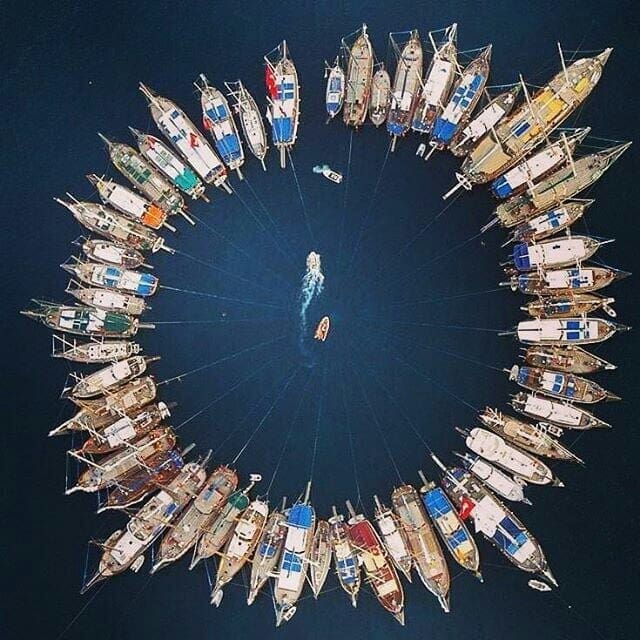 A permanent anchoring system in which a heavy weight on the seabed is connected by chain to a surface buoy. A boat picks up the buoy and makes fast to it instead of dropping its own anchor. More reliable than a temporary anchor in many situations because the weight is permanent and the chain is heavy. Common in popular anchorages where independent anchoring is restricted or prohibited. To take a mooring: approach the buoy, hook it with the boat hook, and secure the pickup line to a cleat.
 - /ˈmʌŋkiz fɪst/ 🪢 Rigging & Sails
- A heavy, spherical knot tied at the end of a heaving line, giving it weight to be thrown accurately to a dock or another boat.
One nautical mile. Based on one minute of latitude on the Earth's surface, which is why navigators can read distance straight off a chart's latitude scale.
- /ˈneɪtəʊ fəˈnɛtɪk ˈælfəbɛt/ 🧭 Navigation
- The standardised alphabet used on radio to spell out words unambiguously: Alpha, Bravo, Charlie, Delta, Echo, Foxtrot, Golf, Hotel, India, Juliet, Kilo, Lima, Mike, November, Oscar, Papa, Quebec, Romeo, Sierra, Tango, Uniform, Victor, Whiskey, X-ray, Yankee, Zulu. Adopted in 1956. Use it on VHF whenever spelling a vessel name or waypoint.
- /ˈnɔːtɪkəl tʃɑːt/ 🧭 Navigation
-
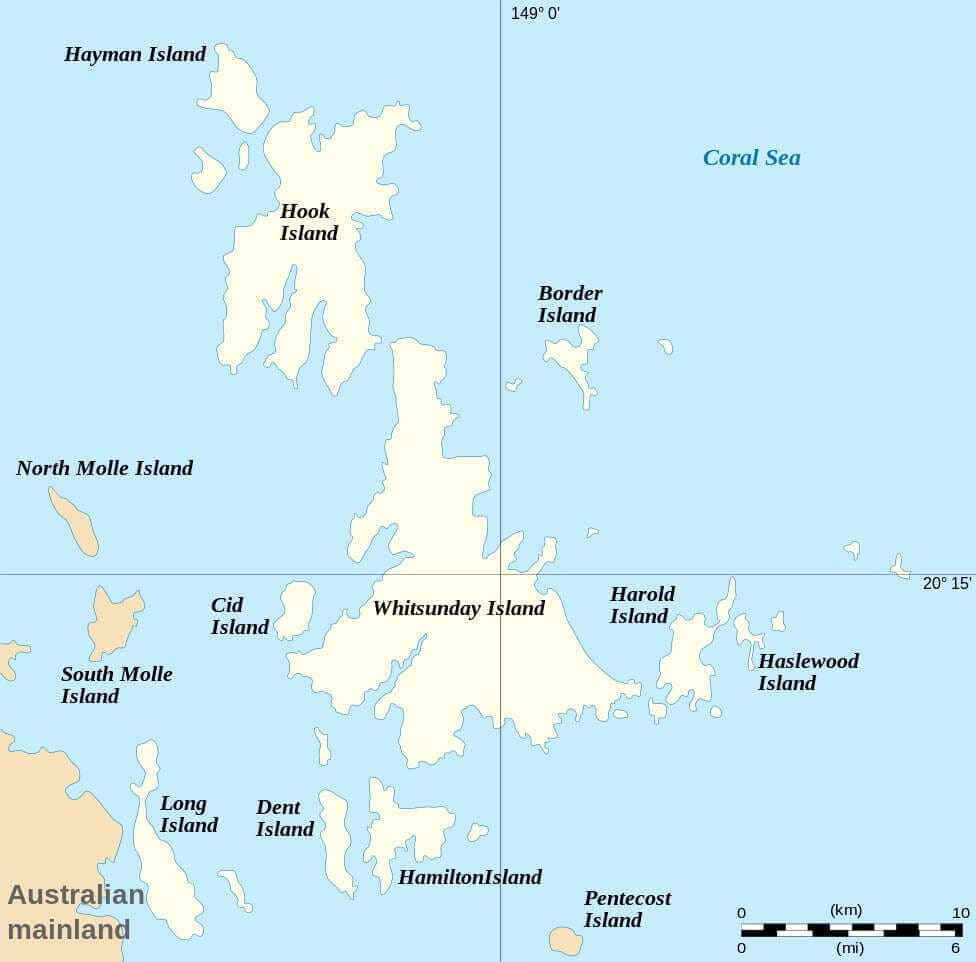 A map of a body of water showing depths, hazards, buoys, lights, anchorages, shipping lanes, and coastal features. Paper charts are corrected by Notices to Mariners; electronic charts update automatically. Use both. Never rely entirely on electronic charts offshore.
 - /ˈnɔːtɪkəl maɪl/ 🧭 Navigation
- A unit of distance equal to 1,852 metres or approximately 6,076 feet, used in maritime and aviation navigation. One nautical mile equals one minute of latitude. This is not a coincidence, it is why nautical miles are used for navigation.
- /ˌnævɪˈɡeɪʃən/ 🧭 Navigation
- The process of planning and directing the course of a vessel from one place to another safely and efficiently.
- /ˌnævɪˈɡeɪʃən laɪts/ 🧭 Navigation
-
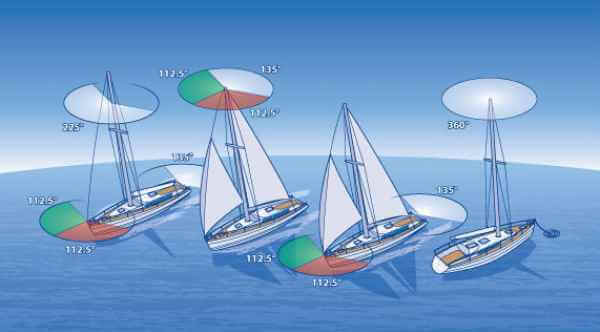 The lights displayed by vessels at night (and in restricted visibility) required by COLREGS to indicate position, heading, and status. Seeing two lights, red over white, means a fishing vessel. Red left, green right bearing down on you means a vessel coming toward you head-on. Learning the light patterns is not optional. Test yourself: navigation lights quiz →
- /ˌnævɪˈɡeɪʃən ruːlz/ 🚨 Safety & Rules
- The International Regulations for Preventing Collisions at Sea, 38 rules governing lights, shapes, sound signals, and right of way between vessels. Also known as COLREGS.
- /niːp taɪd/ 🌊 Weather & Sea
- A tide with the least difference between high and low water, occurring twice a month when the sun and moon are at right angles relative to Earth.
- /nɛt ˈtʌnɪdʒ/ ⚓ Equipment
- A measurement of the usable volume of a ship's cargo spaces, used for port fees and regulations.
- /ɛn ˈmɛə/ 🧭 Navigation
- A standard protocol for communication between marine electronics such as GPS, autopilots, and sensors.
- /nəʊ ruːm tə swɪŋ ə kæt/ 🍺 Slang & Lore
- A very cramped space. The cat was the cat o' nine tails, the multi-tailed rope whip used for punishment on naval vessels. Flogging was carried out on deck, where there was room to swing it. Below decks, in the fo'c'sle or hold, there was not. Hence: no room to swing a cat.
- /əˈkluːdɪd frʌnt/ 🌊 Weather & Sea
- When a cold front catches up with a warm front and the warm air is lifted entirely off the surface. Results in complex weather with persistent rain and confused winds. The most difficult front to read on a forecast.
- /ˈɒkəltɪŋ laɪt/ 🧭 Navigation
- A navigation light that is on more than it is off, a brief eclipse, then the light returns. Abbreviated Oc. The opposite of flashing.
- /ɒn ðə baʊ/ ⛵ Sailing & Manoeuvres
- A bearing that is ahead of the beam but not directly ahead, typically 0 to 45 degrees off the bow. Fine on the bow means very close to dead ahead.
- /əˈraɪən/ 🧭 Navigation
- The most distinctive constellation in the equatorial sky, visible almost worldwide between November and April. Three stars in a perfectly straight line, Orion's Belt, rise due east and set due west anywhere in the world, making them a reliable east-west reference without a compass.
- /ˈaʊtbɔːd/ ⚓ Equipment
- An outboard motor mounted on the transom. On a charter yacht the outboard lives on the pushpit or in a locker and goes on the dinghy. Pull the cord, prime the bulb, hope for the best. The relationship between charter guests and outboard motors is the most reliable source of drama in Mediterranean sailing.
- /ˈaʊthɔːl/ 🪢 Rigging & Sails
- Controls the tension along the foot of the mainsail, pulling the clew out toward the end of the boom. Tight outhaul = flat sail = better in strong winds. Eased outhaul = fuller sail = more power in light winds.
- /ˌəʊvərˈɔːl lɛŋθ/ ⚓ Equipment
- The total length of a vessel measured from the foremost point of the bow to the aftermost part of the stern.
- /ˈəʊvəbɔːd/ 🚨 Safety & Rules
- Anything or anyone that falls or is thrown from the boat into the water.
- /ˈəʊvədraɪv/ ⚓ Equipment
- A mechanical device or gear setting that allows an engine to operate at lower RPM for a given speed, improving fuel efficiency.
- /ˈəʊvəfɔːlz/ 🌊 Weather & Sea
- Rough and turbulent water caused by conflicting tidal streams, currents, or underwater obstructions.
- /ˌəʊvəˈhænd nɒt/ 🪢 Rigging & Sails
- The simplest of all knots, a single loop with the end passed through. The building block of more complex knots. Used as a stopper or to prevent a rope end from fraying. Tightens under load and can be very difficult to undo after heavy use.
- /ˈəʊvəlæp/ ⛵ Sailing & Manoeuvres
- The amount by which the jib or genoa sail extends past the mast when fully sheeted in.
- /ɒn ən ˈiːvən kiːl/ 🍺 Slang & Lore
- Stable, balanced, and well organised. A boat on an even keel sits level in the water, not heeling, not down at the bow, not listing. Extended to describe a person or situation that is composed and functioning well.
- /pleɪn ˈseɪlɪŋ/ 🍺 Slang & Lore
- Something straightforward and easy. From plane sailing: navigation using flat chart geometry rather than spherical, simple, direct, requiring no complex calculation. The spelling drifted to plain and the meaning widened to any uncomplicated task.
- /puːpt/ 🍺 Slang & Lore
- Exhausted; done in. Also: when a following sea breaks over the stern and floods the cockpit. A boat is pooped when a wave overtakes it from astern and deposits itself aboard. Both meanings describe the same feeling.
- /pæn pæn ˈmedɪkəʊ/ 🚨 Safety & Rules
- A Pan Pan call specifically for a medical emergency on board. The coastguard will connect you with a shore-based doctor by radio who can advise on treatment and whether evacuation is required. Available 24 hours.
- /ˈpæn pæn/ 🚨 Safety & Rules
- The international urgency call, one level below Mayday. Used when there is a serious situation requiring assistance but no immediate threat to life, a crew member with a broken leg, a fouled propeller, engine failure in deteriorating conditions. Transmitted on VHF Ch 16, said three times.
- /ˈpæsɪdʒ/ 🧭 Navigation
- A voyage between two ports or anchorages. A day passage is completed within daylight hours; an overnight passage involves standing watches.
- /ˈpæsɪdʒ plæn/ 🧭 Navigation
- The written or plotted plan prepared before departure: intended route with waypoints, tidal windows, hazards, weather forecast, estimated time, fuel and water, and contingencies. Not bureaucracy, a passage plan is what stops you making bad decisions in the dark when you are tired and the wind has backed 40 degrees.
- /piː ɛf diː/ 🚨 Safety & Rules
- The catch-all term for any buoyancy aid or lifejacket. A buoyancy aid keeps a conscious swimmer afloat; a lifejacket turns an unconscious person face-up. Know which one you are wearing and what it will and will not do.
- /pɔɪnt əv ˈseɪlɪŋ/ ⛵ Sailing & Manoeuvres
- The different angles relative to the wind on which a boat may sail.
- /pəˈleərɪs/ 🧭 Navigation
- The star that does not appear to move, it sits almost exactly above the Earth's geographic north pole. Find Polaris and you have found north within one degree. Its altitude above the horizon equals your latitude. How to find it: use the Great Bear's two pointer stars and extend the line five times its own length.
- /puːp dek/ 🍺 Slang & Lore
- The highest deck at the stern of a traditional sailing ship, above the captain's cabin. From the French la poupe (stern). The term causes amusement in visitors unfamiliar with nautical vocabulary.
- /pɔːt/ ⛵ Sailing & Manoeuvres
- The left side of the boat when facing forward. The navigation light on the port side is red. Memory aid: port wine is red, and both port and left have four letters. Also means a harbour. Also a fortified wine from Portugal.
- /pɔːt hænd mɑːk/ 🧭 Navigation
- Red buoy (can or pillar shape, red topmark, red light) to be left to port (your left) when entering harbour or travelling in the direction of buoyage. In IALA A, used in Europe, Africa, Asia, Australia. In IALA B (Americas) the lateral system is reversed.
- /pɔːt tæk/ ⛵ Sailing & Manoeuvres
- When the wind is coming over the port side first and the mainsail is out to starboard.
- /pəˈzɪʃən laɪn/ 🧭 Navigation
- A line on a chart along which a boat's position is known to lie, obtained from a bearing. Two such lines give a fix.
- /ˈpʊlpɪt/ ⚓ Equipment
- The fixed stainless steel guard rail at the bow. You clip on here to handle the anchor, change a headsail, or stand and admire the view. Not designed for sitting on in a seaway.
- /ˈkwɔːtər/ ⛵ Sailing & Manoeuvres
- The portion of the boat midway between the stern and the beam.
- /ˈkwɔːtədɛk/ 🍺 Slang & Lore
- An elevated deck located toward the stern, traditionally where the ship's officers command.
- /kiː/ 🧭 Navigation
- A platform or solid structure built along the shore or bank, used for loading and unloading boats and ships.
- /kwɪk ˈflæʃɪŋ laɪt/ 🧭 Navigation
- 50-60 flashes per minute, too fast to count individually. Abbreviated Q. Used on cardinal marks. Q means continuous quick; Q(3) means a group of three quick flashes then a pause.
- /ræmz hɔːn/ 🪢 Rigging & Sails
- A curved metal reefing hook on the boom at each reefing point. The luff cringle of the sail hooks onto it when reefing, securing the forward end of the reef without a line. Quicker than threading a reefing line through the cringle.
- /ˈredi əˈbaʊt/ 📣 Deck Commands
- The preparatory call before a tack. Crew check their positions; the headsail sheet is readied for release; the new sheet is taken in hand. No action yet, this is the warning, not the order. The tacking command (Hard alee, Helms-a-lee, or Lee-oh) follows.
- /ˈriːfɪŋ/ ⛵ Sailing & Manoeuvres
- Reducing the area of sail exposed to the wind to maintain control in stronger winds.
- /ˈriːfɪŋ ˈpenənt/ 🪢 Rigging & Sails
- A short line threaded through a cringle in the sail and around the boom, used to pull the leech down when reefing. Each row of reef points has a corresponding pennant.
- /rʌm laɪn/ 🧭 Navigation
- A course that crosses every line of longitude at the same angle, appearing as a straight line on a Mercator chart. The simplest course to plot and steer. For short passages the difference from the great circle route is negligible.
- /ˈrɪɡɪŋ/ 🪢 Rigging & Sails
- The system of ropes, cables, or chains which support a sailing vessel's masts and control the sails.
- /ˈrɔːrɪŋ ˈfɔːtɪz/ 🌊 Weather & Sea
- The band of latitude between 40 and 50 degrees South characterised by near-constant westerly gales, the Southern Ocean. The fastest sailing route around the world but the most dangerous. Not a charter destination.
- /ˈrɒknə ˈæŋkər/ ⚓ Equipment
- A modern roll-bar anchor combining a plough-style fluke with a curved roll bar that causes the anchor to self-right and penetrate on first setting. Outstanding holding in most bottoms. One of the most trusted modern anchor designs.
- /ˈrəʊlɪŋ hɪtʃ/ 🪢 Rigging & Sails
- A knot for attaching a line to a spar or rope when the load is along the spar rather than perpendicular. The extra turn grips and holds under lengthwise load. Used to take the strain off a jammed sheet or anchor warp.
- /raʊnd tɜːn ən tuː hɑːf ˈhɪtʃɪz/ 🪢 Rigging & Sails
- One of the most reliable knots for securing a line to a ring, post, or spar. A full turn around the object takes the load; two half hitches lock it. Secure, quick to tie under tension, easy to release.
- /rəʊv tuː ədˈvɑːntɪdʒ/ 🪢 Rigging & Sails
- When a block and tackle system is rigged so the hauling part leads away from the most heavily loaded block, giving the best mechanical advantage for the number of blocks used.
- /ˈrɒləks/ ⚓ Equipment
- The U-shaped or pin fittings on the gunwale of a dinghy or tender that hold the oars in place while rowing. Always attach them to the boat with a lanyard.
- /ruːlz əv ðə rəʊd/ 🚨 Safety & Rules
- The International Regulations for Preventing Collisions at Sea, 38 rules governing lights, shapes, sound signals, and right of way between vessels. Every sailor must know the key rules. Ignorance is not a defence in a collision.
- /ˈrʌnɪŋ ˈbæksteɪ/ 🪢 Rigging & Sails
- Adjustable stays used to support the mast from aft and help control mast bend and sail shape.
- /ˈrʌnɪŋ laɪts/ 🧭 Navigation
- An older term for navigation lights, the lights a vessel shows when underway at night. Still widely used informally.
- /seɪf ˈhɑːbər/ 🧭 Navigation
- A harbour providing genuine shelter from prevailing conditions. Not every harbour is safe in every condition. A good pilot book tells you which harbours are safe in which winds.
- /seɪf ˈwɔːtər mɑːk/ 🧭 Navigation
- Red and white vertical stripes, spherical topmark, Iso/Oc/LFl/Mo(A) white light. Marks the middle of a safe channel, navigable water all around. The fairway buoy. Steer for it, then through it.
- /seɪl plæn/ 🪢 Rigging & Sails
- The complete arrangement of masts, spars, and sails defining how a vessel is rigged. When the skipper says reduce the sail plan, they mean reef or change down before the wind makes the decision for you.
- /seɪl taɪ/ 🪢 Rigging & Sails
- A short length of webbing or line used to lash a furled sail to the boom or forestay. Usually three or four per boat. Usually lost overboard one at a time until there are none left. Carry spares.
- /səˈluːn/ ⚓ Equipment
-
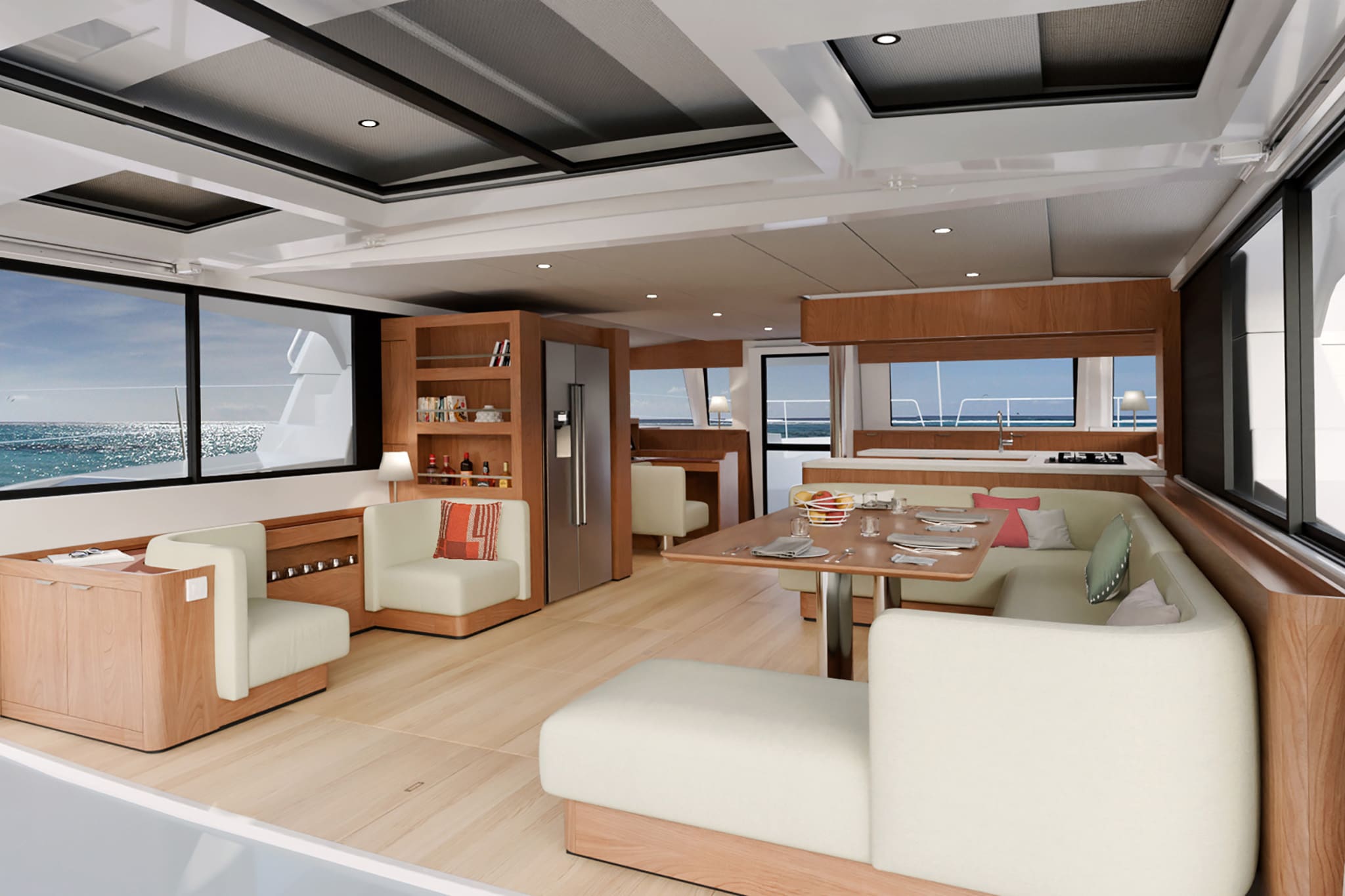 The main communal cabin of a yacht, where crew eat, navigate, and socialise. The social and operational heart of the boat.
 - /ˈsændbæŋk/ 🧭 Navigation
- A submerged or partially exposed ridge of sand formed by tidal and current action. Can shift significantly between chart surveys. Local knowledge and an echo sounder matter more here than the chart.
- /sɑː/ 🚨 Safety & Rules
- The coordinated operation of finding and helping people in distress at sea or elsewhere.
- /sɑːt/ 🚨 Safety & Rules
- An electronic device that helps rescuers locate a vessel or person in distress by responding to radar signals.
- /ˈskuːnər/ 🪢 Rigging & Sails
- A sailing vessel with two or more masts, the mainmast being aft (toward the stern).
- /skəʊp/ ⚓ Equipment
- The ratio of anchor chain paid out to the water depth. In calm conditions a scope of 4:1 is the minimum; in strong winds 7:1 or more. Insufficient scope is the primary cause of dragging anchors.
- /ˈskʌpərz/ ⚓ Equipment
- Drain holes or channels at the edge of the deck, through the toe rail or hull, that allow water shipped on deck to drain overboard. Blocked scuppers are a hazard: deck water that cannot drain adds weight and affects stability.
- /siː briːz/ 🌊 Weather & Sea
- A local wind caused by differential heating between land and sea. The sea breeze builds through late morning, peaks in the afternoon at Force 3-5, and dies at sunset. Predictable and reliable on clear days. The Mediterranean charter sailor's friend.
- /siː ruːm/ ⛵ Sailing & Manoeuvres
- The space available for a vessel to manoeuvre safely clear of hazards or land.
- /ˈsiːkɒk/ ⚓ Equipment
- A valve fitted to an underwater inlet or outlet, allowing the flow of water to be shut off.
- /ˈsiːlɒns/ 🚨 Safety & Rules
- A French term requesting radio silence during distress incidents.
- /set/ 🌊 Weather & Sea
- (1) To hoist or raise a sail. (2) The way in which a sail is set or fits. (3) The direction of tidal current or stream.
- /ˈʃækəl/ ⚓ Equipment
- A metal link with a removable bolt, often D- or U-shaped, used for attaching rigging or hardware.
- /ʃiːt/ 🪢 Rigging & Sails
- The line that controls a sail's angle to the wind. Pull it in (sheet in) and the sail comes closer to the centreline. Let it out (ease the sheet) and the sail opens. Sheets are not halyards, halyards go up, sheets go across.
- /ʃiːt bend/ 🪢 Rigging & Sails
- A knot for joining two ropes, especially of different sizes. The larger rope forms a bight; the smaller is threaded through and secured. Works best under load.
- /ʃɪps bɛl/ 🍺 Slang & Lore
- A brass bell mounted on the foredeck or mast, used historically to mark the time in the watch system. Still rung in fog as a sound signal when at anchor.
- /ʃəʊl/ 🧭 Navigation
- An area of shallow water, usually over sand or mud, that is a navigation hazard. A vessel that runs onto a shoal is aground.
- /ʃraʊdz/ 🪢 Rigging & Sails
- Ropes or wires running from the mast to chainplates at deck level to prevent sideways movement of the mast; part of the standing rigging.
- /ˈsɪrɪəs/ 🧭 Navigation
- The brightest star in the night sky. Blue-white, unmistakable. Found by following Orion's Belt to the lower left. One of the 57 navigational stars in the Nautical Almanac.
- /sɪˈrɒkəʊ/ 🌊 Weather & Sea
- A hot, humid, dusty wind from the Sahara crossing the central Mediterranean. Brings red dust, poor visibility, and an eerie warmth. Makes the sea brown and coats everything on deck with fine sand.
- /skɪn ˈfɪtɪŋ/ ⚓ Equipment
- A through-hull fitting allowing air or water to pass; fitted with a seacock when closed.
- /ˈskɪpər/ 🍺 Slang & Lore
- The person in command of the vessel. Their word is final on matters of safety, seamanship, and passage planning. A good skipper explains decisions. Argue with the skipper ashore. At sea, do what you are told.
- /slæb ˈriːfɪŋ/ 🪢 Rigging & Sails
- Reducing sail area by lowering the sail a fixed amount and securing a horizontal fold at the boom using reefing points and pennants. Quick, reliable, and strong. Also called jiffy reefing.
- /slæm dʌŋk/ ⛵ Sailing & Manoeuvres
- A racing manoeuvre where the leading boat tacks directly ahead of and to windward of a trailing boat, burying them instantly in dirty air. Requires good boatspeed, good timing, and a sufficient lead to cross comfortably.
- /ˈslɪpweɪ/ ⚓ Equipment
- A ramp leading from land into the water, used to launch and retrieve boats on trailers or to haul a vessel out for maintenance. A slippery slipway and a poorly secured trailer are among the most reliable sources of entertainment for bystanders in any harbour.
- /smɔːl bəʊt ˈtʃænəl/ 🧭 Navigation
- A designated inshore channel reserved for vessels under a specified length or draught, allowing small craft to transit without crossing the main shipping channel. Using it is not optional in many busy ports.
- /ɛs əʊ dʒiː/ 🧭 Navigation
- The actual speed of the vessel over the earth's surface.
- /ˈsəʊlæs/ 🚨 Safety & Rules
- An international maritime treaty ensuring safety standards on ships.
- /saʊnd/ 🧭 Navigation
- (1) A long, sheltered stretch of water between an island or peninsula and the mainland. (2) To measure the depth of water, by leadline, echo sounder, or pole.
- /ˈsʌðərn krɒs/ 🧭 Navigation
- The southern hemisphere's navigation constellation. Four bright stars forming a cross. To find south: extend the long axis four and a half times beyond the foot of the cross. Invisible from latitudes above 25 degrees N.
- /speɪd ˈæŋkər/ ⚓ Equipment
- A fixed-fluke concave anchor with a wide blade and no moving parts. Outstanding holding power to weight ratio, sets quickly and resets reliably if dragged. One of the best modern anchor designs for Mediterranean conditions.
- /spɑː/ 🪢 Rigging & Sails
- A general term for wooden or metal poles like masts or booms used to support or shape sails.
- /ˈspɛʃəl mɑːk/ 🧭 Navigation
- Yellow buoy or beacon with an X-shaped topmark and yellow light. Not a navigational hazard, marks cables, pipelines, racing areas, aquaculture, or military zones. Check the chart to find out what it marks.
- /ˈspɪnəkər/ 🪢 Rigging & Sails
- A large, lightweight, balloon-shaped sail used when sailing downwind (reaching or running).
- /spɪt/ 🧭 Navigation
- A narrow finger of sand or shingle extending from the shore into the sea, often at a river mouth. Spits grow, shift, and occasionally disappear between chart editions. A buoy at the end marks where you begin to round it safely.
- /splaɪs/ 🪢 Rigging & Sails
- The method of joining two ropes or wires by interweaving their strands.
- /ʃeɪk ə lɛɡ/ 🍺 Slang & Lore
- Hurry up; get moving. The bosun's call to rouse the watch below. Some accounts say it was used to check hammocks in port, anyone who showed a leg (swung one out) was proved to be aboard legitimately. Others say it was simply an energetic command to move. The result was the same: you got up.
- /sməʊk/ 📣 Deck Commands
- To ease a line fast, typically the kite halyard when dousing a spinnaker. Smoke it means let it run now, quickly, with control but no hesitation. In racing conditions this is the difference between a tidy drop and a swimming spinnaker.
- /splaɪs ðə meɪn breɪs/ 🍺 Slang & Lore
- Old meaning: to repair the main brace, a critical line on a square-rigger, rewarded with an extra tot of rum. New meaning: to have a drink; to celebrate. On a modern yacht, the universal euphemism for the first sundowner of the passage.
- /ˈsprɛdərz/ 🪢 Rigging & Sails
- Horizontal struts on the mast that extend to the shrouds, helping support the mast.
- /stɔːl/ ⛵ Sailing & Manoeuvres
- When airflow over a sail breaks up causing a loss of lift and the boat slows down.
- /ˈstɑːntʃən/ ⚓ Equipment
- The vertical steel posts bolted to the deck that support the lifelines. Not designed to take a falling person's full weight, that is what harnesses and jackstays are for. Bent stanchions are a sign of a boat that has been leaned on too hard.
- /stænd baɪ/ 📣 Deck Commands
- Prepare for action, not yet, but soon. Be alert and ready to execute the next order the moment it is given. Often the last word before something happens. Stand by to gybe means the gybe is imminent and you should be in position now.
- /stænd klɪər/ 📣 Deck Commands
- Move out of the way, immediately. Used when a boom, block, line, or sail is about to move and someone is in its path. Non-negotiable. The boom does not care.
- /stænd ɒn ˈvɛsəl/ 🚨 Safety & Rules
- The vessel with right of way under COLREGS. Must maintain course and speed so the give-way vessel can predict its movements.
- /ˈstændɪŋ pɑːt/ 🪢 Rigging & Sails
- The part of a rope or line not used in knot tying; usually the portion made fast.
- /ˈstændɪŋ ˈrɪɡɪŋ/ 🪢 Rigging & Sails
- Permanent rigging like shrouds and stays that support the mast.
- /ˈstɑːbəd hænd mɑːk/ 🧭 Navigation
- Green buoy (conical shape, green topmark, green light) to be left to starboard (your right) when entering harbour in IALA A. In IALA B (Americas) the lateral colours are reversed.
- /ˈstɑːbəd tæk/ ⛵ Sailing & Manoeuvres
- When the wind strikes the starboard side first and the boom is to port.
- /steɪ/ 🪢 Rigging & Sails
- Wire or rope supporting the mast fore-and-aft; part of the standing rigging.
- /ˈstɪərɪdʒ weɪ/ ⛵ Sailing & Manoeuvres
- The minimum speed at which a vessel can be steered effectively, enough water flowing over the rudder to give it grip. Below steerage way the rudder does nothing.
- /stem/ ⚓ Equipment
- The foremost structural member of the hull, the vertical or curved bar forming the very tip of the bow where the two topsides meet. When a boat goes aground bow-first, the stem takes the initial impact.
- /stɜːn/ ⚓ Equipment
-
 The back of the boat. Where the rudder, the engine, the bathing platform, the pushpit, the ensign, and the wake all live. Going astern means reversing.
 - /ˈstɒpkɒks/ ⚓ Equipment
- Valves on through-hull fittings (skin fittings) controlling the flow of sea water in and out of the boat. Know where every stopcock is and check each one can be operated before any passage.
- /strɒp/ 🪢 Rigging & Sails
- (1) Nautical: a loop of rope, webbing, or wire used as a sling, to attach a block to a spar or rig a temporary purchase. (2) British English: a state of bad-tempered irritation. The two meanings are unrelated, which has caused no confusion on any boat where crew are trying to rig a strop while the skipper is in one.
- /ˈʃʊɡər skuːps/ ⚓ Equipment
- Curved, stepped stern sections extending aft on modern performance yachts and catamarans, forming a platform near the waterline. Makes launching and recovering dinghies and swimmers easier. On warm-weather charters they serve as the swim platform.
- /sʌn bɪˈləʊ ðə ˈjɑːdɑːm/ 🍺 Slang & Lore
- The justification for having the first drink of the day. The yard arm was the horizontal spar on a square-rigged ship's mast. When the sun was above it, it was too early to drink. Once it dipped below (typically late morning at tropical latitudes) it was permissible. On a modern charter yacht the standard is somewhat more relaxed.
- /ˈsʌndaʊnərz/ 🍺 Slang & Lore
- Drinks taken at sunset, on deck, at anchor. The defining ritual of the Mediterranean charter holiday. Whatever the passage threw at you, the sundowner makes the log entry read well. The appropriate response to: the anchor held, no one was sick, the customs officer was polite.
- /swel/ 🌊 Weather & Sea
- Long, smooth, rolling waves generated by distant weather systems. You can have a glassy calm day with a significant swell rolling through, deeply uncomfortable and confusing to people who thought calm meant flat. Swell period matters as much as height.
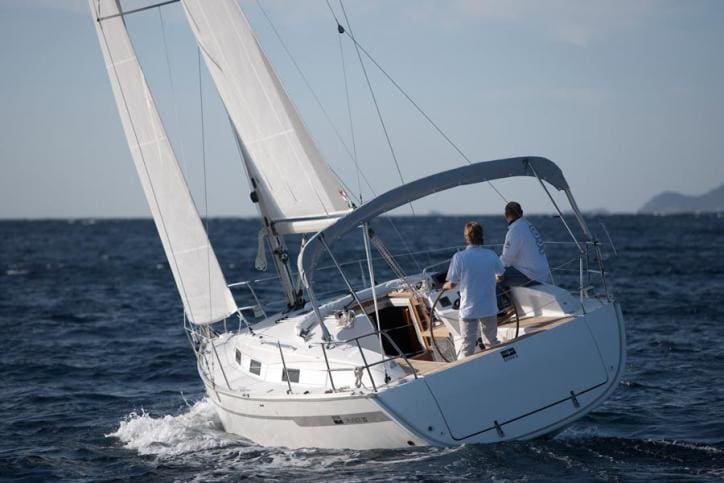 A single-masted sailing boat with one mainsail and one headsail.
 - /tæk/ ⛵ Sailing & Manoeuvres
- (1) The lower forward corner of a sail where the luff meets the foot. (2) To turn a boat's bow through the wind so the wind changes from one side of the boat to the other.
- /ˈteɪkən əˈbæk/ 🍺 Slang & Lore
- Surprised or stopped in one's tracks. When a wind shift causes the sails to back (filling on the wrong side), the boat is taken aback: forward motion stops and control is briefly lost. The sensation of a sudden, unexpected reversal went directly into everyday English.
- /ˈtækɪŋ/ ⛵ Sailing & Manoeuvres
-
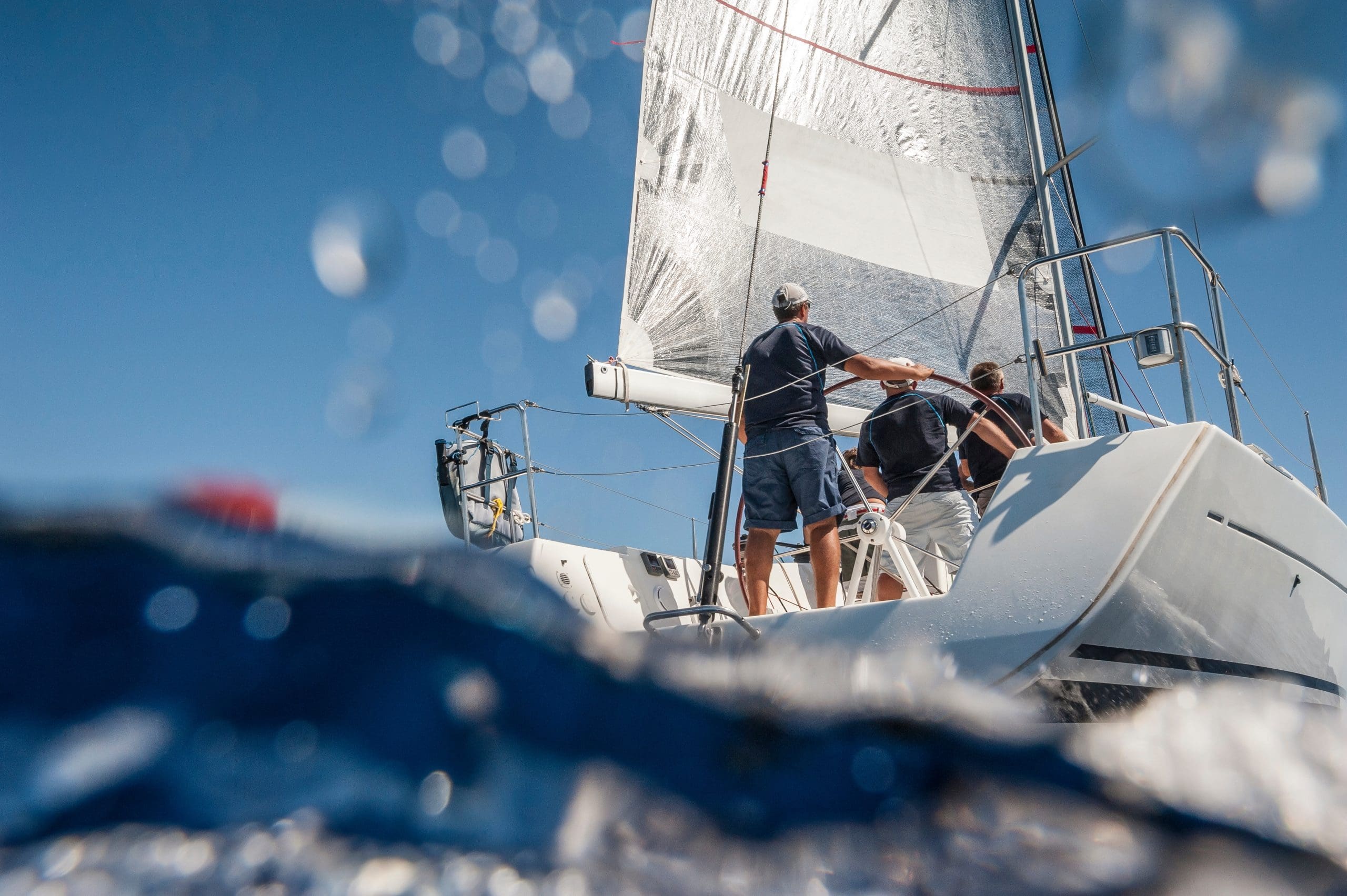 Sailing close-hauled by alternating turns through the wind to progress windward.
 - /tæŋ/ 🪢 Rigging & Sails
- A strong metal fitting by which standing rigging is attached to a mast or spar.
- /ˈtelteɪlz/ 🪢 Rigging & Sails
- Short lengths of wool, ribbon, or sailcloth attached to the sails or shrouds to show wind direction and indicate whether a sail is trimmed correctly. Both windward and leeward tell-tales should stream aft. If the windward one lifts, the sail is luffing. If the leeward one drops, the sail is stalled.
- /ˈtendər/ ⚓ Equipment
- (1) A small boat (typically an inflatable RIB or dinghy) used to ferry crew and supplies between the yacht and shore when anchored. The yacht's lifeline when at anchor. (2) A vessel that heels easily in light wind due to high centre of gravity or insufficient ballast. The opposite of stiff.
- /ðə ɡreɪt beər/ 🧭 Navigation
- The most recognisable constellation in the northern sky, seven bright stars forming a large pan or ladle. The two stars at the outer edge of the pan (Dubhe and Merak) are the pointer stars: extend the line through them five times to reach Polaris. Every sailor in the northern hemisphere should find the Great Bear within seconds of looking up.
- /θriː ʃiːts tə ðə wɪnd/ 🍺 Slang & Lore
- An old nautical expression meaning very drunk. Originally referred to a vessel whose three sheets were all free and flapping, causing the sails to thrash and the boat to lurch about uncontrollably. The analogy to the condition described is exact.
- /taɪd/ 🌊 Weather & Sea
- The regular rise and fall of sea levels caused primarily by the gravitational pull of the moon.
- /təʊ reɪl/ ⚓ Equipment
- A low strip of wood or moulding running along the edge of the deck to help prevent feet or gear from slipping overboard.
- /ˈtɒpɪŋ lɪft/ 🪢 Rigging & Sails
- A line running from the masthead to the boom, used to support or raise the boom when the sail is lowered.
- /ˈtɒpsaɪdz/ ⚓ Equipment
- The sides of the hull above the waterline, everything between the waterline and the deck edge. Topsides take the most visible punishment: dock scrapes, fender marks, salt staining.
- /træk/ 🧭 Navigation
- (1) The course made good by a vessel over the ground. (2) A fitting on a mast or boom onto which sail slides are attached. (3) A fitting along which a traveller runs, used to adjust sheet tension.
- /treɪd wɪndz/ 🌊 Weather & Sea
- Steady north-easterly and south-easterly winds either side of the equator, generated by the global atmospheric circulation. Drove the age of sail. Reliable, consistent, and the reason passage-making under sail is viable on an oceanic scale.
- /trəˈmɒnteɪn/ 🌊 Weather & Sea
- A strong north-westerly wind in the western Mediterranean, funnelling across Roussillon and Catalonia. Close cousin of the Mistral. Affects the Gulf of Lion and the Spanish Catalan coast.
- /ˈtrænsəm/ ⚓ Equipment
- The flat or angled surface that closes off the stern, the back wall of the boat. The outboard motor brackets onto it; the sugar scoops extend from it; the name and port of registry are painted on it.
- /trɪm/ ⛵ Sailing & Manoeuvres
- (1) The adjustment of sails via sheets to achieve optimal aerodynamic efficiency. (2) The adjustment of a boat's load distribution affecting its fore-and-aft balance.
- /trɪp laɪn/ ⚓ Equipment
- A light line attached to an anchor or device, used to release or retrieve it more easily.
- /ˈtrɪpɪŋ bɔɪ/ ⚓ Equipment
- A small buoy attached to the crown of an anchor by a trip line, floating on the surface to mark the anchor position and allow retrieval if the anchor becomes fouled under a rock or obstruction. Pull the trip line to break the anchor out from the opposite direction. Essential where rocky or foul ground is expected.
- /trɒts/ 🧭 Navigation
- A line of boats moored in a row to a system of fixed buoys or anchors with lines running between them, perpendicular to the shore or channel. Common in tidal rivers and busy anchorages where swinging room is limited.
- /truː wɪnd/ 🌊 Weather & Sea
- The direction and speed of the wind measured relative to a stationary point, such as on shore or at anchor.
- /ˈtɜːnbʌkəl/ 🪢 Rigging & Sails
- A device used to adjust the tension of standing rigging by tightening or loosening the wire stays or shrouds.
How sailors say "leeward". Same rule applies: forecastle = fok-sl, boatswain = bosun, gunwale = gunnel. Read the sea, not the spelling.
- /juː bəʊlt/ ⚓ Equipment
- A U-shaped metal fastener secured with two nuts, often used for attaching rigging or deck fittings to the hull or spars.
- /ʌnˈbælənst ˈrʌdər/ ⚓ Equipment
- A rudder where the entire surface is aft of the turning axis, making it harder to turn and requiring more helm effort.
- /ˌʌndəˈweɪ/ ⛵ Sailing & Manoeuvres
- A vessel is underway when it is not at anchor, not made fast to the shore, and not aground. A vessel underway may or may not be making way, a vessel drifting with the engine off is underway but not making way. The distinction matters for COLREGS obligations.
- /ʌnˈfɜːl/ ⛵ Sailing & Manoeuvres
- To unroll or release a sail that was previously furled or stowed, typically from a roller furling system.
- /ˈjuːnjən dʒæk/ 🍺 Slang & Lore
- The national flag of the United Kingdom. Technically the Union Flag unless flown from the jackstaff at the bow of a Royal Navy vessel. It is not symmetrical (the red diagonal stripes are offset), and flying it upside down is a distress signal.
- /ˈʌndər ðə ˈwɛðər/ 🍺 Slang & Lore
- Feeling unwell. Crew stationed on the windward side of the ship were on the weather rail, exposed to wind, spray, and motion. Sailors sent below when sick were under the weather deck, sheltering from conditions. The phrase narrowed from physically cold and battered to simply feeling ill.
- /ˈʌphɪl ɔːl ðə weɪ/ 🍺 Slang & Lore
- Informal for a passage spent close-hauled or hard on the wind, beating into the wind and sea for the entire trip. The least comfortable point of sail. It was uphill all the way means a hard, wet slog to windward.
- /ˈʌpwɪnd/ ⛵ Sailing & Manoeuvres
- The direction from which the wind is blowing. Sailing upwind requires sailing at angles to the wind, typically close-hauled or via tacking.
- /væŋ/ 🪢 Rigging & Sails
- Also known as a kicking strap. A line or tackle system used to control the vertical movement of the boom, especially on a reach or run, helping to flatten the sail and maintain proper sail shape. See also: Kicking Strap.
- /ˌveəriˈeɪʃən/ 🧭 Navigation
- The difference between true north and magnetic north, varying by geographical location and shown on nautical charts. Must be accounted for in compass navigation.
- /vɪər/ 🌊 Weather & Sea
- (1) A wind shift in a clockwise direction (e.g., from north to east). (2) To let out anchor cable or line in a controlled manner.
- /ˈviːɡə/ 🧭 Navigation
- One of the three stars of the Summer Triangle (with Deneb and Altair), blazing blue-white almost overhead in northern summer. The second brightest star in the northern hemisphere sky. Used as a navigational star.
- /ˈviːnəs/ 🧭 Navigation
- Not a star at all, the planet Venus. Because it orbits closer to the Sun than Earth it is never visible in the middle of the night, only near dawn (Morning Star) or dusk (Evening Star). The brightest object in the sky after the Sun and Moon. Used in celestial navigation.
- /ˈveri kwɪk ˈflæʃɪŋ laɪt/ 🧭 Navigation
- 100-120 flashes per minute, faster and more urgent than quick flashing. Abbreviated VQ. VQ(9) is the west cardinal mark.
- /ˈvɛsəl/ ⚓ Equipment
- Any craft designed for transportation on water, including sailboats, motorboats, ships, and other waterborne craft.
- /ˌviː eɪtʃ ˈef ˈreɪdiəʊ/ 🧭 Navigation
- A marine communication radio operating on Very High Frequency channels, used for short-range ship-to-ship and ship-to-shore communication. Vital for safety, navigation, and distress calls. Channel 16 is the international distress and calling channel. Monitor it at all times underway.
- /weɪk/ ⛵ Sailing & Manoeuvres
- The disturbed water left behind a boat as it moves forward, often forming visible waves or ripples.
- /wɔːm frʌnt/ 🌊 Weather & Sea
- The leading edge of warm air rising slowly over cold air. Approaches gradually with thickening cloud, lowering visibility, and steady rain over many hours. Less violent than a cold front but longer-lasting.
- /weɪ ɒn/ ⛵ Sailing & Manoeuvres
- The forward momentum of a vessel. She has way on means the boat is moving. Take the way off means slow down or stop. Managing the way on is the key to a clean berthing.
- /ˈweɪpɔɪnt/ 🧭 Navigation
- A specific location marked by coordinates (latitude and longitude) used for navigation, especially with GPS systems.
- /ˈweðər helm/ ⛵ Sailing & Manoeuvres
- A sailing condition where the boat tends to turn into the wind, requiring the helmsman to apply leeward rudder to maintain course. Moderate weather helm can be helpful, but too much causes inefficiency and fatigue.
- /ˈwɛðər saɪd/ ⛵ Sailing & Manoeuvres
- The side of the boat from which the wind is blowing; the windward side.
- /ˈdʌbəljuː dʒiː ɛs eɪti fɔː/ 🧭 Navigation
- The standard geodetic reference system used by GPS and most nautical charts.
- /ˈwɪskər pəʊl/ 🪢 Rigging & Sails
- A lightweight pole used to hold the clew of a headsail out to windward when sailing directly downwind. Helps prevent the sail from collapsing.
- /ˈwɪslɪŋ ɒn bɔːd/ 🍺 Slang & Lore
- Do not whistle on a boat. Whistling is believed to summon the wind, and sailors have historically been far more concerned about too much wind than too little. This rule is only partially a joke.
- /wɪntʃ/ ⚓ Equipment
-
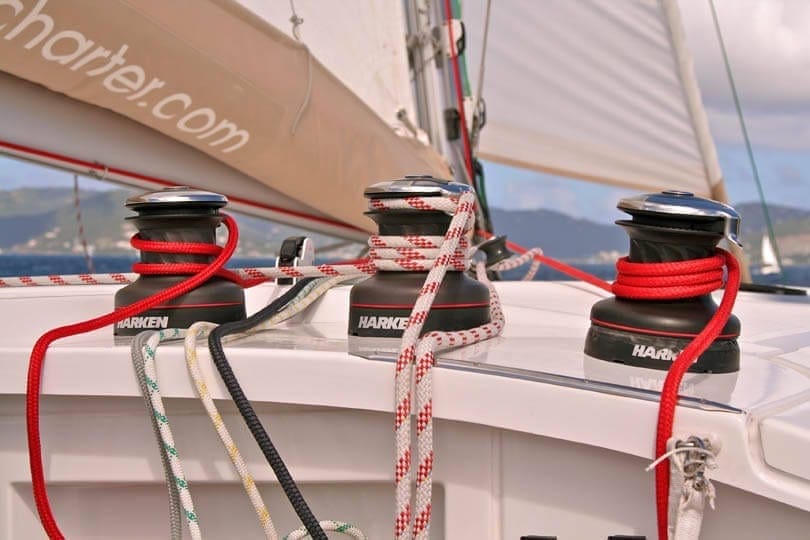 A mechanical device, usually consisting of a rotating drum turned by a handle, used to haul in or tension a line. Provides mechanical advantage when trimming sails or raising anchors.
 - /wɪnd/ 🌊 Weather & Sea
- (1) The movement of air relative to the surface of the Earth, fundamental to sailing. (2) May refer to true wind (felt at rest) or apparent wind (as felt onboard while moving).
- /ˈwɪndɪdʒ/ ⛵ Sailing & Manoeuvres
- The total area of a boat that is exposed to the wind, including hull, rigging, sails, and even crew. High windage increases drag and makes the boat more susceptible to being blown off course.
- /ˈwɪndləs/ ⚓ Equipment
- A heavy-duty mechanical or electric winch used for hauling in or paying out the anchor chain or rode. Typically mounted on the foredeck.
- /ˈwɪndwəd/ ⛵ Sailing & Manoeuvres
- The direction from which the wind is blowing, the upwind side of the boat. Opposite of leeward.
- /ˈwɪndwəd ʃɔː/ ⛵ Sailing & Manoeuvres
- The shore the wind is blowing from, the upwind side. Anchoring on a windward shore means the wind blows you away from the land. Contrast with a lee shore, where the wind pushes you onto it.
- /ɛks draɪv seɪlz/ 🪢 Rigging & Sails
- A modern sail construction method using continuous fibre mapping for strength and shape control.
- /jɒt/ ⚓ Equipment
- A recreational boat or ship, typically used for leisure or charter. Full guide: what is a yacht →
- /zed draɪv/ ⚓ Equipment
- A steerable propulsion unit mounted beneath the hull that can rotate 360 degrees, combining the propeller and rudder functions in one unit. Standard on modern motor yachts and some sailing catamarans. Eliminates the traditional fixed shaft and separate rudder. Highly manoeuvrable, a boat with Z-drives can spin on its axis. Also called an azimuth drive or pod drive.
- /ˈzɪɡzæɡ ˈseɪlɪŋ ˈʌpwɪnd/ ⛵ Sailing & Manoeuvres
- The process of tacking repeatedly to progress against the wind.
- /zɪŋk ˈænəʊd/ ⚓ Equipment
- A sacrificial metal part that prevents corrosion on underwater metal components by corroding itself preferentially. Replace when more than 50% consumed. Checking zincs is part of the haul-out routine.
Common Questions About Sailing Terminology
We hear the same ones from every sailor who is new to the water. Here are straight answers to the ten most common.
Ready to Sail?
Browse 9,000 charter yachts worldwide, or send us a message and one of the team will come back to you.