
Live Firing Areas: What Skippers Should Do
Two warships fired live rounds in British and French waters eight days apart in July 2026. The difference between them was a radio call.

Founding Member: International Federation of Yacht Charter Agents

Verified & Protected by Pantaenius Yacht Insurance.
Live Firing Areas: What Skippers Should Do
On 20 July 2026 a Russian frigate spent half an hour on a live artillery shoot about forty miles south of Plymouth. Before it fired, it called HMS Tyne, said what it was about to do, and asked the British patrol vessel to open the range. Eight days later a French Navy patrol boat fired off Cap Gris-Nez, roughly three hundred metres from a small fishing boat carrying a journalist, an MP and a skipper who said he had never seen anything like it. Everyone aboard that boat says there was no warning at all.
A great deal of argument followed the second one, most of it about politics rather than seamanship. Set it aside. For anyone who takes a boat across the Channel or along the south coast, the useful question is narrower: how are you supposed to know when a navy is about to open fire, and what do you do if you find yourself in the middle of it?
The answers are written down. They are not obvious, they are not where most sailors look, and one of them changes the moment you leave British waters. We have advised on charters since 2011, and what follows comes from the primary sources, chiefly the UK Hydrographic Office's own annual notice, rather than from forum lore.
Quick Navigation
- 1 What Happened Two Shoots, Eight Days Apart
- 2 Clear Range Whose Job Your Safety Is
- 3 Charted Areas Where They Are Marked
- 4 Red Flags The Signals And Their Limits
- 5 Range Safety Craft How To Recognise Them
- 6 If Firing Starts Hold Your Course
- 7 Crossing The Channel Where The Cover Stops
- 8 Where To Look The Sources That Carry It
- 9 Before You Sail A Ten Minute Routine

1.What Happened
Two Shoots, Eight Days Apart
The Russian frigate Neustrashimy spent about thirty minutes on an artillery exercise in international waters south of Plymouth, shadowed by the Royal Navy throughout. What matters here is the courtesy that came first. The frigate told HMS Tyne what it intended to do and asked the River class patrol vessel to move to a safer distance. A French military aircraft also called it up to confirm its intentions.
Eight days later the patrol vessel PSP Flamant fired about three miles off the French coast near Cap Gris-Nez. A BBC journalist three hundred metres away counted seventeen rounds. The Prefecture maritime de la Manche et de la mer du Nord says it was a handgun firing exercise, unrelated to the presence of the British boat, which it says was never within range of the fire.
Both accounts can be true at the same time. A range can be genuinely judged clear by the people firing and still feel extremely close to the people watching. That gap, between what the range authority knows and what the small boat knows, is the whole subject of this article.

2.Clear Range
Whose Job Your Safety Is
In the United Kingdom and a number of other countries, firing areas run on what the UK Hydrographic Office calls a Clear Range procedure. Its wording repays a slow read: exercises and firing only take place when the ranges are thought to be clear of all shipping, and it is the responsibility of the designated Range Authorities to avoid accidental damage to any vessel which may be in a firing practice area.
Two things follow. The first is reassuring. The duty to keep you safe sits with the people who have the guns, not with you. The second is less so. The phrase is "thought to be clear", and that is a judgement made by somebody with binoculars and radar. Judgements have edges.
There is no restriction on your right to pass through a firing practice area at any time. You are not trespassing and you do not need permission. But a right of passage and a quiet passage are not the same thing.

3.Charted Areas
Where They Are Marked
Practice area limits are shown for UK home waters on a series of six small scale charts, the PEXA series. Since a review in 2000, the limits of firing and bombing areas have also been added to ordinary charts as those charts come up for a new edition or a full revision.
That last detail catches people out. When "Firing Practice Area" appears on a new edition of a chart you have used for years, nothing has changed on the water. The area was always there and the chart has only caught up. The UKHO makes the point itself, noting that some chart users may not have been aware of the proximity or overlap of their normal limited area of operation to a long established exercise area.
Range beacons, lights, marking buoys and any targets that might endanger navigation are charted too, and picked up in the Sailing Directions and the List of Lights. Occasionally a non-firing practice is arranged outside the established limits, and those are promulgated by Temporary Notices to Mariners or Notices to Fishermen.
4.Red Flags
The Signals And Their Limits
Where warning signals are given they are red flags by day and red fixed or red flashing lights at night, shown from shortly before practice begins until it ceases. Vessels carrying out anti-aircraft practice fly a red flag. Shore batteries generally show signals. Airborne towed targets generally do not.
Then comes the sentence every skipper should commit to memory, quoted below. The absence of a signal is not evidence of anything, and it is certainly not permission. It is the single most misread thing about firing areas.
One more signal worth knowing. Vessels and aircraft on exercise may illuminate with bright coloured flares, and red or orange are deliberately held back for genuine emergencies. A green or white flare over an exercise area is not a distress signal, and treating it as one helps nobody.
5.Range Safety Craft
How To Recognise Them
If firing is under way there is often a boat whose entire job is to keep you out of it, and it is worth knowing what one looks like before it comes alongside. Range safety craft, target towers and control launches display some or all of four marks: a red flag at the masthead, the International Code signal NE4, dayglow orange boards lettered RANGE SAFETY on either side of the wheelhouse, and a dayglow orange cabin roof.
Target towing vessels fly the red flag at the masthead and carry the signals for a vessel towing a tow of more than two hundred metres. Give them the room that implies, because the dangerous part is the bit you cannot see.
Remote controlled surface targets are stranger again. They carry not under command shapes and lights, and a control craft keeps visual and radar watch out to roughly eight miles with air cover over a wider area, specifically so that other shipping is not endangered.
“The absence of any such signal cannot, however, be accepted as evidence that a practice area does not exist.”
UK Hydrographic Office · Annual Notice to Mariners No. 5

6.If Firing Starts
Hold Your Course
The instinct is to turn and run. The official guidance is the opposite, and the reasoning is sound. If a vessel finds itself in an area where practice is in progress, it should maintain course and speed. The range authority has already plotted you. A sudden alteration makes you unpredictable to the one party whose job is to avoid you.
Only if the exigencies of navigation prevent you from holding your course should you clear the area, and then at the earliest opportunity rather than in a scramble.
If projectiles or splinters are seen falling near the boat, the advice changes completely. Everyone on board takes cover, and you call the Coastguard immediately on VHF channel 16 or by DSC and tell them your situation. That is the point at which holding your course stops being the priority.
7.Crossing The Channel
Where The Cover Stops
Here is the part of the July incident that genuinely matters to a British crew, and it has nothing to do with who was intimidating whom. The UKHO is explicit that the arrangements above do not apply in all respects in all countries, and that it does not intend to re-promulgate, through Admiralty Notices to Mariners, information it receives about firing practice or exercises in foreign waters.
Read that again with a Channel crossing in mind. The notification regime you have relied on all season stops at the edge of British waters. Beyond it you depend on local promulgation, which the UKHO says should be by radio, NAVTEX, visual signals or notices, sufficient to reach those whose cooperation is required.
"Should be" is carrying a great deal of weight in that sentence. The exercise off Cap Gris-Nez may well have been properly notified through French channels. The people on a fishing boat three miles away had not seen it. Both of those can be true, and the lesson is the same either way. Crossing the Channel means crossing into a different information regime, and you have to go and look for it.
8.Where To Look
The Sources That Carry It
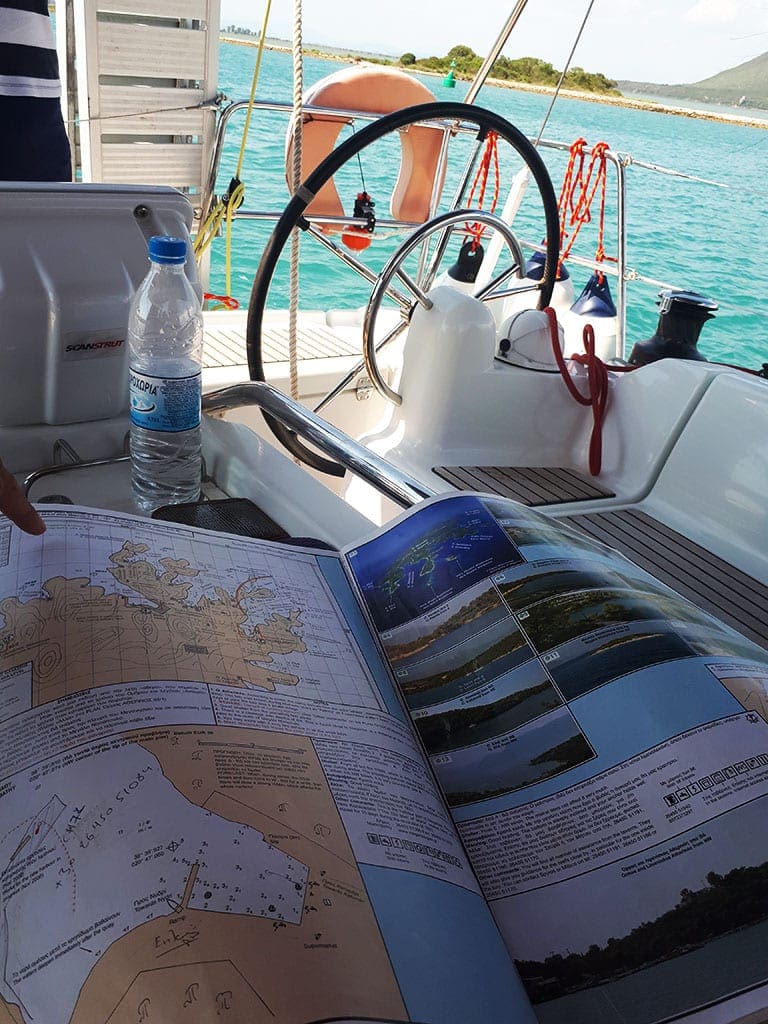
Range safety broadcasts around the UK are listed in the Admiralty List of Radio Signals Volume 3, together with the broadcasting authority, the times and frequencies, and a diagram of the PEXA limits and range control areas. Where they are known, foreign range safety authorities are listed there too, which makes Volume 3 the most useful single book on this subject.
NAVTEX carries urgent maritime safety information out to roughly two hundred and fifty miles offshore and is the obvious passive source underway. Local Notices to Mariners, harbour masters and yacht clubs carry firing programmes, and range control will normally confirm the arrangements if you telephone or call up on VHF and simply ask.
For the ranges you pass regularly the programme is published in advance. Lulworth is the one most south coast sailors meet, where during firing the sea danger area reaches some six miles south of the cove. Look up the range control channel for your stretch of coast and write it on the passage plan next to the waypoints.

9.Before You Sail
A Ten Minute Routine
None of this needs to become a project. On a domestic passage, check the chart for practice area limits along your route, look up the firing programme for any range you will pass, and note the range control channel on the plan. That is ten minutes of work and it is the difference between a surprise and a non-event.
On a cross-Channel or foreign passage, add the one step the UKHO has told you plainly it will not do on your behalf. Go and find the local promulgation: the national notices, the local NAVTEX station, the port authority. If you cannot find it, plan on the assumption that nobody is going to warn you.
And keep the radio on. In both of the July incidents the difference between an exercise and an incident came down to a call on the radio. One was made. The other, according to everybody who was there, was not.
Planning a Channel crossing or a charter in less familiar waters? We have advised on charters since 2011 and we are tied to no operator, so the brief you get is the one that suits your crew, not ours.

Christopher Lait
Chris founded Drake Academy, a sailing company that provides leadership training to businesses. Now the CEO of SailChecker.com you will find him handling many of your enquiries as he attempts to drive SailChecker.com forward as the company of choice for yacht charter and sailing by focusing on quality advice and great customer service.