Coastal Skipper and Yachtmaster Quiz · Collision regulations
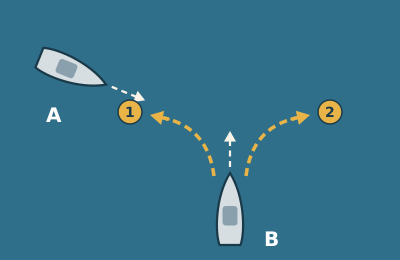
B is the stand-on motor boat and A is not keeping clear. B decides to take action early, as Rule 17 allows. Which manoeuvre should she avoid, if the circumstances of the case admit?
Seen from above: two motor boats on crossing courses. A is in the upper left, heading across towards the path of B. B is at the bottom, heading up the picture, with A on her port bow. Two dashed gold arrows curve away from B: arrow 1 turns to the left, towards the side A is on, and arrow 2 turns to the right.
Show the answer
Turn 1: altering course to port, towards the side A is on. Rule 17(c) says a power-driven vessel acting early in a crossing situation with another power-driven vessel shall, if the circumstances admit, not alter course to port for a vessel on her own port side. If the give-way vessel finally wakes up, she will most likely turn to starboard, and the two turns would bring them together.